
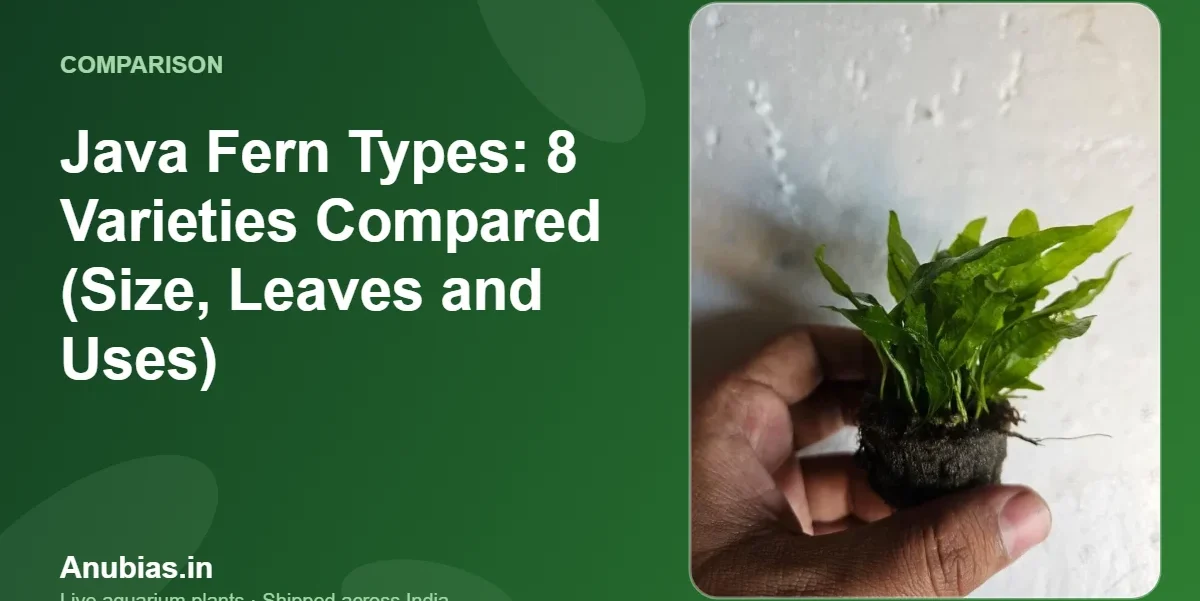
Java fern (Microsorum pteropus) comes in many forms, from tiny nano-tank ferns to broad-leaved giants and lacy, forked varieties. They all share the same easy care, so choosing between them is really about size, leaf shape and where they will go in your aquascape. This guide compares the main Java fern types you will find in India.
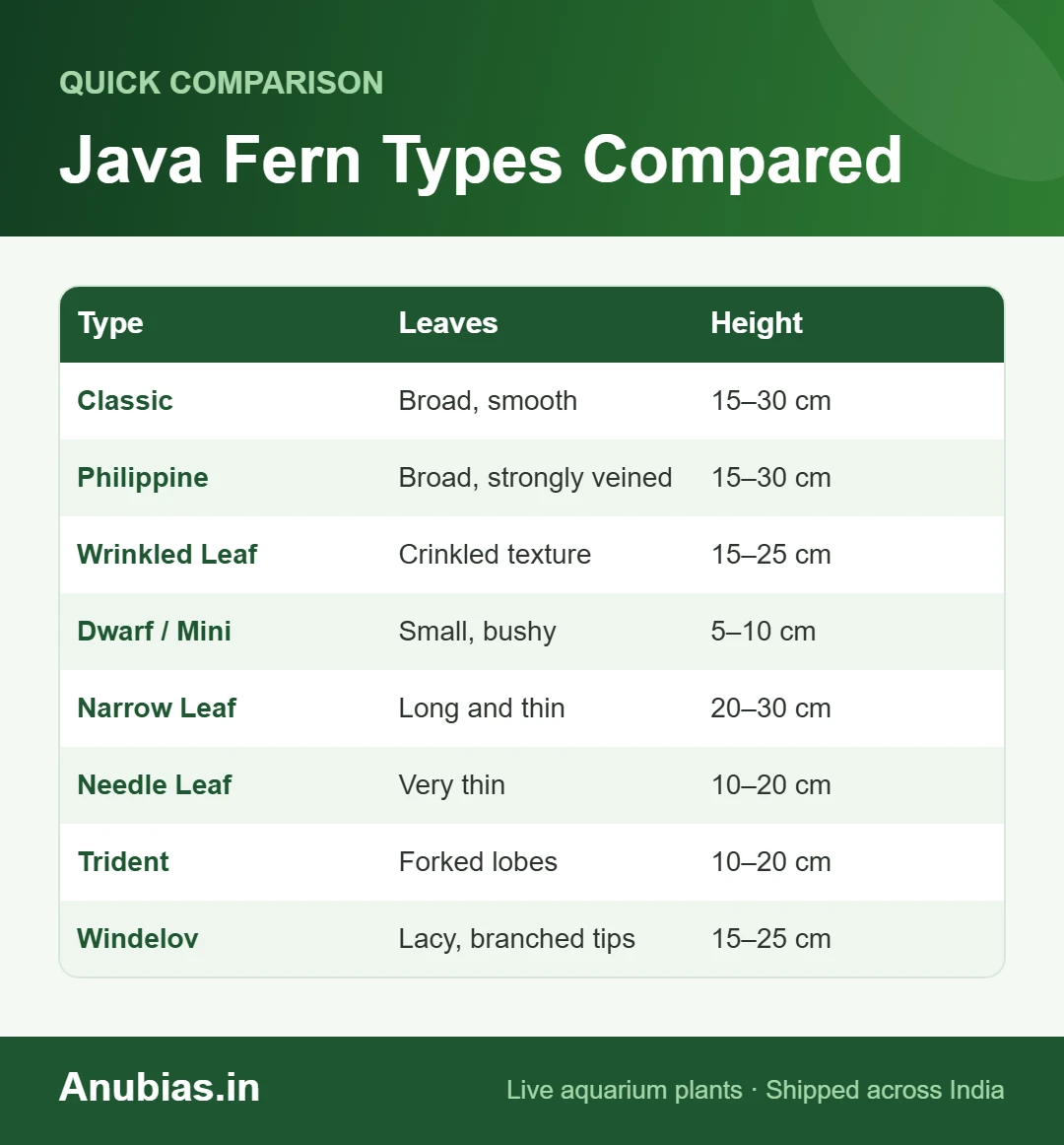
Quick answer: The main Java fern types are classic (broad green leaves, 15–30 cm), Philippine (broad, strongly veined leaves), Wrinkled Leaf (crinkled texture), Dwarf or Mini (stays under about 10 cm), Narrow Leaf and Needle Leaf (thin, grass-like leaves), Trident (forked leaves) and Windelov (lacy, branched tips). All need low to medium light, no CO2 and an attached rhizome that is never buried.
Java fern types compared
| Type | Leaves | Typical height | Best use | On Anubias.in |
|---|---|---|---|---|
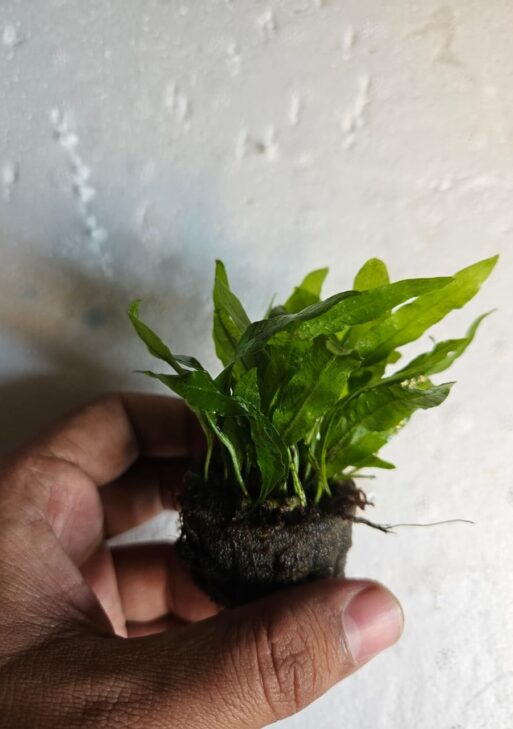
| Classic Java fern | Broad, smooth, lance-shaped | 15–30 cm | Midground, background, hiding equipment | ₹175 |
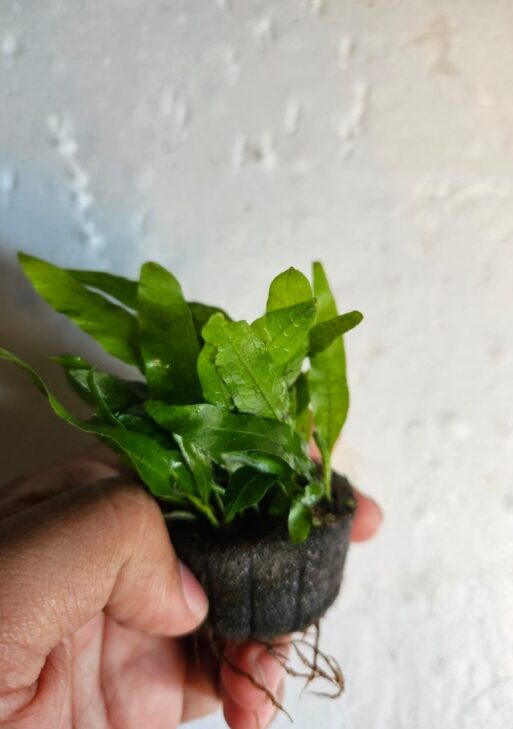
| Java Fern Philippine | Broad, prominently veined | 15–30 cm | Bold focal plant on wood | ₹175 |
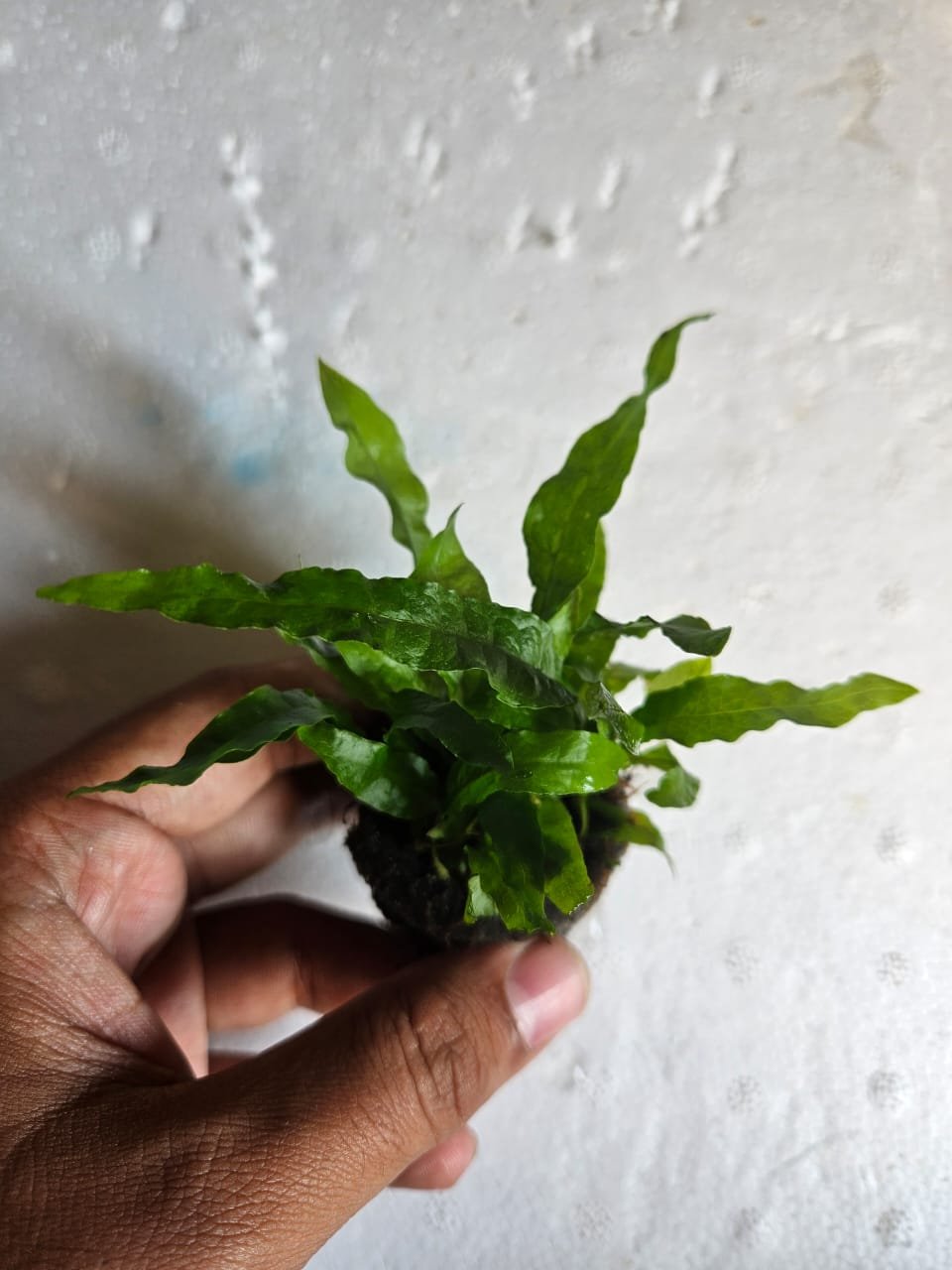
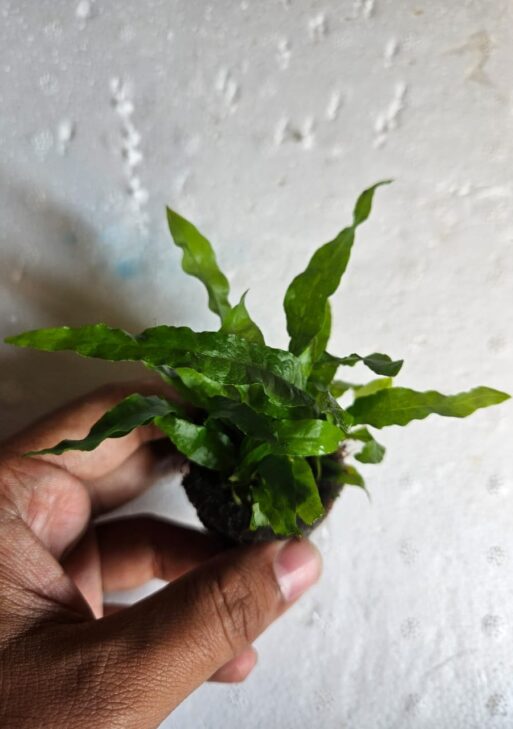
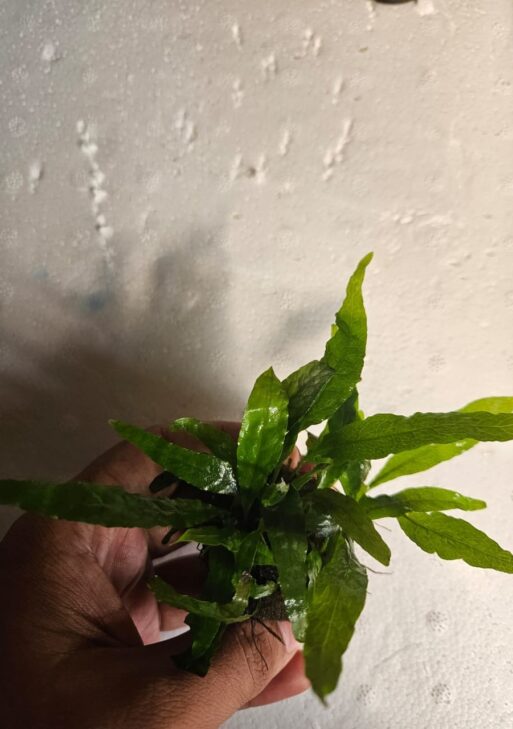
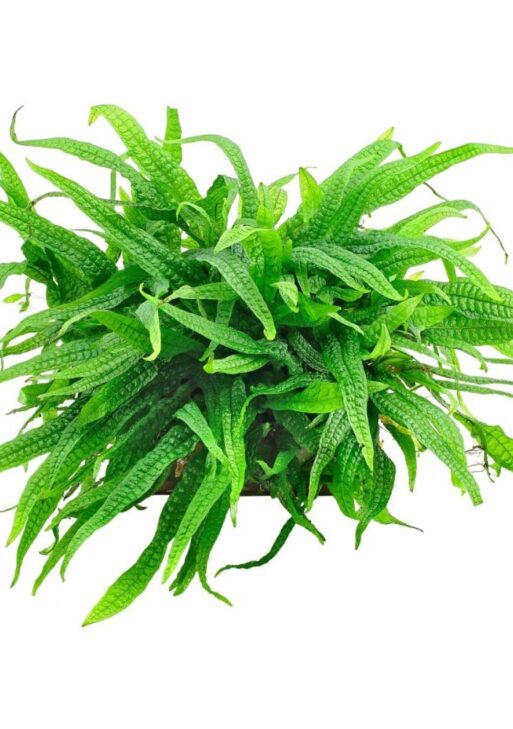
| Wrinkled Leaf Java fern | Deeply crinkled, textured | 15–25 cm | Texture contrast next to Anubias | ₹175 |
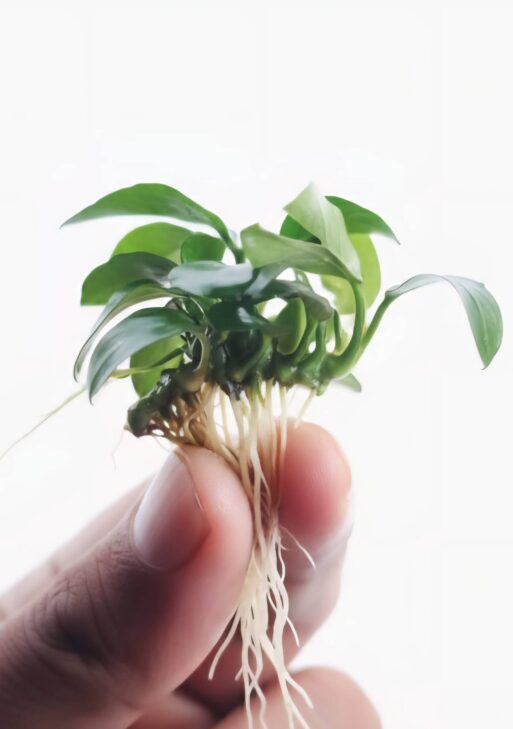
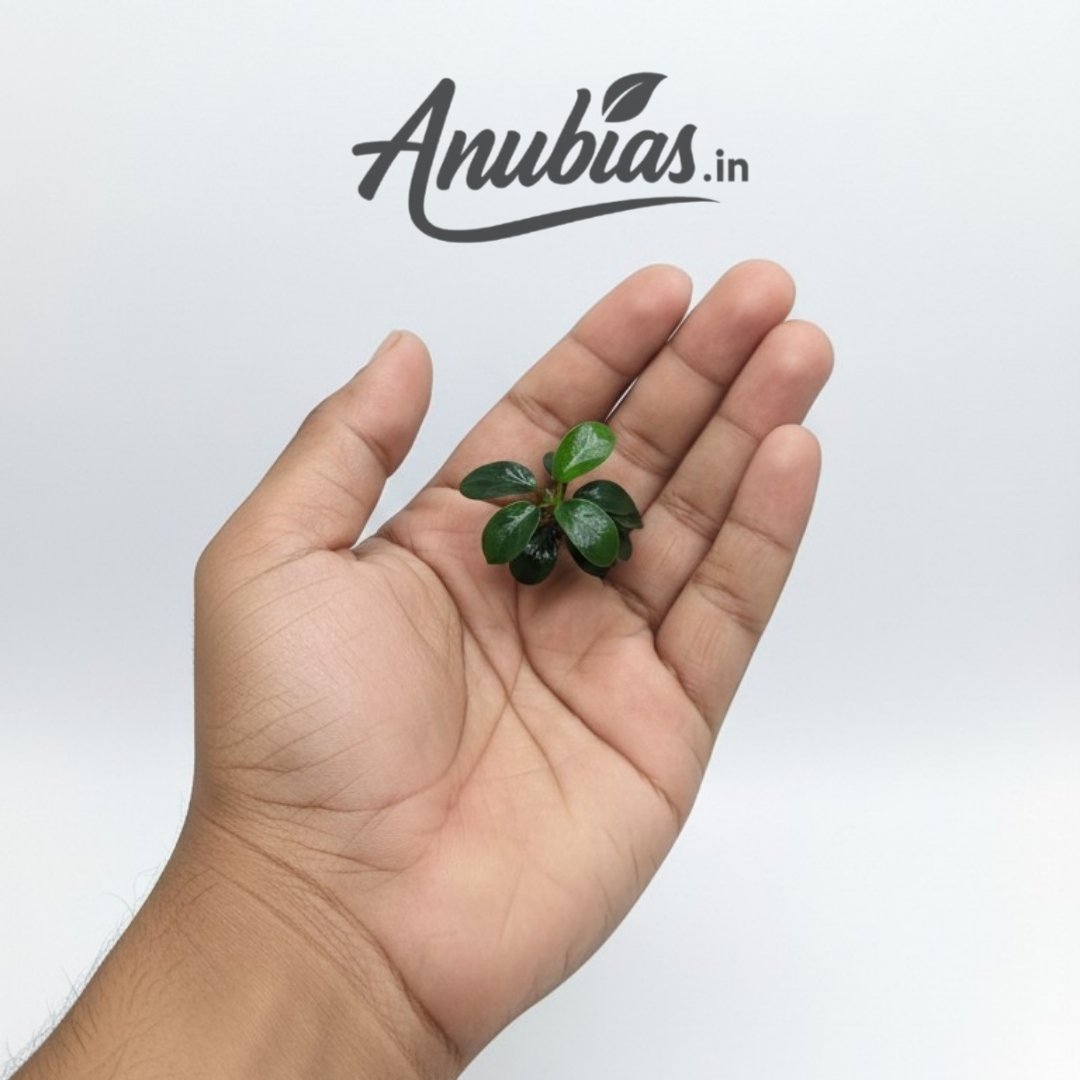
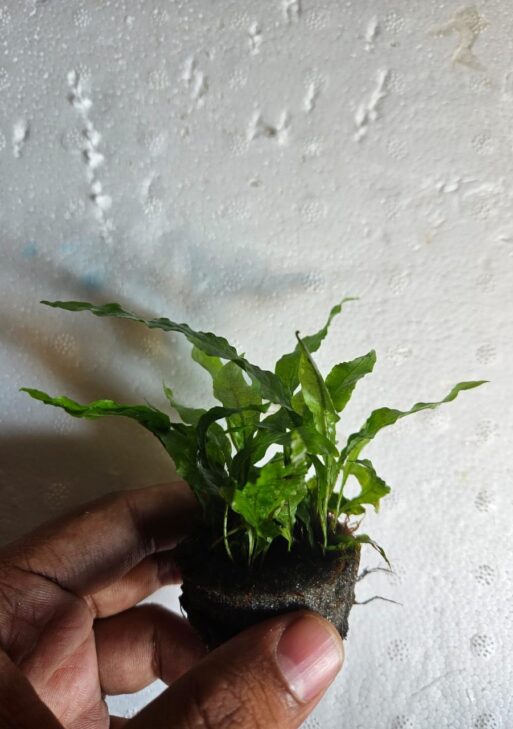
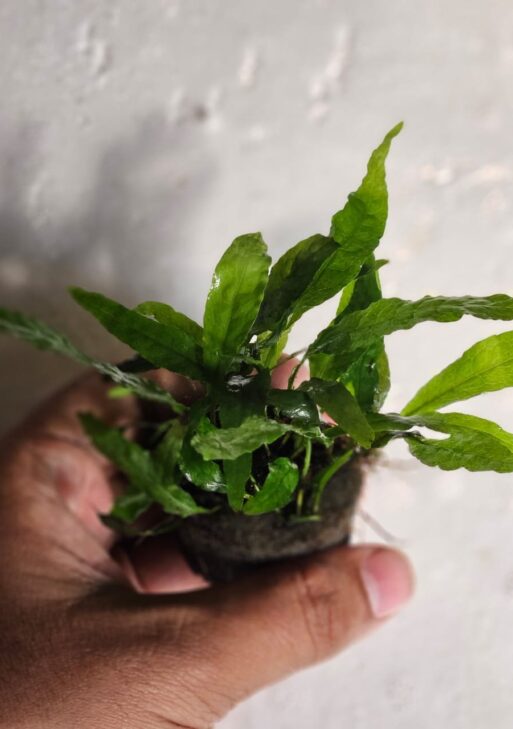
| Dwarf / Mini (Green Gnome) | Small, bushy | 5–10 cm | Nano tanks, foreground hardscape | ₹175 |
| Narrow Leaf | Long and thin | 20–30 cm | Soft background, flowing look | Not currently stocked |
| Needle Leaf | Very thin, needle-like | 10–20 cm | Fine texture in nano scapes | Not currently stocked |
| Trident | Forked into 2–5 lobes | 10–20 cm | Midground detail | Not currently stocked |
| Windelov | Lacy, branched leaf tips | 15–25 cm | Feathery focal point | Not currently stocked |
Which Java fern should you choose?
- For a first planted tank: classic Java fern is the hardiest and fills space fastest.
- For a nano tank under 40 litres: Dwarf or Mini Java fern keeps scale right.
- For a bold centrepiece on driftwood: Philippine, with its broad veined leaves.
- For texture contrast: Wrinkled Leaf alongside smooth Anubias and fine moss.
- For hiding heaters and filters: classic or Philippine tied to wood at the back.
Care is the same for every type
All Java fern varieties are the same species and share one care routine. Attach the rhizome to wood or rock with thread or gel superglue, keep it out of the substrate, give low to medium light for 6–8 hours a day, and keep water at 22–28 °C. CO2 is not needed. A weekly liquid fertiliser prevents the brown, see-through patches that appear when nutrients run low. Full details are in our Java fern care guide.
Do Java fern types change shape?
Yes, a little. Leaf shape can vary with light, nutrients and whether the plant was grown emersed at the nursery. Dwarf types can grow somewhat larger in rich conditions, and new submerged leaves on recently planted ferns often look different from the leaves they arrived with. The overall character of each type stays the same.
How Java fern reproduces
Java fern grows small plantlets directly on older leaves, usually along the edges or tips. Once a plantlet has a few roots and two or three leaves, pull it off and tie it to a new spot. You can also split a long rhizome into sections, each with several leaves. Black or brown dots in rows under the leaves are usually spore clusters, a normal sign of a mature plant.
More Java fern guides:
Plants in this guide
Frequently asked questions
Which Java fern is best for beginners?
Classic Java fern. It is the toughest, grows the most readily and is very forgiving of Indian tap water and warm temperatures.
Which Java fern stays the smallest?
Dwarf or Mini types such as Green Gnome, which usually stay under about 10 cm, followed by Needle Leaf.
Can different Java fern types be grown together?
Yes. Mixing broad, wrinkled and dwarf types on one piece of driftwood creates a natural, layered look with identical care.