
Java fern is one of the first plants most Indian hobbyists buy, and one of the most asked about. Here are quick answers to the most common Java fern questions, with links to our detailed guides.
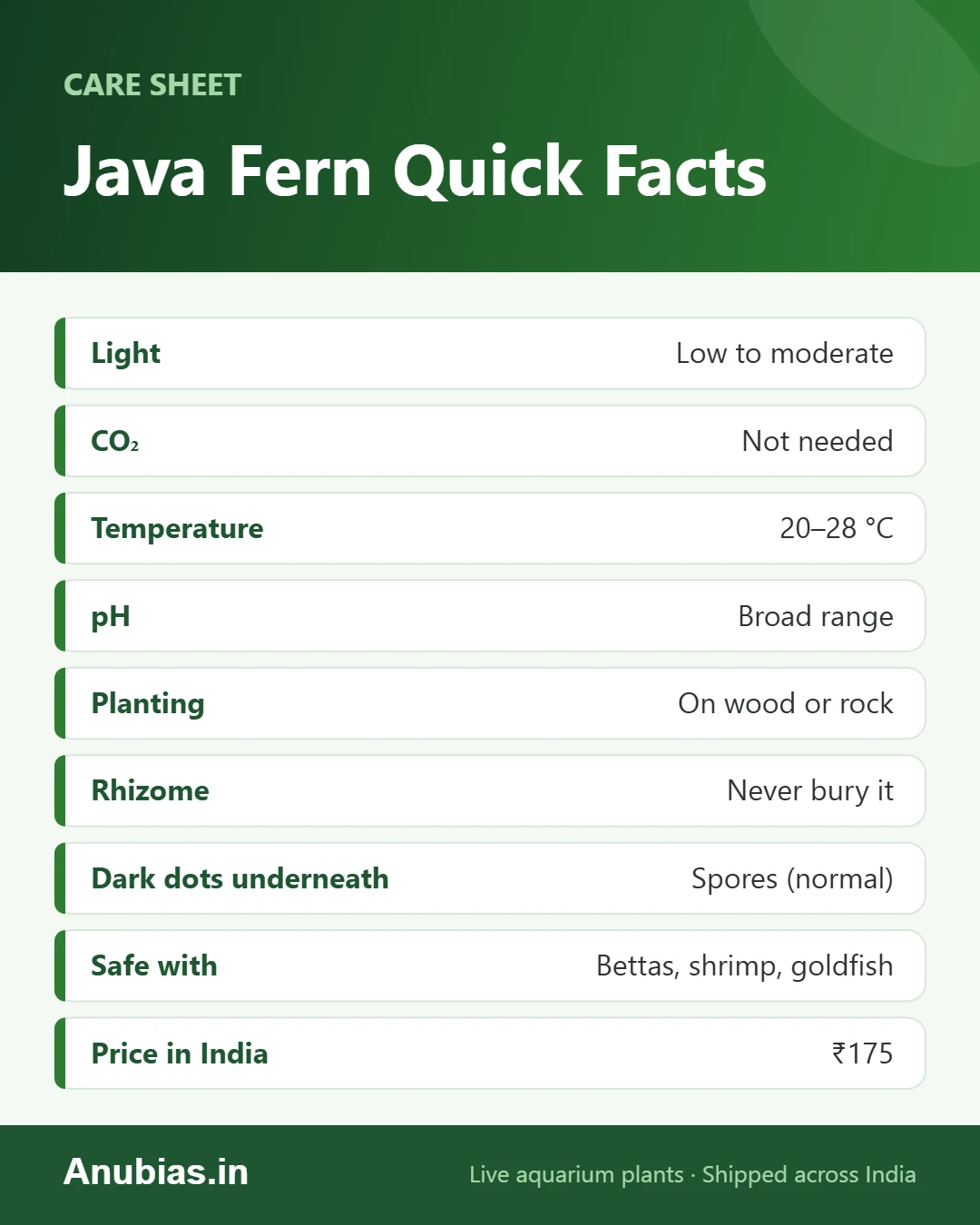
Quick answer: Java fern is a hardy epiphyte that needs low to moderate light, no CO2 and water at about 20–28 °C. Attach it to wood or rock and never bury the rhizome. Dark dots under leaves are usually spores, brown see-through patches mean it needs fertiliser, and it is safe for bettas, shrimp and goldfish. Varieties cost ₹175 on Anubias.in.
More Java fern guides:
Choosing the right spot in your tank
Where you put Java fern matters more than almost anything else you do for it, and the plant gives clear clues about whether the spot is working.
Mid-ground and background positions suit it best, because mature leaves reach a decent size and will swamp a foreground. On driftwood at roughly a third of the tank height, the fronds arch outwards and fill space without blocking the view.
It also does well tucked beside or behind hardscape where light is filtered. Java fern in a shaded pocket grows slower but keeps cleaner leaves, whereas the same plant directly under a bright LED often develops algae along the leaf edges.
Flow is the other consideration. Leaves should move gently in the current, which keeps debris from settling on them. A spot in complete dead water collects detritus on the fronds and encourages brown patches.
Avoid the very front corners, where the plant will need trimming constantly to keep the glass clear, and avoid burying any part of the rhizome in substrate.
A year of Java fern maintenance
- Months 1 to 2: leave it completely alone after attaching. Some leaf damage from shipping or transplanting is normal and should not be trimmed unless the leaf is fully brown.
- Months 3 to 6: new leaves appear and the plant thickens. Remove any leaf that is more than half browned, cutting at the rhizome rather than mid-leaf.
- Month 6 onwards: plantlets form on older leaves. Leave them until they have two or three leaves and visible roots, then detach and tie them elsewhere.
- Through the Indian summer: expect growth to pause in sustained 30°C water. Keep the surface agitated and do not increase light to compensate.
- Once a year: lift the wood, check the rhizome is still firm along its length, and thin out crowded sections so water moves through the clump.
Plants in this guide
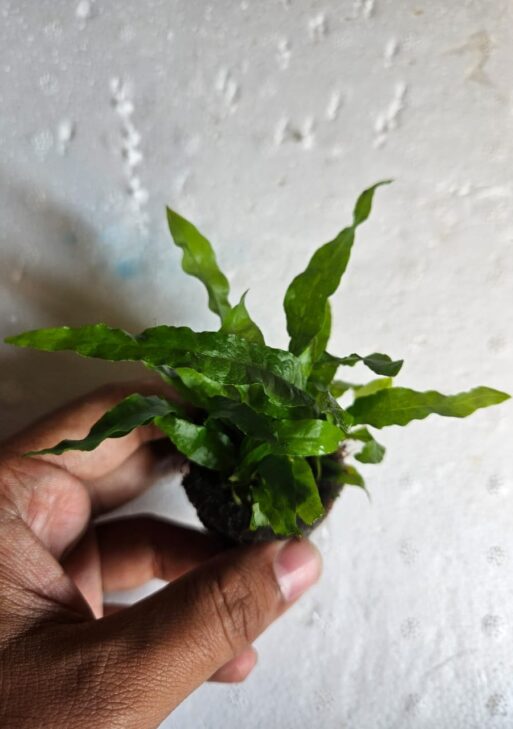
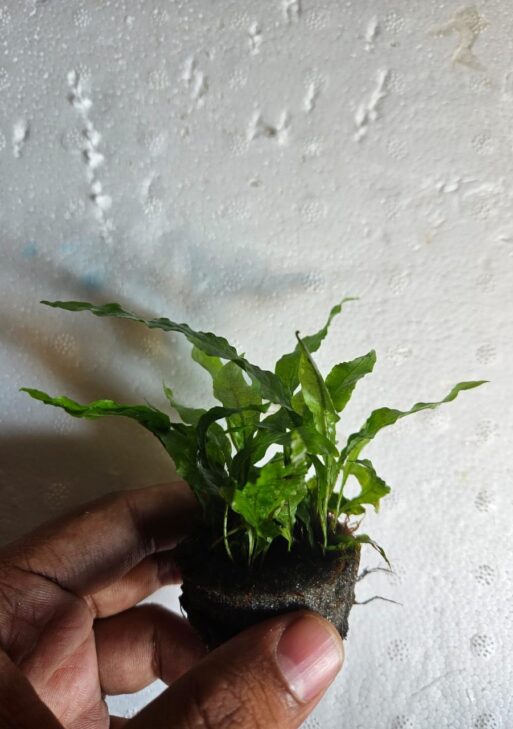
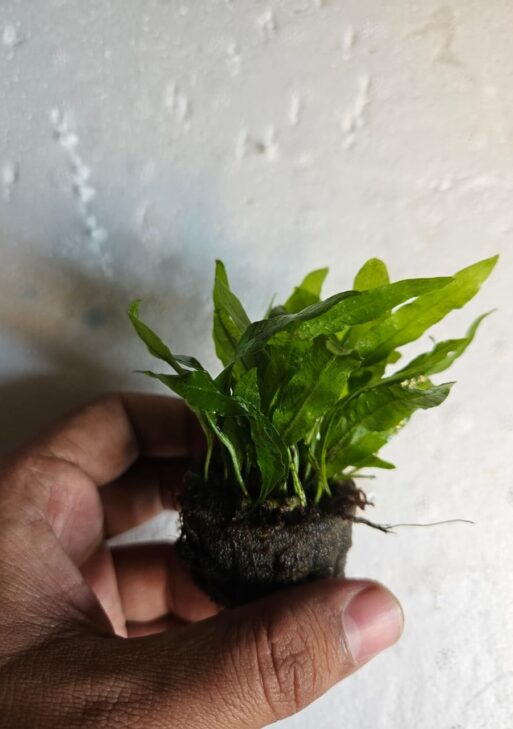
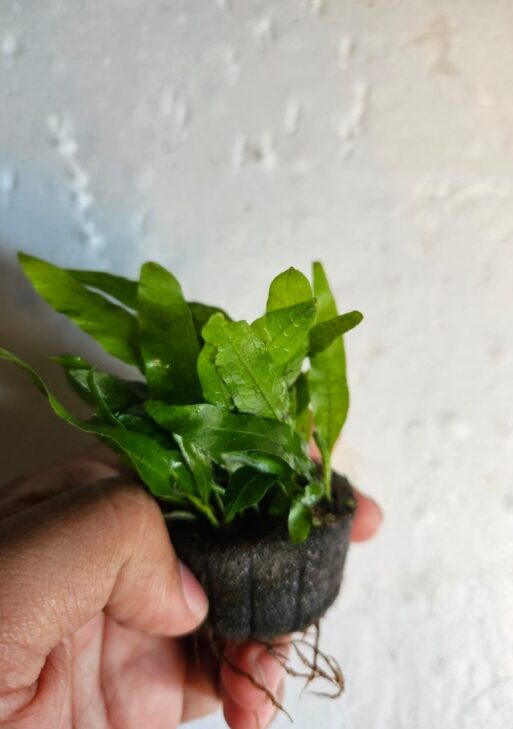
Frequently asked questions
Does Java fern need CO2?
No. Java fern grows well without CO2 in low to moderate light.
How much light does Java fern need?
Low to moderate light. Very strong light can cause brown, burnt patches and algae.
What temperature does Java fern like?
About 20–28 °C, and it tolerates a broad pH range, so most dechlorinated Indian tap water is fine. Java fern care guide
Can I plant Java fern in gravel?
Do not bury the rhizome. Attach Java fern to wood or rock; its roots can reach the substrate but the rhizome must stay exposed.
How do I attach Java fern to driftwood?
Tie the rhizome with cotton thread or fishing line, or use aquarium-safe gel superglue. The roots grip within a few weeks.
Why does my Java fern have black spots under the leaves?
Neat rows of dark dots are usually spores (sori), a normal sign of a mature plant. Java fern problems
Why is my Java fern turning brown?
Spreading brown, see-through patches usually mean nutrient shortage; add a weekly complete liquid fertiliser.
How does Java fern reproduce?
It grows baby plantlets on its leaves and can also be divided by cutting the rhizome.
Is Java fern safe for bettas, shrimp and goldfish?
Yes. Its tough leaves are rarely eaten, making it great for betta, shrimp and even goldfish tanks. Fish-proof plants
How fast does Java fern grow?
Slowly to moderately, faster than Anubias but slower than stem plants.
Which Java fern types are there?
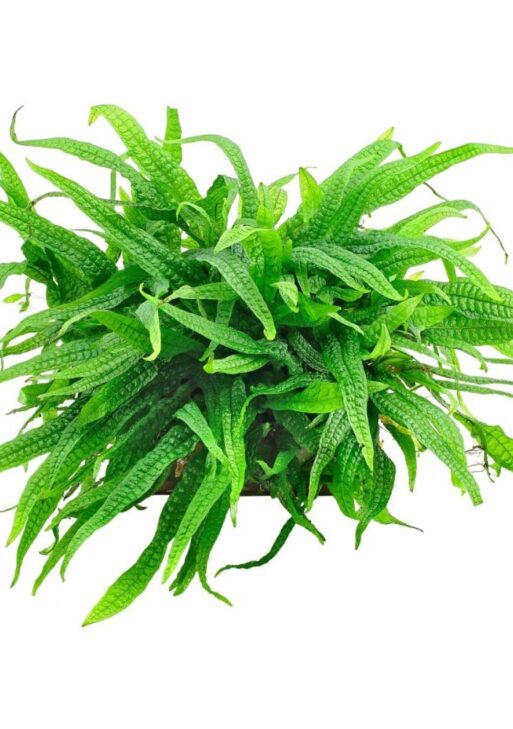
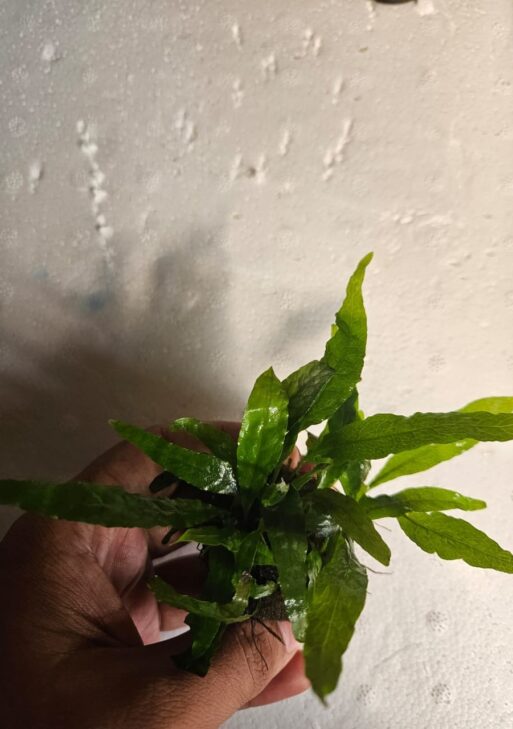
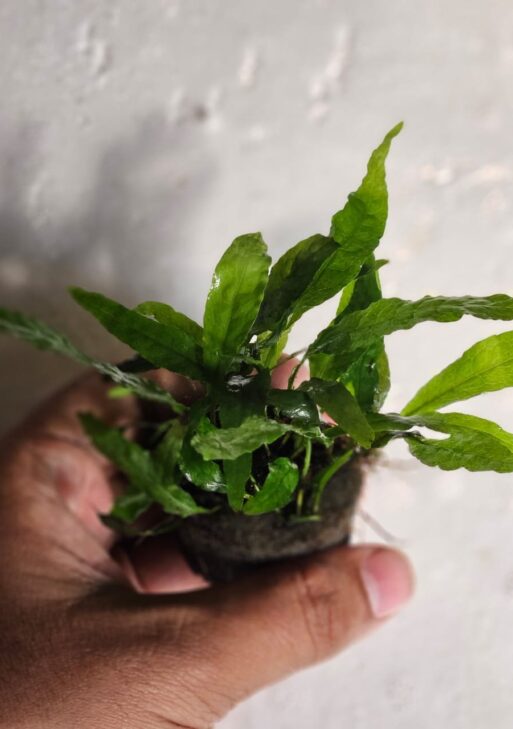
Common types include classic, Philippine, Wrinkled Leaf, Dwarf/Mini, Narrow Leaf, Needle Leaf, Trident and Windelov. Java fern types compared
Java fern or Anubias?
Both are beginner-proof. Java fern gives taller background cover; Anubias suits the front and middle. Java fern vs Anubias
How much does Java fern cost in India?
Java fern varieties cost ₹175 each on Anubias.in.
Can Java fern grow in an outdoor pond or tub?
It can in a shaded tub, but direct Indian sun is too intense and will scorch and algae-coat the leaves within weeks. Keep the tub under a roof overhang or dense shade, and remember water in a small outdoor container heats up far faster than an indoor tank. It is a workable option for monsoon and winter months more than for peak summer.
Why did my Java fern melt after I shifted house?
Because it experienced a sudden change in water parameters, temperature and light all at once, which is the classic trigger for melt. The rhizome almost always survives, so keep it attached, remove the mushy leaves, and wait. New leaves typically appear within four to eight weeks once conditions stabilise.
How many Java ferns do I need for a two-foot tank?
Two or three healthy plants will fill a two-foot background within a year, since each spreads and produces plantlets. Buying more gives an instant look but costs more and often ends in you removing plants later. If you are patient, start with two and propagate from them.