

Quick answer: The Walstad method is a planted tank built on 2-3 cm of plain garden soil, capped with 3-4 cm of fine sand, planted heavily on day one and run with moderate light and no CO2. In India it works well if you buy unenriched mineral soil, avoid manure and NPK mixes, keep a sponge filter running through summer heat, and accept a messy first six weeks.
What the Walstad method actually is
A Walstad tank is a planted aquarium built on a thin layer of ordinary soil, capped with sand, planted heavily from the first day and run with moderate light and no injected CO2. The soil feeds plants through their roots and releases a slow trickle of carbon dioxide as it breaks down; the plants in turn take up ammonia from fish waste and decaying leaves before it ever becomes a problem. Diana Walstad wrote the book that popularised the approach, and the biology behind it is genuinely sound.
What it is not is a self-cleaning magic box. A dirted tank still needs water changes when the test kit says so, still needs light discipline, and still fails if you underplant it. Treat it as a low-input method with a muddy first month rather than a shortcut.
Choosing soil in India: what to buy, what to avoid
You want plain topsoil: mineral soil, mostly clay and silt, with only a modest amount of organic matter. In most Indian cities this is sold loose by nurseries as garden soil or red soil, and in 2-5 kg packets online as plain potting soil. A standard 2-feet tank needs surprisingly little, roughly 3-4 kg.
Avoid anything enriched. Manure-based mixes, vermicompost, soils with added NPK granules and blends sold for flowering plants will release ammonia and phosphate into a small body of water for weeks on end. Perlite- and cocopeat-heavy mixes are the other trap: perlite works up through the cap forever, and cocopeat blends are too light to stay under the sand.
A quick field test before you buy. Squeeze a damp handful; good aquarium soil holds together as a clod and smells of clean earth. If it is springy and pale, studded with white beads, or smells sour, leave it in the garden. Whatever you buy, sieve out the twigs, bark and stones, which are the main cause of gas pockets later.
Mineralising and capping: the layered build
Mineralising means soaking the soil until it stinks, drying it completely in the sun, and repeating that cycle three or four times over a week or two. It burns off the easily broken-down organic matter, so the finished tank produces less ammonia and fewer gas pockets. In most of India the sun does this for free in a day or two per cycle. Plenty of people skip the step and still succeed, but skipping it buys a rougher first month; if you are impatient, do at least one soak-and-dry cycle.
The build itself is simple. Lay 2-3 cm of damp soil flat across the base, with no slopes and never deeper than 3 cm, because deeper layers go anaerobic and sour. Cap it with 3-4 cm of sand in the 1-2 mm range; ordinary river sand or filter sand from a building supplier is ideal after a thorough rinse.
Grade matters more than colour. Very fine play sand compacts into an airtight lid and traps gas, while coarse 4-5 mm gravel lets soil chimney up every time you plant something. Fill the tank slowly onto an upturned plate, and expect the first fill to look like tea regardless.
Planting day one: how heavy is heavy enough
Heavy means you should struggle to see much substrate when you step back. Aim to cover roughly two-thirds of the floor area at planting, with fast growers making up at least half of what goes in. A sparsely planted dirted tank is simply an algae farm with extra steps.
Fast stems do the real work in weeks one to four, soaking up ammonia as quickly as the soil releases it. Water Wisteria at around Rs 120, Rotala Rotundifolia at Rs 120, Ludwigia Repens at Rs 140, Bacopa Caroliniana at Rs 120 and Egeria Densa at Rs 60 are all cheap, forgiving and quick.
Root feeders are the whole point of dirt, so give them room. Amazon Sword at Rs 180, Cryptocoryne wendtii Green at Rs 150 or the Red form at Rs 170, Dwarf Sagittaria at Rs 140, Vallisneria Nana at Rs 80 and a Red Tiger Lotus at Rs 250 will all put down serious root systems and pull nutrients straight from the soil layer.
Floaters are non-negotiable in the first two months. Amazon Frogbit at Rs 90, Water Lettuce at Rs 90, Brazilian Pennywort at Rs 80 or Duckweed at Rs 60 shade the tank while it settles and export ammonia fast; thin them once things stabilise.
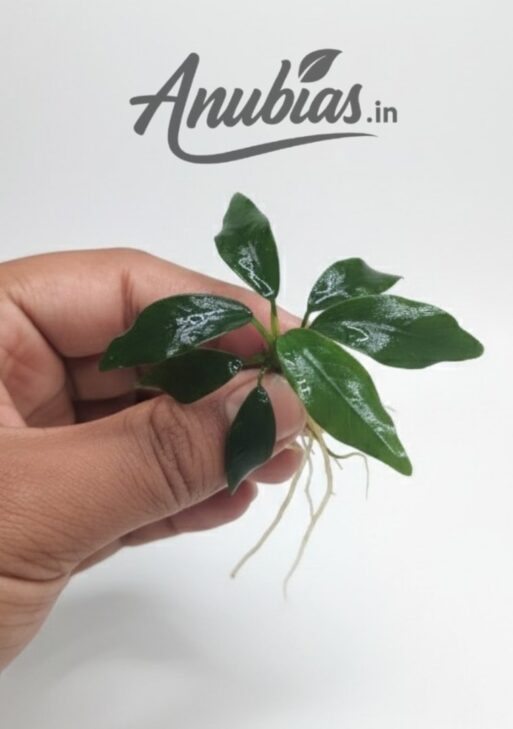
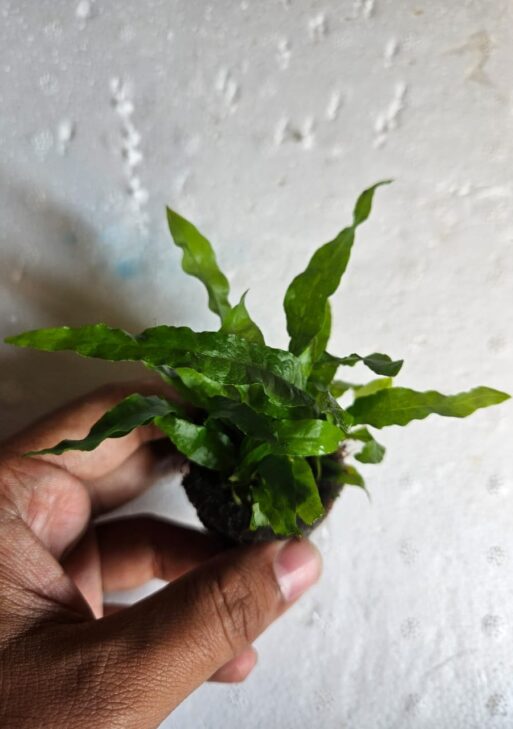
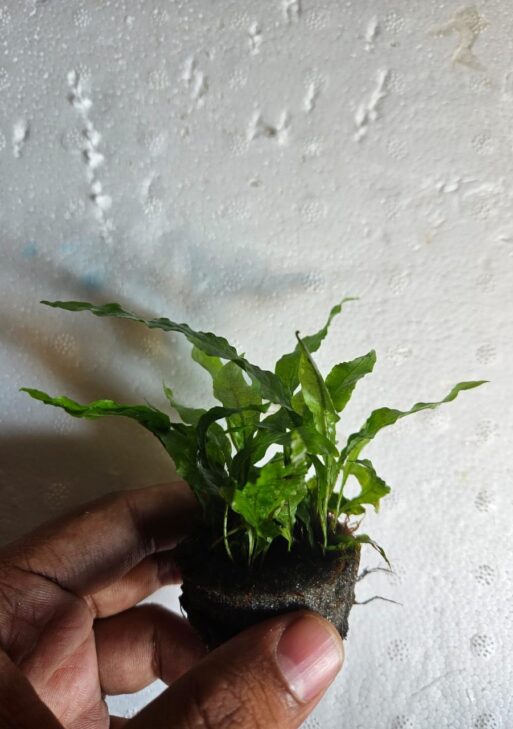
For hardscape, use rhizome plants. Anubias Nana at Rs 90, Java Fern at Rs 175 and Java Moss at Rs 120 tie onto wood and stone and ask for almost nothing. Rhizome plants are never buried in substrate; the thick horizontal stem must stay in open water or it rots.
The first six weeks: spikes, cloud and film
Expect an ammonia spike between roughly day three and day fourteen as the soil settles and bacteria colonise. Test with a liquid reagent kit, change 30-50 per cent of the water whenever ammonia or nitrite is clearly readable, and add no fish until both sit at zero. A heavily planted dirted tank often cycles faster than a bare one, but it is not instant.
Cloudy white water in the first fortnight is a bacterial bloom, not dirt, and clears on its own. Brown dust on glass and leaves in weeks two to four is diatoms, which also pass. An oily surface film around weeks two to five is normal; skim it with kitchen paper laid flat on the water, or aim the filter outlet to break the surface.
Keep the photoperiod to 6-8 hours from the start and resist the urge to run bright light over fresh soil. The nutrients are already there in excess; more light only decides whether plants or algae use them first.
Filter or no filter? The honest Indian answer
Run a filter. The no-filter version of this method assumes a stable, cool, lightly stocked tank, and Indian conditions are none of those for a good part of the year.
Two reasons specifically. Summer tank temperatures of 28-32 degrees are normal across much of the country, and warm water holds less oxygen, so a filterless tank with a soft mulm layer can crash overnight. Power cuts are the second: a still tank in a 31-degree room stratifies quickly, and a filter restores surface movement the moment power returns.
A simple sponge filter on a small air pump suits most dirted tanks. It adds gas exchange without blasting the sand and carries bacteria you can move to a new tank later. A small hang-on filter works too, provided you baffle the outflow so it does not excavate the cap.
Long term: gas pockets, replanting and failure modes
Gas pockets are normal. Small silver bubbles under the sand are usually harmless, but if a disturbed patch smells of rotten eggs you have an anaerobic zone. Poke the substrate gently with a chopstick during water changes, a few spots at a time, and the problem stays small.
Replanting is where most dirted tanks go wrong. Uprooting a large sword or crypt tears through the cap and clouds the tank for a day, so plan the layout once and leave heavy root feeders alone. Trim stems above the substrate rather than pulling and replanting them.
Real failures usually trace to four causes: a soil layer deeper than 3 cm, enriched or manure-based soil, too few plants at setup, or too many fish added too early. Any of those produces the classic sequence of persistent ammonia, hair algae and a sulphurous smell, and the only honest fix is to strip and rebuild.
The soil itself is largely spent after two to three years. Long before that, top up with root tabs pushed under heavy feeders and a light water-column dose during growth spurts; a Green Plus and Trace fertiliser pack at around Rs 250 lasts a small tank a long time.
What a dirted tank actually costs
This is where the method earns its reputation. Substrate for a 2-feet tank built on aqua soil generally runs around Rs 1,200-2,500, and aqua soil breaks down and needs replacing every one to three years. The dirted equivalent is soil plus sand, both cheap almost everywhere in India.
| Item | Dirted build | Aqua soil build |
|---|---|---|
| Substrate, 2-feet tank | Rs 250-700 | Rs 1,200-2,500 |
| CO2 system | None | Optional, Rs 6,000-15,000 |
| Replacement cycle | 2-3 years, top up with tabs | 1-3 years, full replacement |
Prices for soil and sand vary a good deal by city, so treat those as broad ranges rather than quotes. Roughly, 4 kg of plain garden soil and 8-10 kg of river sand comes in well under a thousand rupees in most places, and often under five hundred if you buy sand loose from a building supplier rather than in aquarium packaging.
The saving is real, but spend it in the right place. A dirted tank lives or dies on how much plant mass goes in on day one, so put what you saved on substrate into stems and floaters.
Plants in this guide
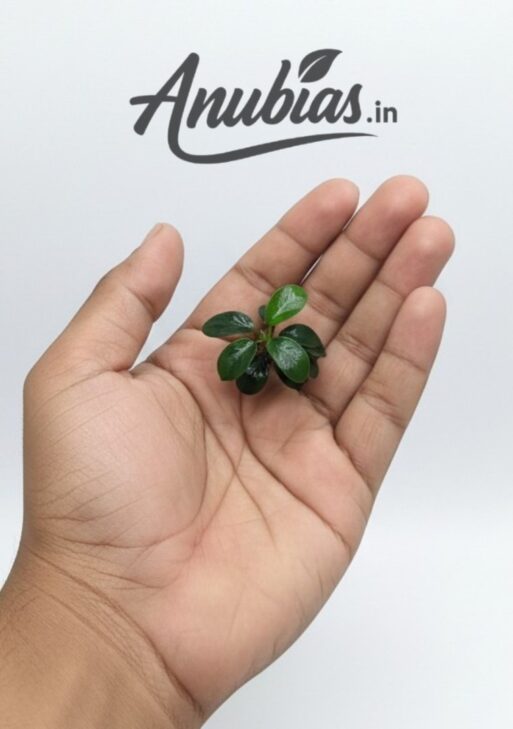
Grown in Surat · graded by leaf count and photographed before dispatch · live-arrival guarantee on every order · ₹99 shipping, free from ₹2,000


Frequently asked questions
Can I use ordinary garden soil from my backyard for a Walstad tank?
Yes, provided it is plain mineral soil and has not been treated with fertiliser, manure or pesticide. Sieve out stones, roots and bark, then soak and sun-dry it a few times before use. If your garden is regularly fed with compost or chemical fertiliser, buy plain topsoil from a nursery instead.
Is potting soil safe for an aquarium?
Only the plainest kind. Most Indian potting mixes are enriched with vermicompost, manure or NPK granules and contain a lot of cocopeat and perlite, all of which cause long ammonia spikes and floating debris. Read the ingredients and choose a plain topsoil or garden soil with no added feed.
How deep should the soil and sand cap be?
Keep soil to 2-3 cm and never more than 3 cm, because deeper layers turn anaerobic and sour. Cap it with 3-4 cm of 1-2 mm sand, which is heavy enough to hold the soil down and coarse enough to allow some gas exchange. Very fine play sand compacts and traps gas.
Do I really need a filter in a dirted tank in India?
In practice, yes. Summer tank temperatures of 28-32 degrees are normal in much of India and warm water holds less oxygen, so a still tank has little margin for error. A cheap sponge filter on an air pump gives you surface movement and biological capacity without disturbing the sand cap.
Which plants should I start a dirted tank with?
Use a mix of fast stems, root feeders and floaters. Water Wisteria, Rotala Rotundifolia and Ludwigia Repens grow quickly and soak up ammonia, while Amazon Sword, Cryptocoryne wendtii and Dwarf Sagittaria exploit the soil layer. Add Amazon Frogbit or Water Lettuce for shade, and tie Anubias or Java Fern to hardscape without burying the rhizome.
Plants for a dirted tank
A dirted tank needs heavy planting on day one: root feeders, fast stems and floaters. Browse the shop or work out quantities with how many plants you need.