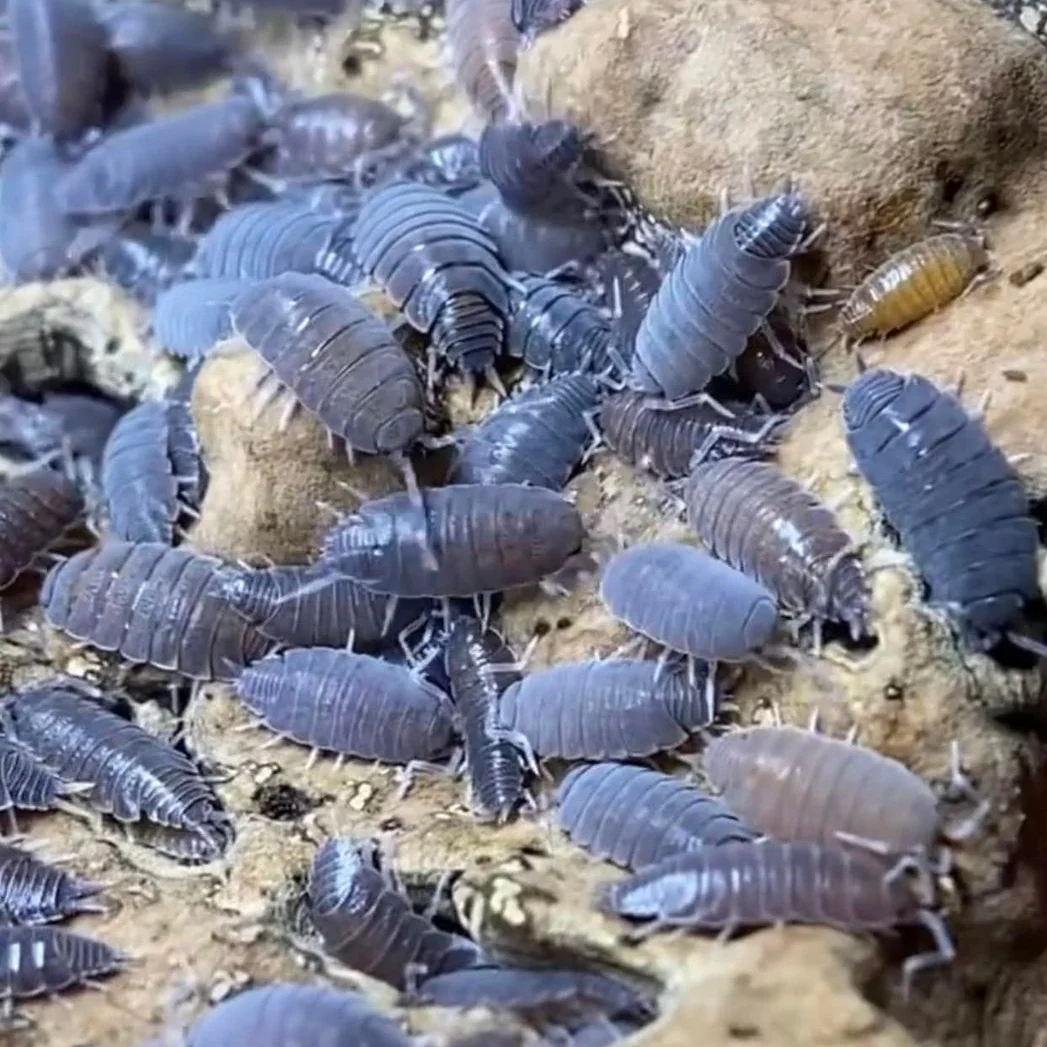


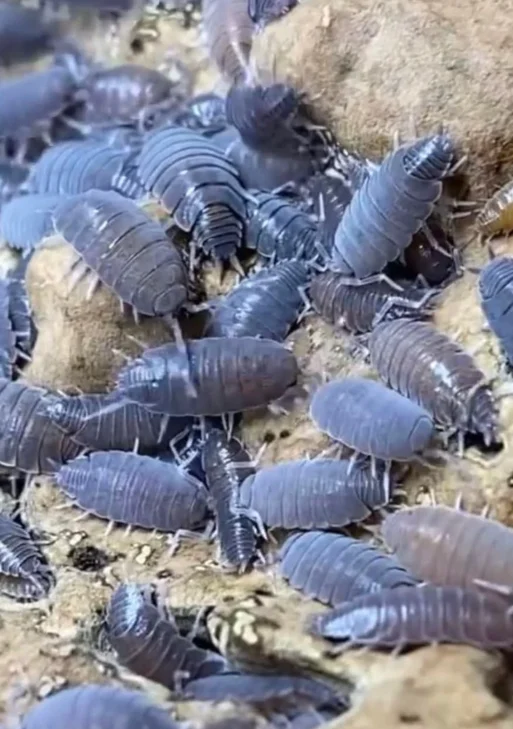
Cubaris sp. ‘Rubber Ducky’ is one of the most famous isopods in the world, named for its yellow-orange face that looks like a tiny rubber duck. It is now available in India for bioactive terrariums and collectors. Because colonies grow slowly and the price is high, getting the setup right from day one matters.
Quick answer: Rubber Ducky isopods (Cubaris sp.) are terrestrial isopods, not aquarium animals. Keep them in a ventilated tub or terrarium with 70–90% humidity, 22–28 °C, a moist and a drier zone, leaf litter, rotting hardwood, sphagnum moss and a calcium source such as cuttlebone. They breed slowly with small broods, which is why they cost around ₹1,200 in India.
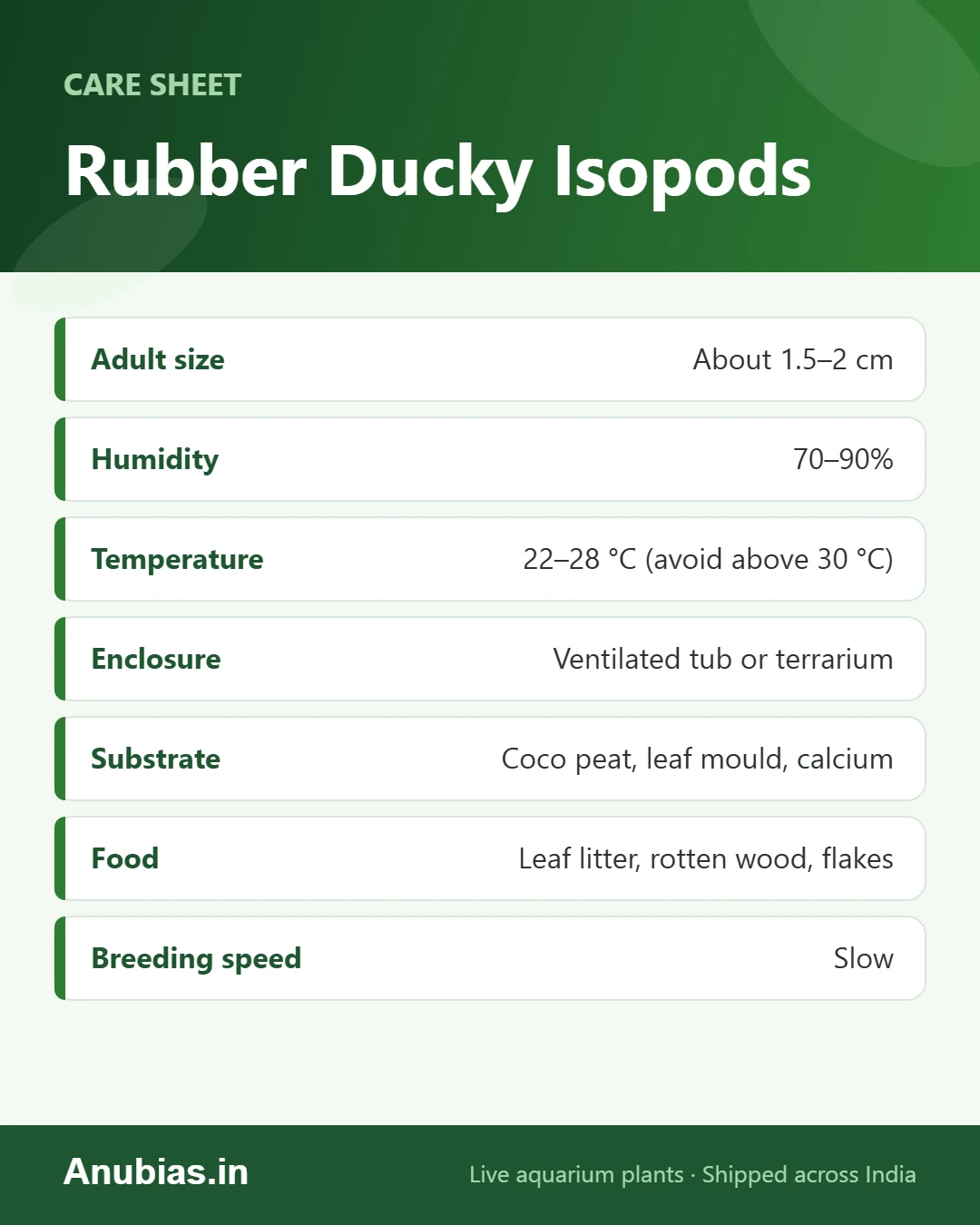
Rubber Ducky isopod care sheet
| Parameter | Recommendation |
|---|---|
| Scientific name | Cubaris sp. “Rubber Ducky” |
| Origin | Thailand |
| Adult size | About 1.5–2 cm |
| Humidity | 70–90% |
| Temperature | 22–28 °C (avoid above 30 °C) |
| Enclosure | Ventilated plastic tub or small terrarium |
| Substrate | Coco peat, leaf mould and crushed limestone or cuttlebone |
| Food | Leaf litter, rotten wood, fish flakes, vegetables |
| Breeding speed | Slow |
| Price in India | From ₹1,200 on Anubias.in |
Why are Rubber Ducky isopods so expensive?
They reproduce slowly. Females produce only a few young at a time, and juveniles take months to mature. Combined with high demand and limited captive-bred stock, that keeps prices far above common isopods such as the bioactive clean-up crew isopods.
Enclosure setup step by step
- Use a small plastic tub with fine ventilation holes on the sides and lid.
- Add 4–6 cm of substrate made from coco peat, leaf mould and crushed calcium.
- Keep one side moist and the other slightly drier so isopods can choose.
- Add plenty of dry leaves (oak, almond or other untreated hardwood), cork or rotting wood and a patch of moss.
- Place cuttlebone for calcium, needed for moulting.
- Mist the moist side every few days and never let the whole tub dry out.
Indian climate tips
- Summer heat: keep the tub in the coolest room, away from windows; above 30 °C colonies can crash.
- Monsoon: humidity is easy, but watch for mould; increase ventilation and remove uneaten food.
- Dry winters: mist more often and add extra moss.
Feeding
Leaf litter and decaying wood are the main diet. Offer small amounts of protein (fish flakes, shrimp pellets) and vegetables (carrot, zucchini) once or twice a week, and remove leftovers after a day to prevent mould and mites.
Choosing how many to start with
Group size makes a real difference with a slow-breeding species, and it is the main decision to get right before buying.
A pair or trio is the cheapest entry point but a slow and risky one. Isopods cannot be reliably sexed by eye, so a small group may turn out to be all one sex, and a single loss is a large proportion of the colony.
Five to ten individuals is the usual recommendation. The odds of having both sexes are good, and the colony can absorb a loss during acclimation without stalling.
Ten or more gives the fastest path to a self-sustaining culture, at the highest upfront cost.
Whatever the number, add them all at once rather than mixing batches from different sources weeks apart. Introducing new animals into an established enclosure risks bringing in mites and disturbs a colony that has just started breeding.
When the colony seems to have stopped
Rubber Duckies hide constantly, so an empty-looking enclosure is normal. Work through these before assuming the worst.
- Check the moisture gradient. A tub that has dried out evenly gives them nowhere comfortable to sit. Re-wet one end, leave the other dry.
- Check the temperature. Sustained heat above 28°C during an Indian summer pushes them deep into the substrate and halts breeding. Move the enclosure to the coolest room in the house.
- Look under the leaf litter, not on top of it. Lift a piece of bark gently rather than digging through the substrate, which crushes juveniles.
- Check the food. Uneaten protein going mouldy will make them avoid that area entirely. Remove it and offer smaller portions.
- Check calcium. Without a cuttlebone or similar source, moulting fails and the colony quietly declines.
- Then wait. This species breeds slowly by nature, and several months with no visible increase is normal rather than a fault.
Plants in this guide
Grown in Surat · graded by leaf count and photographed before dispatch · live-arrival guarantee on every order · ₹99 shipping, free from ₹2,000
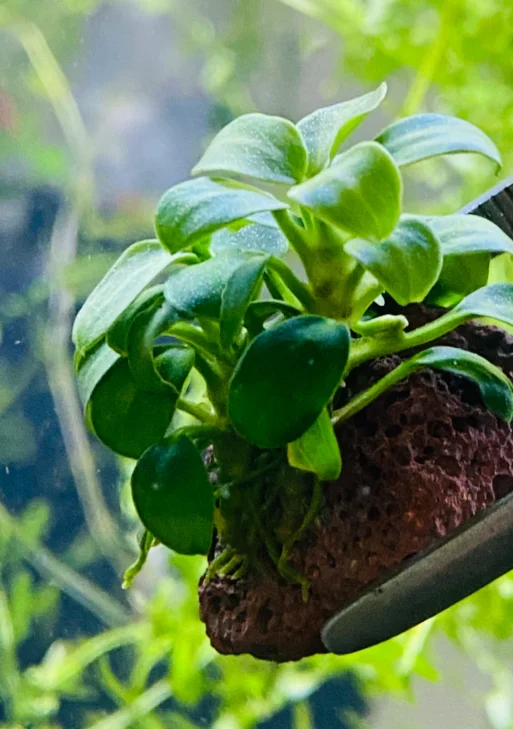
₹ 700 ₹ 1,000

Frequently asked questions
Can Rubber Ducky isopods live in an aquarium?
No. They are land animals and will drown. They can live on the land section of a humid paludarium.
How long before a colony grows?
Expect several months before you see a steady number of juveniles. Avoid disturbing the enclosure often.
Are Rubber Ducky isopods good clean-up crews?
They help, but because they are expensive and slow-breeding, most keepers use them as display animals and rely on hardier species for cleaning bioactive tanks.
Buy Cubaris Rubber Ducky Isopods or see all isopods, and read our isopod clean-up crew guide.
Comparing isopod costs? See isopods price in India.
Can Rubber Ducky isopods escape their enclosure?
They can climb smooth plastic surprisingly well, especially in very humid conditions, so a secure fitting lid is essential. Ventilation holes should be small enough that juveniles cannot pass through, since the young are tiny. A layer of petroleum jelly around the upper rim is a common extra precaution.
Do Rubber Ducky isopods need light?
They need no special lighting and actively avoid it, spending most of their time under bark and leaf litter. Ambient room light on a normal day and night cycle is enough. Keep the enclosure out of direct sunlight, which will overheat a small container very quickly in Indian conditions.
Can I keep Rubber Ducky isopods with other isopod species?
It is best not to. Faster-breeding species such as Powder Orange or Dairy Cow will outcompete them for food and space, and a slow breeder loses that contest badly. Mixed cultures also make it impossible to track whether your Rubber Duckies are actually reproducing.