
Quick answer: Liquid carbon is a dilute glutaraldehyde solution, not a real CO2 substitute. It is generally safe for Anubias, Bucephalandra, Java fern and crypts at the dose printed on the bottle, but it melts Vallisneria, Elodea and some mosses, and overdosing kills shrimp and snails. Follow your bottle’s dose per litre, start at half, and treat it as algae control rather than plant food.
What liquid carbon actually is
Nearly every bottle sold as liquid carbon is a dilute glutaraldehyde solution. In India it appears under several brand names, typically ₹350 to ₹700 a bottle, lasting roughly a month on a medium tank. Glutaraldehyde is a biocide, used outside the hobby as a disinfectant, and inside a tank its most reliable effect is killing algae and thinning biofilm.
The carbon claim is weaker than the marketing. There is a plausible route by which the molecule breaks down into something a plant can use, but the quantity delivered at a safe dose is nowhere near what injected CO2 provides. A working CO2 system holds dissolved carbon steady all day at a level a daily capful cannot approach.
Treat it as an algae control product with a small side benefit. Anyone telling you it will grow a dwarf hairgrass carpet in place of CO2 is selling you something. If you want real carbon for a demanding tank, DIY or pressurised CO2 is the honest answer.
Dosing per litre, and where overdose begins
Follow the dose per litre printed on your own bottle, and start at half of it. Concentrations differ between brands, so a millilitre figure copied from a forum thread about some other product is genuinely unsafe advice. Read your label, halve it for the first fortnight, and only move to the stated dose if nothing in the tank looks unhappy.
There is no single overdose number, but the practical picture is consistent. Damage tends to appear somewhere above roughly double the stated daily dose, and it appears sooner in a small tank, a warm tank, or one that runs low on oxygen overnight. Indian summers do both at once, so margins here are thinner than in the European forums most dosing folklore comes from.
A few habits keep you out of trouble. Dose once a day at the same time, shortly after lights on, with the filter running so it disperses instead of pooling. Never double up to make good a missed day. Never dose a tank with the filter switched off, and never dose a tank where fish are already gasping at the surface.
One more line that matters: this is a plant and algae product. It is not a fish medication, and it should never be used to treat a sick fish.
The plants that melt
Some species are reliably sensitive, and they show it within days of a first full dose.
- Vallisneria is the classic casualty. Leaves go translucent, then brown from the tip, and a big Val stand can strip itself inside a week.
- Elodea and Egeria react the same way, softening and shedding leaves down the stem.
- Riccia tends to brown and break apart, which is doubly annoying when it has been tied down.
- Some mosses are unpredictable. Java moss is often fine at half dose; finer mosses such as Christmas and flame moss more often pale and thin out.
- Newly planted, still-settling stems of almost any species take it worse than established growth.
If Vallisneria or a moss wall is the centrepiece of your tank, the sensible decision is simply not to use liquid carbon at all.
The plants that tolerate it
The plants most Indian low-tech tanks are built on are also the ones that handle glutaraldehyde best. Anubias, Bucephalandra, Java fern and most Cryptocoryne species have tough, slow-growing leaves and generally sail through a correctly measured dose.
That tolerance is exactly why spot-dosing black beard algae on Anubias is the one use case that genuinely works. The algae is far more fragile than the leaf it is sitting on.
Two caveats. Crypts sometimes melt back after any sudden change in water chemistry, including a new dosing routine, so do not panic if a crypt drops a few leaves; it usually returns. And whatever you are treating, rhizome plants stay unburied. Anubias, Bucephalandra and Java fern rhizomes rot if pushed into substrate, and that damage gets blamed on the bottle far more often than it deserves.
Shrimp and snails: the real risk
The honest answer is that liquid carbon is neither shrimp-safe nor shrimp-lethal in the abstract. At the stated dose most Neocaridina colonies carry on normally. At double, in a warm tank, deaths are common, and freshly moulted shrimp and shrimplets go first.
Caridina are less forgiving than Neocaridina, and snails are more sensitive still. A nerite or a colony of ramshorns will often react before the shrimp do. Watch for shrimp sitting oddly still, swimming erratically near the surface, or failing to complete a moult.
With livestock present, dose conservatively. Start at a quarter to a half of the stated dose, hold there for a fortnight, and increase only if the colony behaves normally. Add it into the filter outflow so it dilutes at once, rather than dropping a concentrated capful over a moss patch where shrimp are grazing. Keep aeration strong in hot weather.
And remember that copper, not glutaraldehyde, is the most common cause of sudden unexplained shrimp losses. Check your fertiliser and any recent treatment before you blame the carbon bottle.
Spot-dosing black beard algae on Anubias
This is the one job liquid carbon does better than anything else you can buy cheaply.
- Lower the water level so the affected Anubias leaves are exposed, or work with a syringe held just under the surface.
- Switch off the filter and any circulation pump so the liquid stays where you put it. Leave the air pump running.
- Draw a small quantity into a syringe and lay it directly onto the algae tufts. Small means a fraction of your normal daily tank dose, not an extra dose on top of it.
- Wait five to ten minutes, no longer, then restore the water level and switch the filter back on.
- Skip your regular daily dose on a spot-treatment day.
The algae turns red, then pink, then white over the following two or three days, and Amano shrimp or otocinclus will usually finish it off. Treat a few leaves at a time rather than the whole tank in one session.
What not to do: do not leave the filter off for an hour, do not spot-dose a tank full of shrimplets, do not aim the syringe where Vallisneria or moss sits downstream, and do not repeat it daily. Once a week at most, and stop as soon as the algae stops returning.
None of this fixes the cause. Black beard algae follows unstable CO2, weak flow and long lighting. Put the lights on a timer at six to eight hours, improve circulation, and dose fertiliser consistently, or the tufts simply come back.
When it is a waste of money, and when it helps
It is a waste of money when you buy it hoping for growth. A low-tech Anubias, fern and crypt tank does not grow measurably faster on liquid carbon, and ₹350 to ₹700 a month is real money to spend on a placebo.
It earns its place in two situations: knocking back black beard algae on hardy rhizome plants, and acting as a short-term brake on algae while you sort out light, flow and nutrients. It is a tool for a specific job over a few weeks, not a permanent line in your monthly budget.
We sell plants and fertilisers, not medications, so we have no stake in whether you buy a bottle. Our honest position is that most low-tech keepers do not need one.
Cheaper alternatives for a low-tech Indian tank
- A plug-in timer. Holding the photoperiod at six to eight hours does more for algae than any bottle, for a one-off cost.
- Better flow. Repositioning the filter outlet so water actually reaches the dead corners costs nothing at all.
- Manual removal. Trim the worst leaves and wipe the rest. An old Anubias leaf carrying heavy algae is usually better removed than rescued.
- Consistent fertiliser. Plants fed steadily outcompete algae; starved plants leave the nutrients for it.
- A cleanup crew. Amano shrimp, nerite snails and otocinclus graze continuously and cost less over a year than a monthly bottle.
- Floating plants to shade a tank sitting in bright Indian daylight near a window.
Fix those first. If black beard algae still clings to your Anubias afterwards, a bottle of liquid carbon and a syringe is a reasonable next step, used at half dose with your shrimp watched closely.
Plants in this guide
![Green Plus + Trace Fertilizer [ 250ML + 250ML ]](https://anubias.in/wp-content/uploads/2026/04/1000647632-513x654.jpg)
![Green Plus + Trace Fertilizer [ 250ML + 250ML ]](https://anubias.in/wp-content/uploads/2026/04/1000647617-513x729.jpg)
₹ 410 ₹ 580
₹ 250 ₹ 410
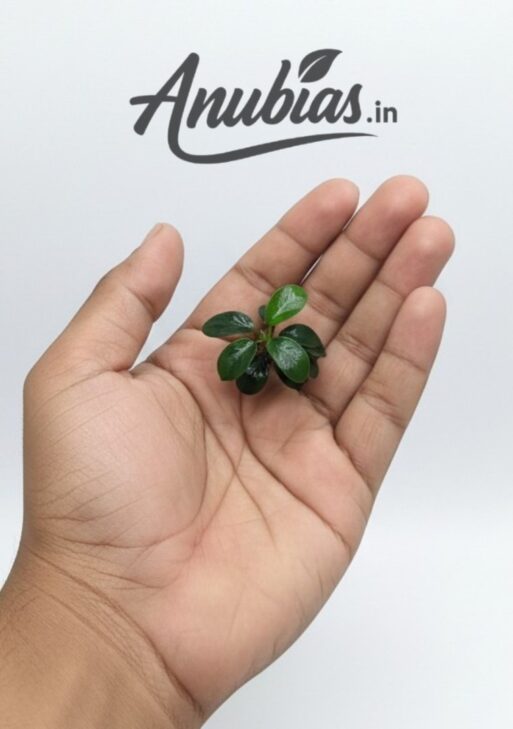
Price range: ₹ 90 through ₹ 250
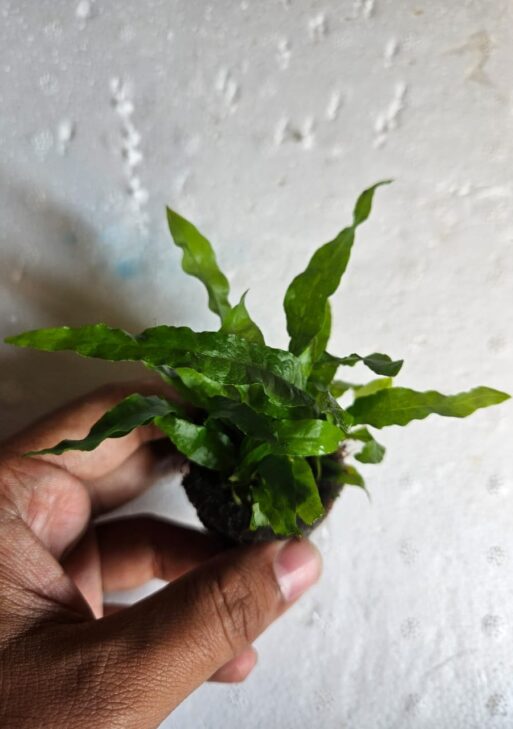
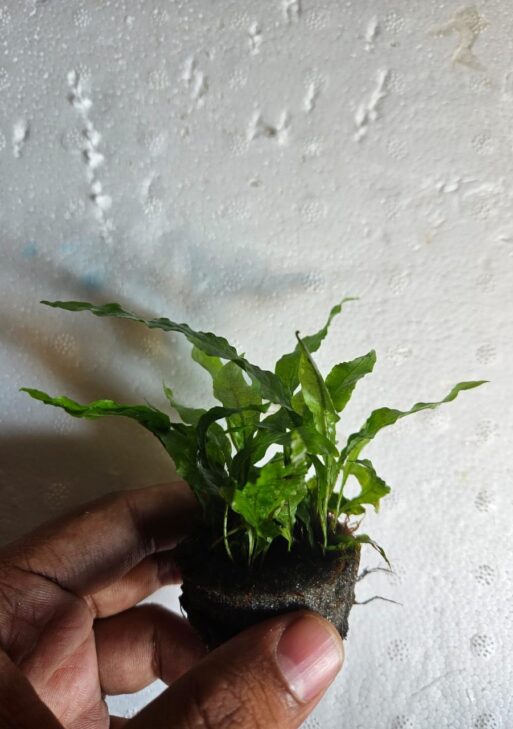
₹ 175 ₹ 320
Frequently asked questions
Is liquid carbon safe for aquarium plants?
It is safe for most hardy plants at the dose printed on the bottle, including Anubias, Bucephalandra, Java fern and Cryptocoryne. It is not safe for Vallisneria, Elodea, Riccia and several fine mosses, which commonly melt. Start at half the stated dose per litre and watch for a week before going further.
Can I use Seachem Excel or similar products on Anubias?
Yes, Anubias is among the most tolerant plants for glutaraldehyde-based products, which are sold in India under several brand names. Its thick, slow-growing leaves handle a correctly measured dose well, and spot-dosing black beard algae on Anubias is the one job these products do reliably. Keep the rhizome above the substrate as always.
Does liquid CO2 kill moss and Vallisneria?
Vallisneria very often melts, with leaves going translucent and browning from the tip within days. Fine mosses such as Christmas and flame moss frequently pale and thin, while Java moss is usually more tolerant at half dose. If either is a centrepiece in your tank, skip liquid carbon entirely.
Is liquid carbon safe for shrimp?
At the stated dose most Neocaridina colonies are unaffected, but overdosing kills shrimp, and freshly moulted shrimp and shrimplets die first. Caridina and snails are more sensitive than Neocaridina. Dose at a quarter to a half strength into the filter outflow, keep aeration strong in warm weather, and increase only if behaviour stays normal.
What is the correct glutaraldehyde dose for an aquarium?
Use the dose per litre stated on your own bottle, because concentrations differ between brands and a figure copied from another product can be dangerous. Begin at half that dose for the first fortnight. Trouble typically begins somewhere above double the stated daily dose, and sooner in small, warm or poorly oxygenated tanks.
Plants that never need it
Anubias, Bucephalandra, Java fern and mosses grow without CO2 or carbon dosing. Browse them in the shop, or compare every species in the plant care chart.