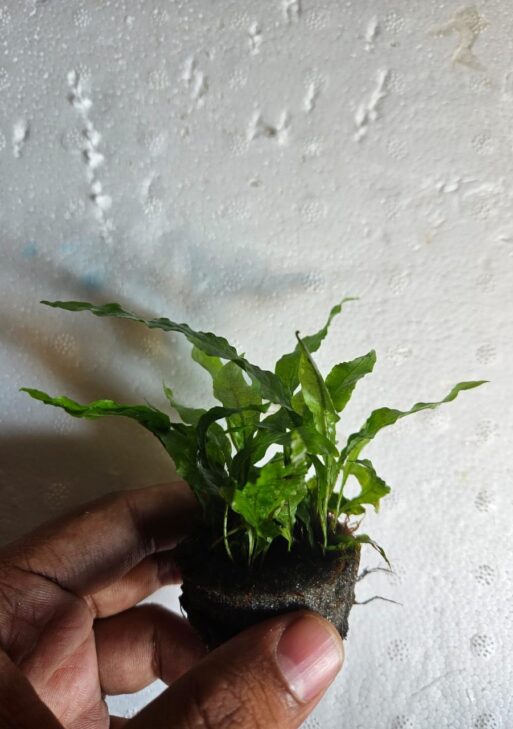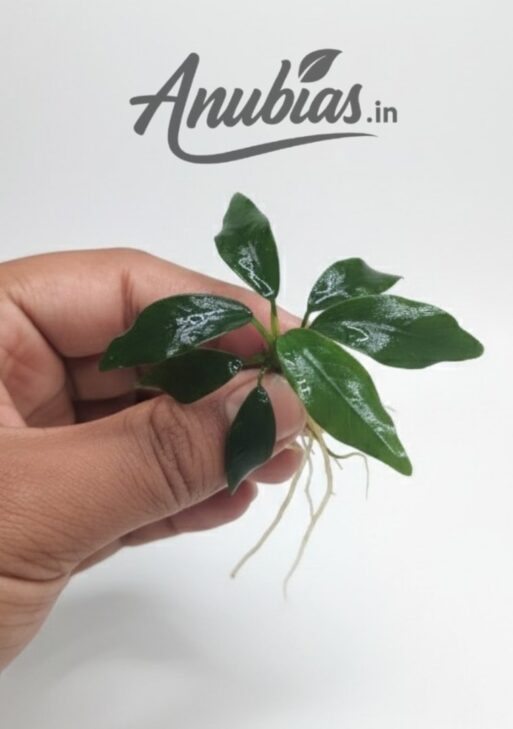


Bucephalandra has quickly become a favourite with Indian aquascapers, and it comes with plenty of questions about care, melting and prices. Here are short answers to the most common ones, with links to our full guides.
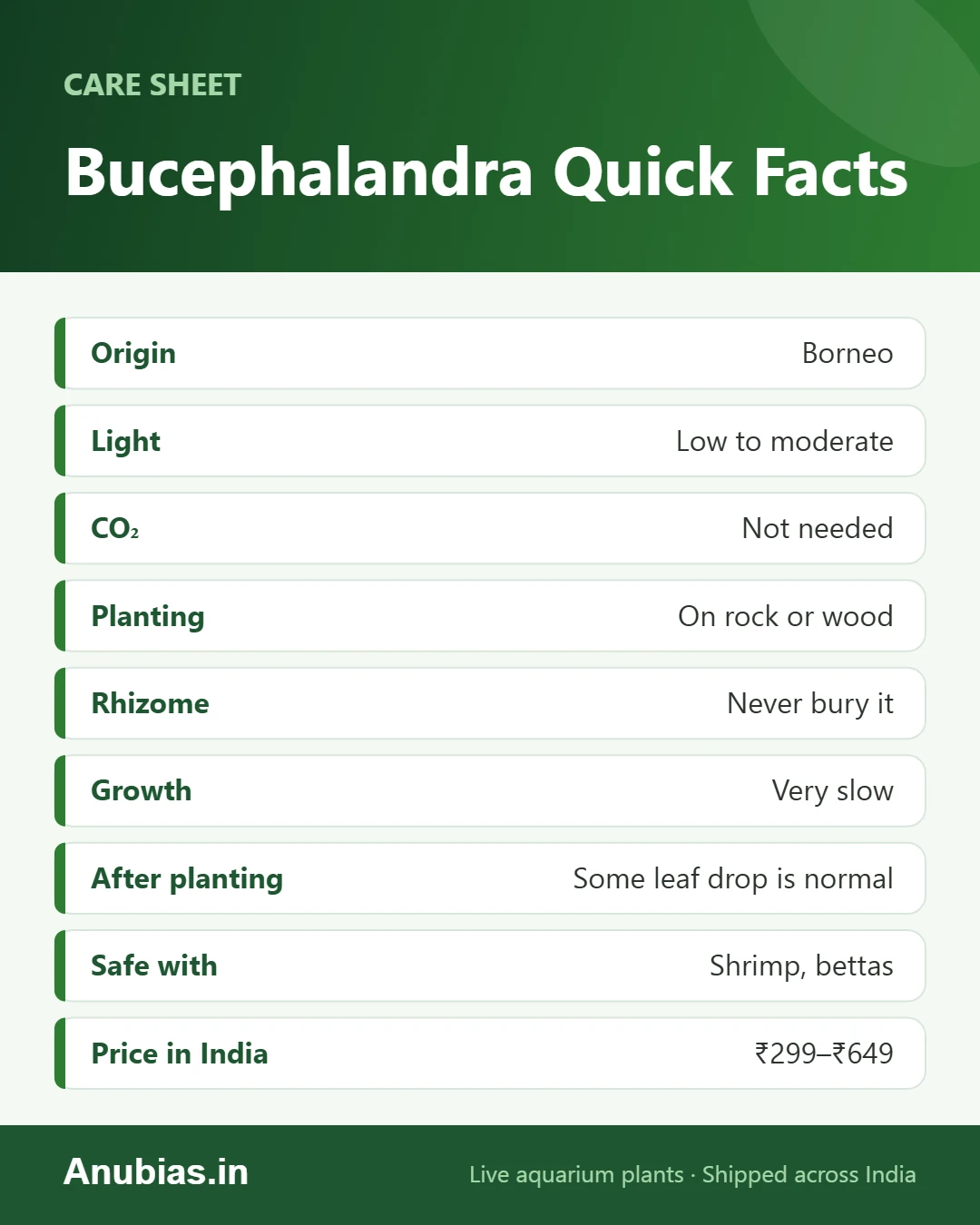
Quick answer: Bucephalandra is a slow-growing, easy epiphyte from Borneo that needs low to moderate light and no CO2. Attach it to rock or wood without burying the rhizome, expect some leaf drop after planting, and keep conditions stable. In India, named cultivars cost about ₹299–₹649 on Anubias.in.
More Bucephalandra guides:
Your first thirty days with a new Bucephalandra
Most of the trouble people have with Buce happens in the first month, so it helps to know what the sequence should look like.
- Day one. Unpack immediately and rinse gently in tank-temperature water. Remove any rock wool or pot completely.
- Days one to two. Attach the rhizome to wood or stone with cotton thread or a small dot of gel glue. Leave the rhizome fully exposed.
- Week one. Place it in a shaded or moderately lit spot. Expect some leaves to go soft or transparent; this is the plant switching from emersed to submerged growth.
- Week two. Trim away any fully melted leaves so they do not rot in the tank. Do not lift the plant to inspect the roots.
- Weeks three and four. Small new leaves appear, usually a different shape and shade from the originals. Start weekly liquid fertiliser once you see this.
Signs your Bucephalandra has settled
Because Buce grows so slowly, it is easy to assume nothing is happening when it is actually fine. These are the things worth watching for.
- A firm rhizome. Press it gently. Firm and green means healthy, regardless of how the leaves look. Soft and brown means rot.
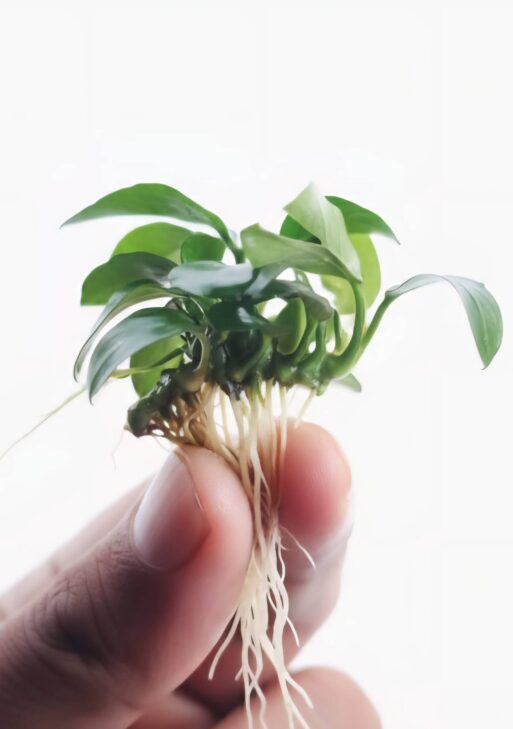
- White roots gripping the hardscape. Fine roots reaching over the surface of wood or rock are the clearest sign of acceptance.
- New leaves, however small. Submerged leaves are often narrower and darker than the ones the plant arrived with.
- Clean leaf surfaces. An absence of algae usually means light and nutrients are in reasonable balance.
In tanks running at 30°C or higher through the Indian summer, all of this slows down and the plant may show nothing new for weeks. That stall is not failure. Keep flow moving across the leaves, avoid raising light to force growth, and it will resume when the tank cools.
Plants in this guide
Grown in Surat · graded by leaf count and photographed before dispatch · live-arrival guarantee on every order · ₹99 shipping, free from ₹2,000

Frequently asked questions
What is Bucephalandra?
Bucephalandra (“Buce”) is a slow-growing epiphyte from the rivers of Borneo, collected by named cultivars for its colourful, textured leaves. It needs the same easy care as Anubias. Bucephalandra care guide
Is Bucephalandra hard to grow?
No. It tolerates low to moderate light and needs no CO2. It is slow and can drop leaves after planting, but it is not difficult.
Does Bucephalandra need CO2?
No. CO2 and brighter light are optional extras that speed growth and boost colour.
How do I plant Bucephalandra?
Attach the rhizome to rock or wood with gel superglue or thread, or wedge it into a crevice. Never bury the rhizome.
Why is my Bucephalandra melting?
Some leaf drop (“buce melt”) after planting is normal while it adapts to new water. Keep conditions stable and the rhizome healthy; new leaves follow. Why new plants melt
How fast does Bucephalandra grow?
Very slowly, even slower than many Anubias, which is why good plants cost more.
Is Bucephalandra safe for shrimp and bettas?
Yes. It is completely safe for shrimp and community tanks, and its leaves collect biofilm for shrimp to graze.
Which Bucephalandra is best for beginners?
Wavy Green is the easiest and most affordable named cultivar to start with. Bucephalandra price guide
What is the rarest Bucephalandra sold in India?
Among Anubias.in cultivars, Skeleton King is the rarest and highest priced. Bucephalandra varieties guide
How much does Bucephalandra cost in India?
On Anubias.in, prices range from ₹299 for Wavy Green to ₹649 for Skeleton King.
Bucephalandra or Anubias?
Anubias is cheaper with more size options; Bucephalandra offers more colour and texture for nano tanks. Care is almost identical. Anubias vs Bucephalandra
Can Bucephalandra grow out of water?
Yes, in humid emersed setups such as paludariums, similar to Anubias.
Why are Bucephalandra leaves changing colour?
Colour depends on light, nutrients and whether new leaves are still maturing; stronger light and CO2 usually deepen colour.
Can I propagate Bucephalandra?
Can Bucephalandra survive a tank at 30°C?
It can survive, but it will grow very slowly and is more prone to melting at sustained high temperatures. Buce is happiest in the low to mid twenties, and Indian summers push most tanks well above that. Increase surface agitation, keep the tank out of direct sun and avoid adding new Buce portions during the hottest months.
Should I quarantine Bucephalandra before adding it to my tank?
A short quarantine is sensible if your tank holds shrimp or sensitive fish, mainly to spot hitchhiking snails or pest eggs. A plain container of dechlorinated water with gentle light for a week is enough. Avoid strong chemical dips, since Buce leaves are easily damaged and the plant is slow to replace them.
How do I stop algae growing on Bucephalandra leaves?
Reduce light intensity or photoperiod first, because slow-growing leaves sit under the light far longer than a stem plant’s do. Improve flow across the plant so detritus does not settle, and keep up regular water changes. Amano shrimp and nerite snails graze soft algae off the leaf surface without damaging the plant.