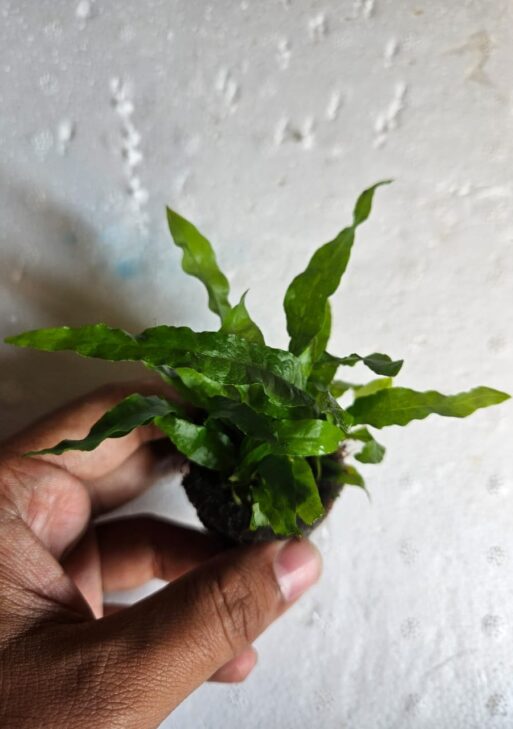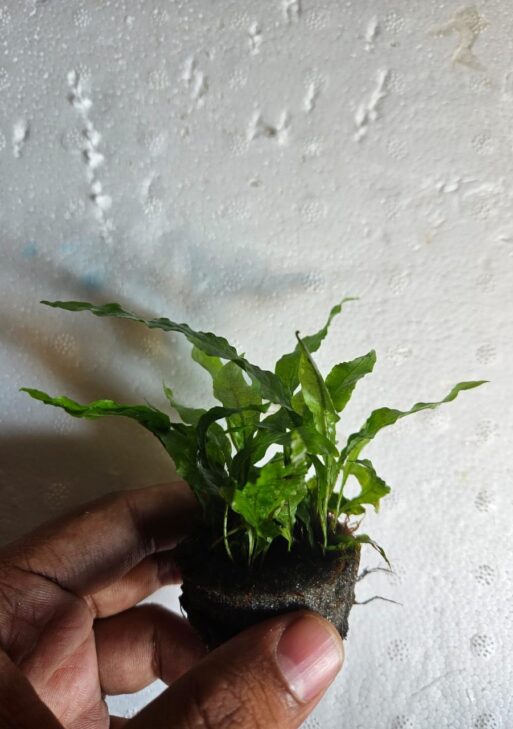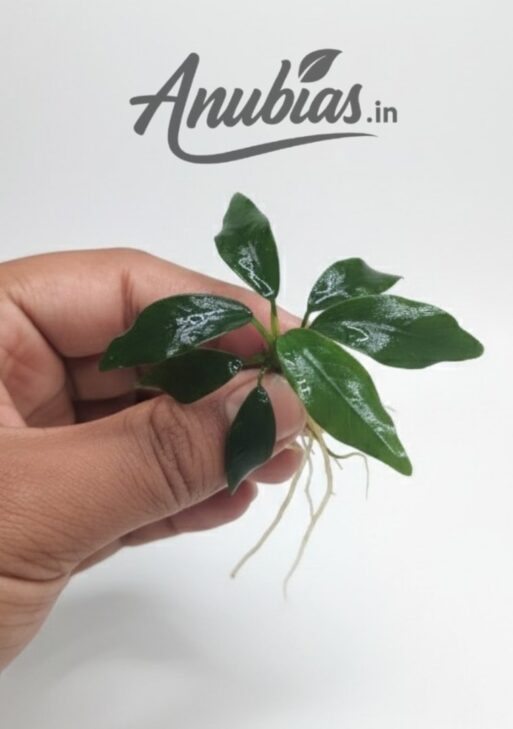

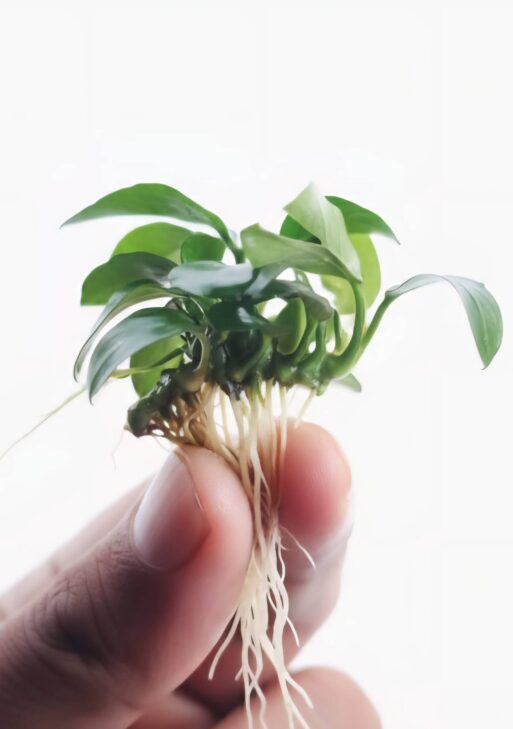
Anubias ‘Chili’ is a compact, collector-grade cultivar with narrow leaves and warm, bronze-tinted new growth. It is small enough for nano tanks and adds fine texture and a hint of colour to rock and wood.
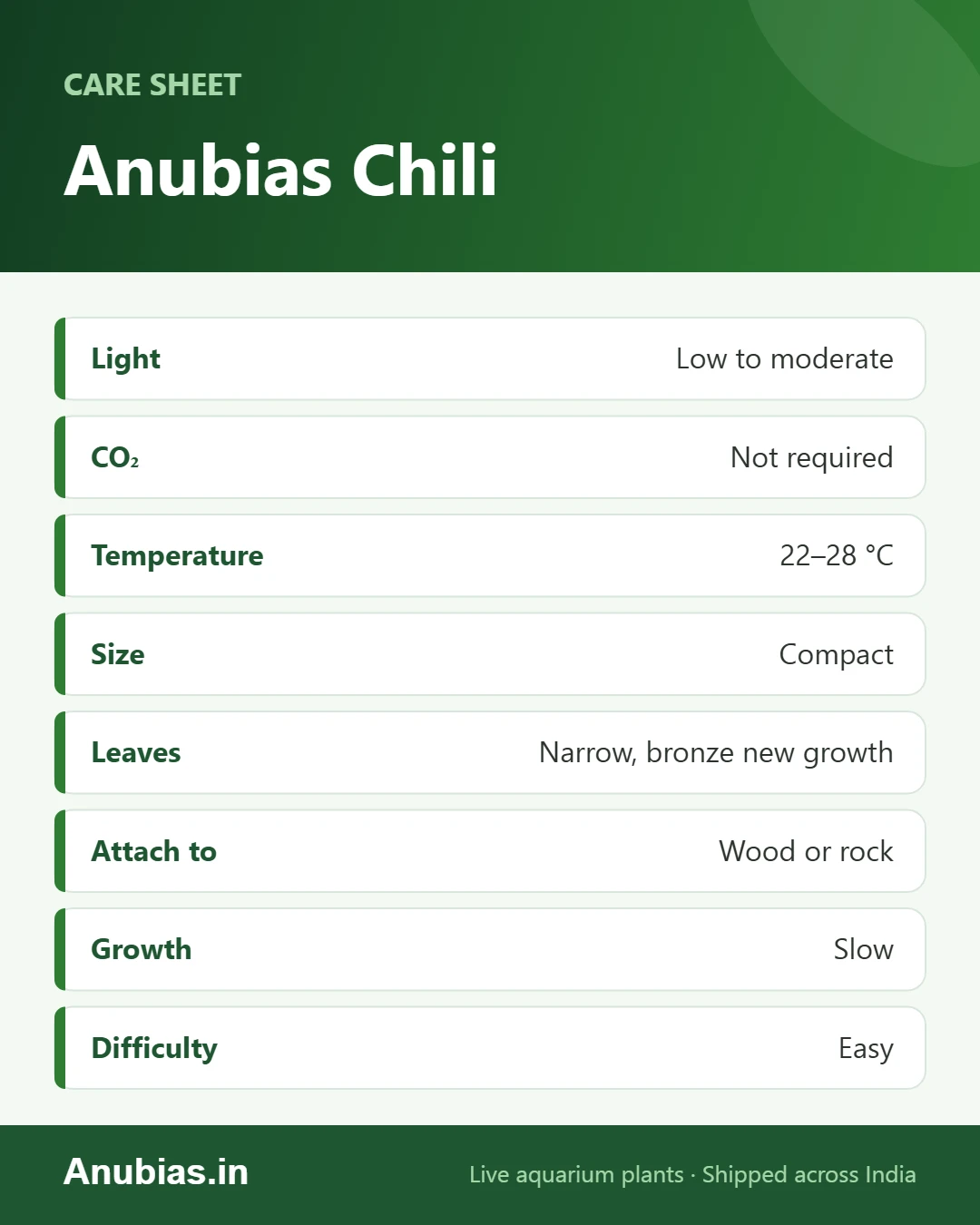
Quick answer: Anubias Chili is easy to grow: low to moderate light, no CO2, and 22–28°C water. Tie or glue its rhizome to driftwood or rock and never bury it. Its compact size and narrow leaves make it ideal for nano tanks and detailed hardscape, and like all Anubias it grows slowly, so avoid long, intense lighting that encourages algae. It costs ₹310 on Anubias.in.
Why it suits nano tanks
Chili stays compact and grows slowly, so it will not outgrow a small tank the way stem plants do. Wedge it between stones or tie it to small branches as a focal detail. Best plants for nano tanks.
Light and colour
New leaves emerge with a bronze tint. Keep light low to moderate: stronger or longer light mainly feeds algae on slow Anubias leaves. How long to run your light.
Attaching
Use cotton thread or aquarium-safe gel glue on the rhizome’s underside. The roots grip within a few weeks. How to attach Anubias.
Tank mates for Anubias Chili
Anubias Chili is safe with bettas, gouramis, tetras, rasboras, danios, corydoras, livebearers, cherry and Amano shrimp and nerite snails, which leave its thick leaves alone; shrimp even clean the leaf surface. Large cichlids, silver dollars, crayfish and mature common plecos can shred or rasp it over time, and goldfish may nibble, so tie it firmly to hardscape. Anubias tank mates.
How to propagate Anubias Chili
Once the rhizome is long enough, cut it with a clean blade so each piece keeps several leaves, then tie or glue each section to wood or rock. New growth appears from the cut ends over the following weeks. How to propagate Anubias.
Common Anubias Chili problems
| Problem | Likely cause | Fix |
|---|---|---|
| Green or black spots on leaves | Algae from strong or long lighting | Cut light to 6–8 hours, shade the plant, wipe leaves |
| Soft, dark rhizome | Rhizome buried or damaged | Cut back to firm tissue and reattach to hardscape |
| Yellow new leaves | Low nutrients, often iron | Weekly complete liquid fertiliser |
| Pinholes in old leaves | Potassium shortage | Complete fertiliser with potassium |
| No new leaves for weeks | Normal slow growth or settling in | Be patient; about one leaf every 2–3 weeks is normal |
Its bronze-tinted new leaves turn greener as they mature, which is normal. Anubias leaf problems · Anubias not growing.
Scaping ideas that suit a plant this small
Anubias Chili is easy to lose in a busy tank. The narrow leaves and small overall size mean it works best where it has a clear background behind it and nothing tall growing in front.
- On a branch tip. Attaching a single portion to the end of a thin branch lets the leaves hang into open water, which shows off their shape better than a plant pressed against a rock.
- In a crevice. Wedging the rhizome into a gap between two stones gives the impression of a plant that seeded itself there. No thread is visible once the roots grip.
- As a repeated accent. Three or four small portions placed at different heights along one piece of wood create rhythm without adding bulk.
- Against dark hardscape. The bronze tint on new leaves reads much more clearly against dark stone or black background than against pale sand.
Avoid planting it near fast stem plants. In a few weeks the stems will overhang the Chili completely, and a slow grower under shade produces almost nothing.
Habits that stall Anubias Chili
Most failures with this plant are about handling rather than water parameters.
Moving it repeatedly. Every time you reposition the rhizome you break the fine roots it has just put out. Pick a spot and commit for at least a month.
Over-lighting it. Because the leaves grow so slowly, algae has weeks to colonise each surface. Low to moderate light is not a compromise here; it is the setting that keeps leaves clean.
Treating it like a substrate plant. Root tabs do nothing for an epiphyte. Weekly liquid fertiliser is what the plant actually uses.
Through a 30°C-plus Indian summer, Chili often simply stops producing new leaves. As long as the rhizome stays firm and green, that pause is normal and growth resumes as the water cools.
Plants in this guide
Grown in Surat · graded by leaf count and photographed before dispatch · live-arrival guarantee on every order · ₹99 shipping, free from ₹2,000
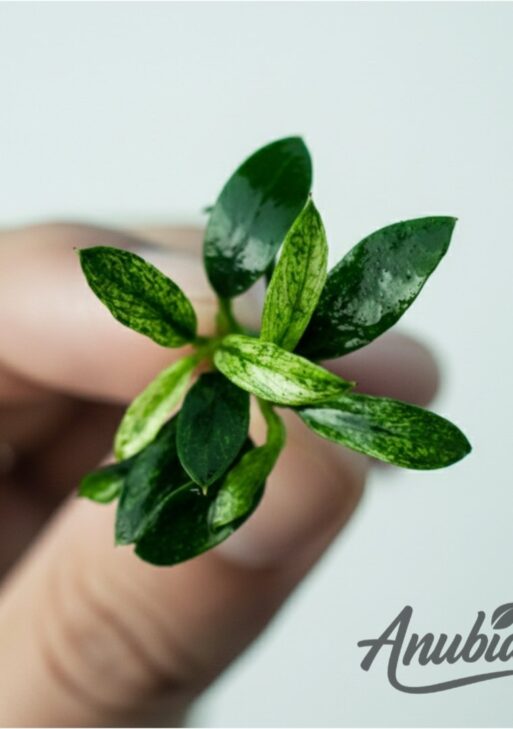
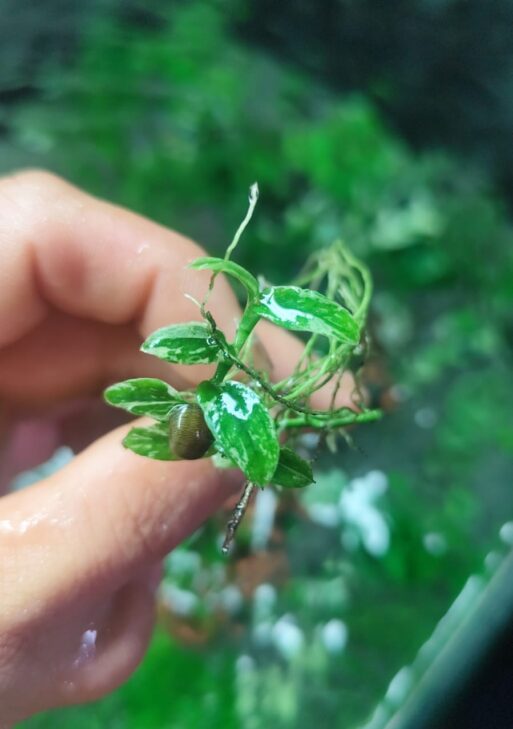
₹ 310 ₹ 600
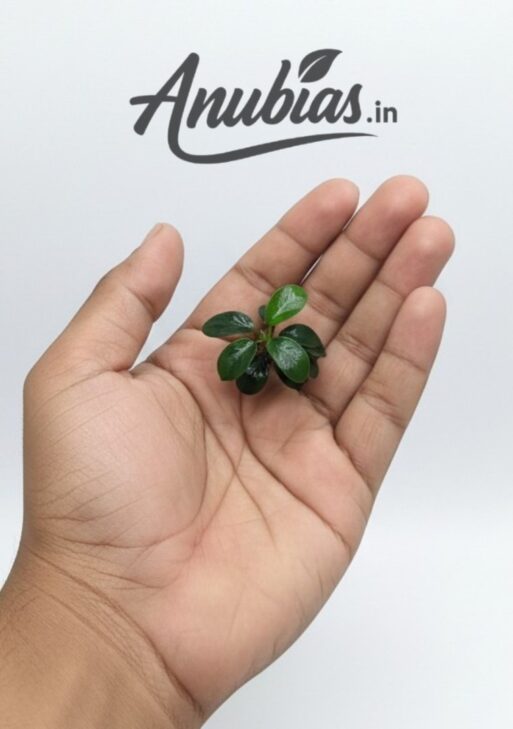
Price range: ₹ 90 through ₹ 250
Price range: ₹ 90 through ₹ 250
Price range: ₹ 90 through ₹ 250
Frequently asked questions
Is Anubias Chili good for beginners?
Yes. It is a hardy, slow-growing Anubias that thrives in low light without CO2.
How big does Anubias Chili get?
It stays compact, which is why it is popular for nano tanks and small aquascapes.
Where can I buy Anubias Chili in India?
Anubias Chili is available on Anubias.in for ₹310.
How fast does Anubias Chili grow?
Very slowly, typically a new leaf every few weeks under good conditions and less than that in warm weather or dim light. This is normal for the plant and not a sign of a problem. It also means a small portion stays small for a long time, which is exactly why it suits nano tanks.
Can Anubias Chili be kept in a bowl without a filter?
It can survive in an unfiltered bowl, since it needs no CO2 and tolerates low light. The main risks are stagnant water letting detritus settle on the leaves and temperature swings in a small volume. Change a third of the water weekly and keep the bowl away from direct sun and it will hold up.
Does Anubias Chili flower?
Yes, Anubias species including Chili produce a small white or cream spathe underwater, and it can appear on a healthy established plant. The flower is harmless and does not need to be removed, though many keepers trim it because it can trap detritus. It does not indicate stress either way.