

Quick answer: A planted aquarium costs far less to run than most people expect. A 1 ft nano runs on roughly ₹60 to ₹200 a month, a 2 ft low-tech tank on ₹150 to ₹400, and a 3 ft high-tech tank with CO2 on ₹450 to ₹1,100. Electricity is the largest share, and you can calculate yours exactly from the wattage of your light and filter and your own per-unit tariff.
The five recurring costs nobody adds up
Most people budget carefully for the setup — tank, light, filter, substrate, plants — and then quietly assume the tank is free once it is running. It is not free, but it is far cheaper than almost everyone fears.
A planted aquarium in India has exactly five recurring costs: electricity, fertiliser and additives, plant replacement, water and dechlorinator, and CO2 if you run it. Everything else — filter media, an airstone, a net — is replaced once a year or less and belongs in an annual budget, not a monthly one.
Every figure below is a range, because your tariff, your tap water, your ambient temperature and your plant choices all move the number. Where we show arithmetic, redo it with your own numbers.
Electricity: the biggest line, and the easiest to calculate
Electricity is usually the largest recurring cost of a planted tank, and the only one you can work out exactly. The formula is units per month = watts × hours per day × 30 ÷ 1,000, then multiply units by your per-unit tariff.
Domestic tariffs in India commonly land somewhere around ₹6–₹9 per unit, but this varies by state, by consumption slab and by the fixed charges and surcharges on your bill. Take the per-unit rate from your last bill and use that instead of our range.
Two things run around the clock: the filter and, seasonally, the heater. The light runs only for your photoperiod, which on a planted tank should be 6–8 hours a day. A longer photoperiod does not grow better plants; it grows better algae.
1 ft nano tank, roughly 10–20 litres
A nano typically runs a 6–12 W light and a 3–5 W sponge or internal filter. Low end: 6 W × 6 h = 36 Wh for the light plus 3 W × 24 h = 72 Wh for the filter, giving 108 Wh a day, about 3.2 units a month. High end: 12 W × 8 h plus 5 W × 24 h is 216 Wh a day, about 6.5 units.
So a nano uses roughly 3–7 units a month, or about ₹20–₹60 at ₹6–₹9 per unit. That is genuinely less than one takeaway coffee.
2 ft tank, roughly 55–70 litres
Call it a 15–30 W LED and a 5–15 W hang-on or small canister. Low end: 15 W × 6 h plus 5 W × 24 h = 210 Wh a day, 6.3 units. High end: 30 W × 8 h plus 15 W × 24 h = 600 Wh a day, 18 units.
That works out to roughly 6–18 units a month, or ₹40–₹160. Notice how much of it is the filter rather than the light: a 15 W filter running all day costs more per month than a 30 W light running eight hours.
3 ft high-tech tank, roughly 110–150 litres
Here you add a stronger light, a canister and a CO2 solenoid. Low end: 40 W × 6 h, 20 W × 24 h and a 3 W solenoid × 7 h is about 741 Wh a day, roughly 22 units a month. High end: 70 W × 8 h, 30 W × 24 h and 5 W × 8 h is about 1,320 Wh a day, roughly 40 units.
So 22–40 units a month, or about ₹130–₹360. Add a heater in winter and you land close to the ₹250–₹600 high-tech figure in our setup cost guide.
The heater is seasonal, not monthly
Across most of India, including here in Surat, a heater sits idle for eight or nine months of the year. When it is working, a 50–100 W heater on a 2 ft tank or a 150–200 W heater on a 3 ft tank cycles on perhaps a quarter to a third of the time, adding roughly ₹100–₹250 a month through the coldest weeks. Treat it as a winter line item.
Fertiliser and additives at realistic dosing
This is where people badly over-budget. A low-tech 2 ft tank dosed three times a week gets through roughly 25–30 ml a month of each bottle in a two-part system. Our Green Plus + Trace set is ₹410 for 250 ml + 250 ml, so one set lasts eight to nine months — about ₹45–₹60 a month.
A 3 ft high-tech tank dosed daily is a different animal. At around 5 ml of each per day you are through 150 ml of each in a month, so a 250 ml set lasts about seven weeks: roughly ₹200–₹280 a month, plus root tabs for heavy feeders such as swords and Cryptocoryne at ₹100–₹200 every three or four months.
The 100 ml + 100 ml set at ₹250 is the sensible buy for a nano, but per millilitre the larger set is clearly better value.
Plants: replacement, trimming and why propagation gets you to net zero
Budget honestly for month one. Some melt is normal as plants convert to your water and lighting, and a few stems will not survive. On a 2 ft tank that might mean ₹150–₹400 of replacements.
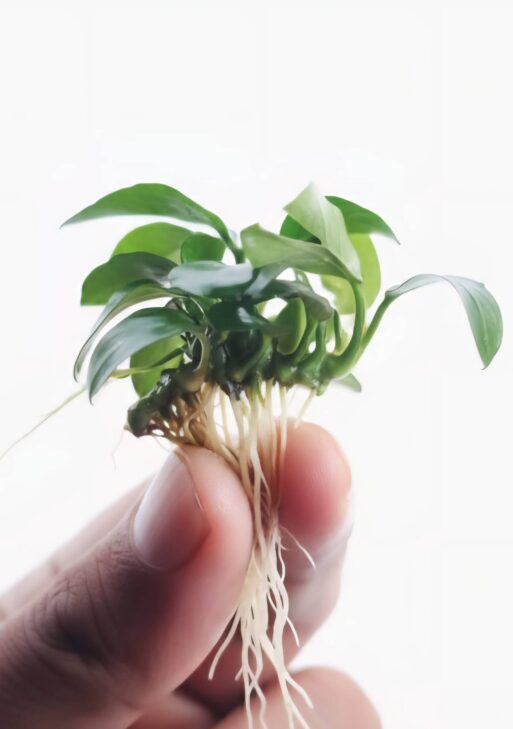
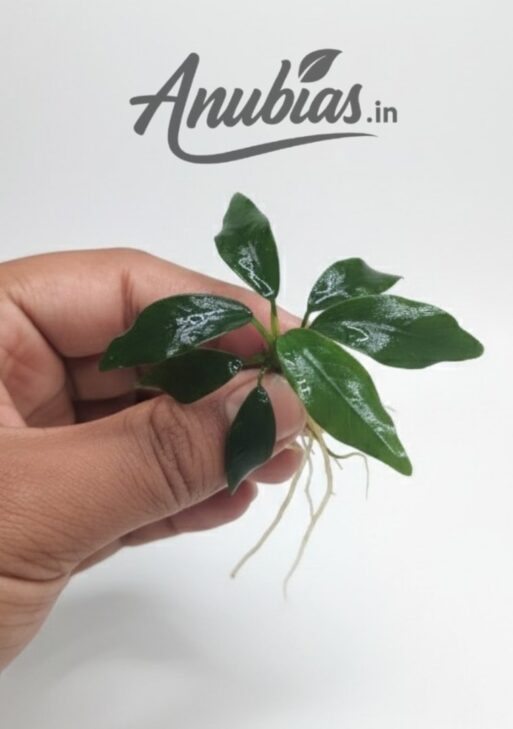
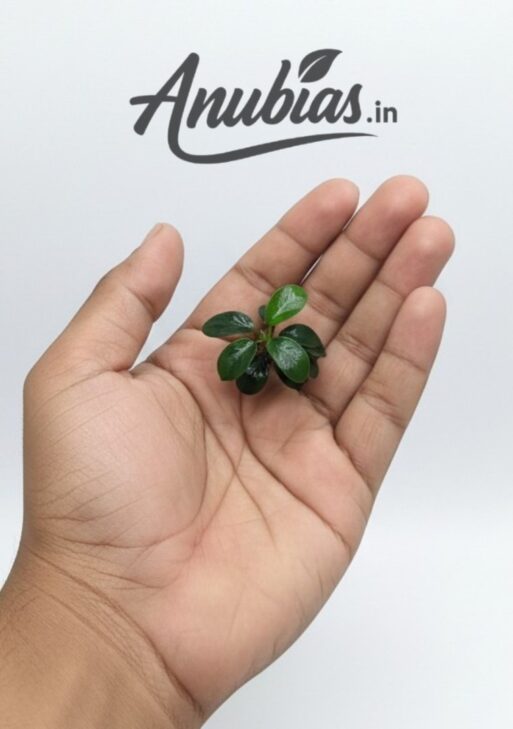
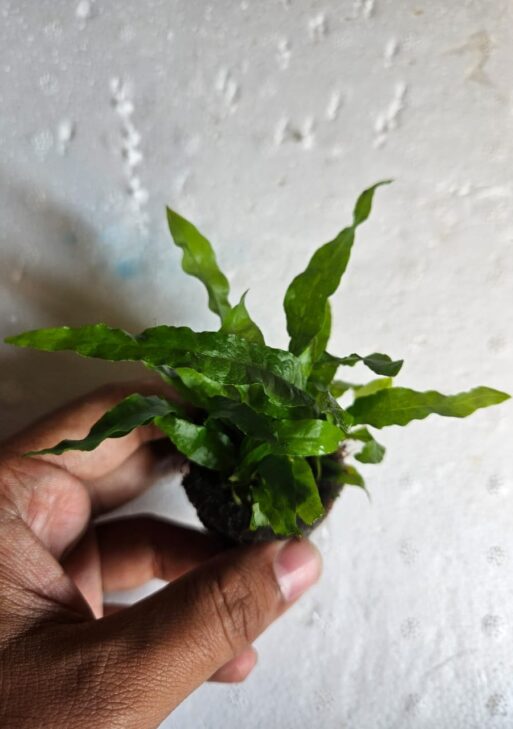
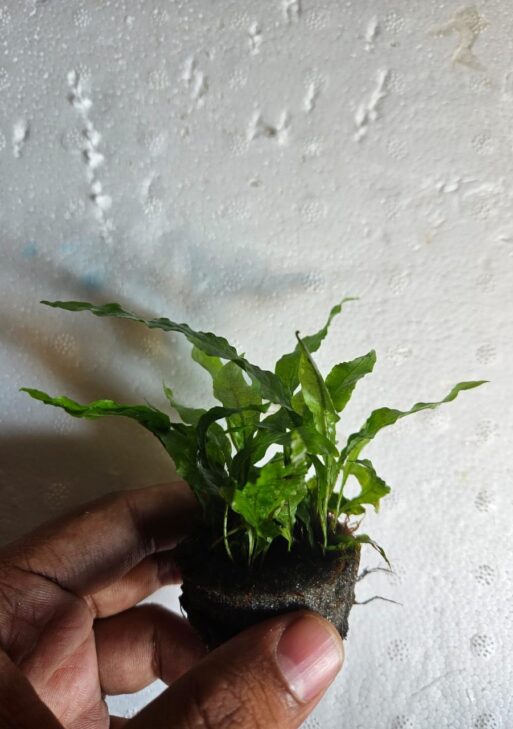
After that the maths flips. Stem plants such as Rotala Rotundifolia at ₹120 or Ludwigia Repens at ₹140 double in a few weeks, and every trim hands you tops you replant for nothing. Epiphytes like Anubias Nana at ₹90 and Java Fern at ₹175 divide into new plants once or twice a year, and carpets such as Monte Carlo at ₹150 spread sideways on their own.
From roughly month three onward, a healthy planted tank is net zero on plants, and frequently net positive. Realistically, budget ₹0–₹200 a month, and most of that will be a new species you wanted rather than a replacement you needed.
Water, dechlorinator and the weekly change
A weekly 25–30% change on a 2 ft tank is about 15–20 litres, so 60–80 litres a month. On metered municipal supply that is a rounding error, usually under ₹5 a month. If you buy tanker water or run RO, price it at your own rate, since that varies by city.
Dechlorinator is the real cost here, and it is still small. A conditioner bottle at roughly ₹150–₹400, dosed at about 1 ml per 10 litres of new water, treats a month of changes on a few millilitres. Most 2 ft keepers spend around ₹15–₹40 a month; nano keepers, a fraction of that.
CO2: cylinder refills, DIY or none at all
None is a perfectly respectable answer and costs ₹0. Plenty of good-looking tanks run Anubias, ferns, Cryptocoryne, Vallisneria and mosses with no injected CO2.
DIY yeast CO2 costs ₹20–₹40 in sugar and yeast per batch, and a 2-litre bottle runs two to three weeks before fermentation slows, so ₹40–₹80 a month for two batches. Pressurised is cheaper to run and far more stable: a refill at ₹150–₹350 lasting two to four months works out to roughly ₹40–₹175 a month, though the cylinder and regulator are a ₹6,000–₹20,000 up-front cost. Liquid carbon is the expensive option at ₹350–₹700 a bottle, lasting roughly a month at recommended dosing.
Three monthly budgets
| Cost | 1 ft nano, low-tech | 2 ft low-tech | 3 ft high-tech |
|---|---|---|---|
| Electricity | ₹20–₹60 | ₹40–₹160 | ₹130–₹360 |
| Fertiliser | ₹20–₹40 | ₹45–₹120 | ₹200–₹400 |
| Water and conditioner | ₹10–₹25 | ₹15–₹45 | ₹30–₹70 |
| Plants, after month three | ₹0–₹100 | ₹0–₹150 | ₹0–₹250 |
| CO2 | ₹0 | ₹0–₹80 | ₹40–₹175 |
| Monthly total | ₹60–₹200 | ₹150–₹400 | ₹450–₹1,100 |
Add a heater in winter and the 2 ft and 3 ft totals climb by roughly ₹100–₹250 a month while it runs. Even at the top of every range, a 3 ft high-tech tank costs less monthly than a mid-range mobile plan.
Five ways to cut the monthly bill without hurting the plants
- Trim the photoperiod, not the intensity. Moving from 8 hours to 6 cuts light consumption by a quarter and usually reduces algae too. Stay within 6–8 hours; shorter starts costing you growth.
- Look at the filter, not the light. The filter is the 24-hour device, so it dominates the bill. An oversized pump on a small tank is the most common avoidable cost, and switching off a decorative airstone overnight saves more than you would guess.
- Buy fertiliser in the larger size. The 250 ml + 250 ml set at ₹410 costs less per millilitre than two 100 ml + 100 ml sets at ₹250 each. One purchase a year instead of three also means fewer shipping charges.
- Propagate instead of replacing. Replant stem trims into the gaps, divide Anubias and Java Fern rhizomes once they are large, and let carpets fill in. A few fast growers early give you free plant mass later.
- Consolidate your orders. Shipping is ₹99 on orders under ₹2,000 and free above that, so combining a fertiliser restock with plants you were buying anyway beats three small orders across three months.
The honest summary is that a planted tank is expensive to start and cheap to keep. Almost all of the money goes in during week one.
Plants in this guide
Grown in Surat · graded by leaf count and photographed before dispatch · live-arrival guarantee on every order · ₹99 shipping, free from ₹2,000


Frequently asked questions
Is a planted aquarium expensive to maintain in India?
No. After setup, a 1 ft nano runs on roughly ₹60–₹200 a month, a 2 ft low-tech tank on ₹150–₹400, and a 3 ft high-tech tank with CO2 on ₹450–₹1,100. The expense is concentrated in the initial setup; the monthly running cost is modest and predictable.
How do I calculate the electricity cost of my fish tank?
Use watts × hours per day × 30 ÷ 1,000 to get units per month, then multiply by your per-unit tariff. Do it separately for the light, which runs 6–8 hours, and the filter, which runs 24 hours. Tariffs are commonly around ₹6–₹9 per unit but vary by state, so use the rate on your own bill.
How much does aquarium fertiliser cost per month?
A low-tech 2 ft tank dosed three times a week uses about 25–30 ml a month of each bottle in a two-part system, so a ₹410 set of 250 ml + 250 ml lasts eight to nine months — around ₹45–₹60 a month. A 3 ft high-tech tank dosed daily works out closer to ₹200–₹280 a month.
Do I have to keep buying replacement plants every month?
Only in the first month or two, while some plants melt and adapt. After that, trimming and propagation usually make the tank net zero on plants and often net positive, because stems, rhizome plants and carpets all multiply on their own.
Is CO2 worth the monthly cost?
It depends on your plants. Anubias, ferns, Cryptocoryne, Vallisneria and mosses grow well without CO2 at ₹0 a month. If you want fast, dense growth, pressurised CO2 is the cheapest to run at roughly ₹40–₹175 a month in refills, though the cylinder and regulator cost ₹6,000–₹20,000 up front.
Cheap plants that keep costs down
Slow, hardy plants need less light, less fertiliser and almost no replacement. Browse them in the shop or compare them in the plant care chart.