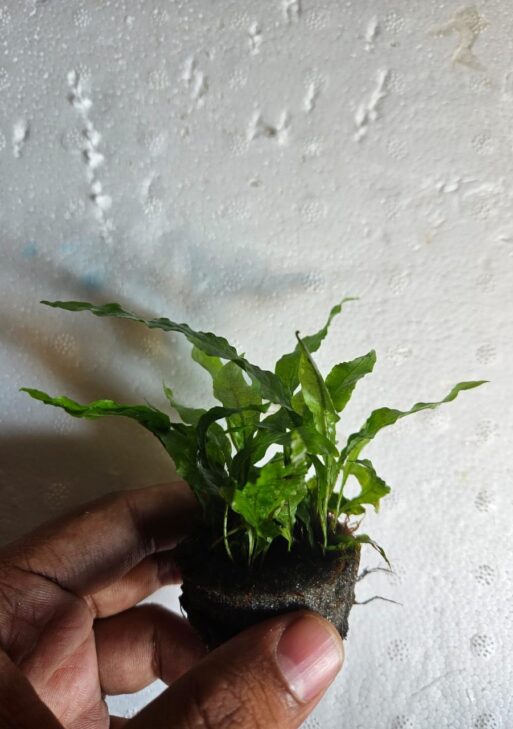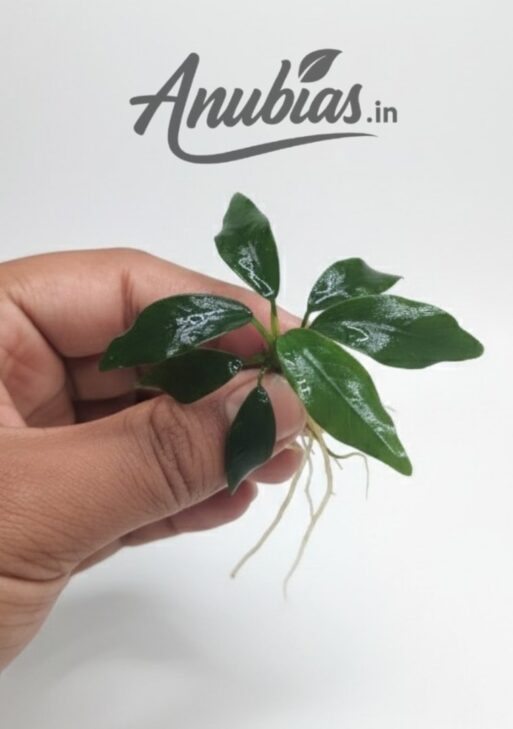


In a big aquarium, small Anubias like Nana get lost. Larger varieties give the same easy, low-tech care but with enough leaf size to anchor the midground or background of a 3-feet or larger tank.
Quick answer: The best large Anubias for big tanks are Anubias King, a robust broad-leaved plant for a bold centrepiece; Anubias Congensis, with narrow lance-shaped leaves that add height in the midground to background; and Anubias Barteri var. glabra, a graceful larger Anubias that offers the best value. All three need only low to moderate light, no CO2 and 22–28°C water, with the rhizome tied to wood or rock rather than buried.
Anubias King
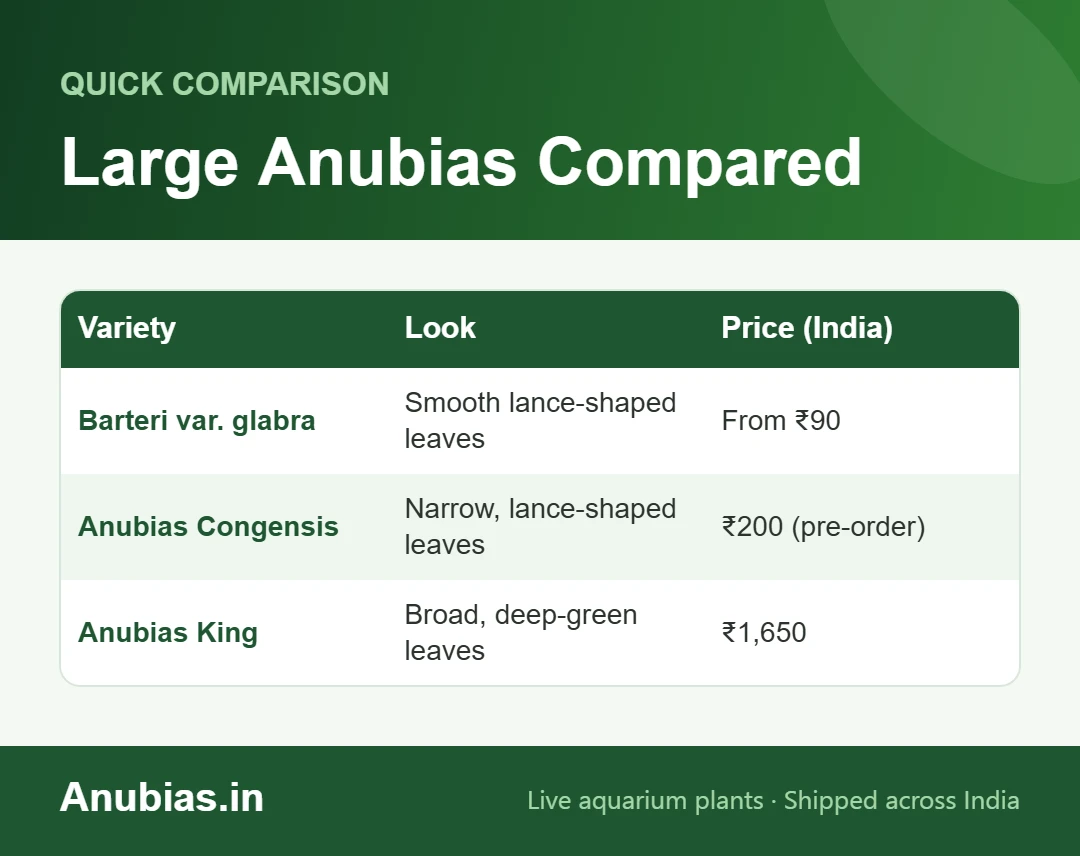
A robust, large-leaved Anubias with broad, deep-green foliage. It suits bigger tanks and bold aquascapes as a single focal plant. Anubias King.
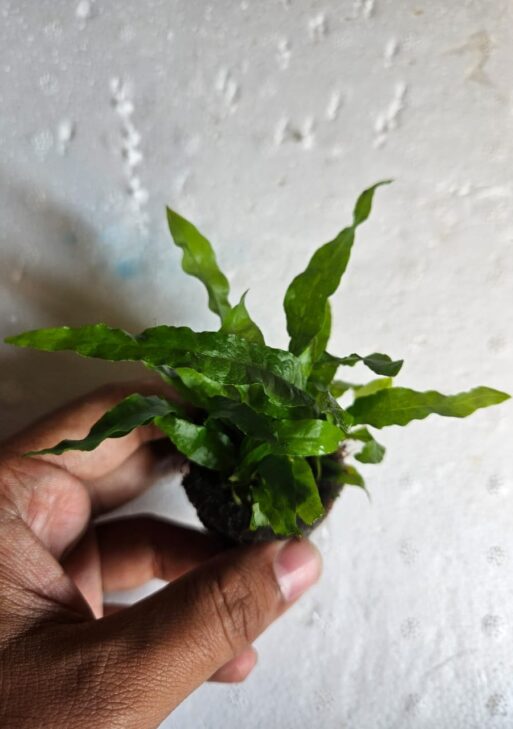
Anubias Congensis
A larger Anubias with narrow, lance-shaped leaves that works from the midground to the background. Anubias congensis care guide.
Anubias Barteri var. glabra
A graceful, larger Anubias with smooth, lance-shaped leaves on slender stems, and the most affordable way to fill space. Anubias barteri care guide.
Care for large Anubias
- Light: low to moderate.
- CO₂: not required.
- Temperature: 22–28°C.
- Placement: tie or glue the rhizome to large driftwood or rock; never bury it.
- Growth: slow, so buy the size you want rather than waiting for a small plant to fill in.
How many you actually need
Large Anubias are bought by the plant, not by the pot, and the number you need is smaller than most people assume. In a four-foot tank, three well-grown specimens placed at different depths usually read better than eight small ones scattered evenly, because the eye follows the biggest leaf shapes and ignores clutter.
A workable approach is one dominant plant slightly off-centre, one supporting plant set further back and partly behind hardscape, and a third low down near the front to link the layout together. Everything else in the tank can be cheaper, faster-growing filler.
Because these plants grow slowly, buy the size you want to look at rather than the size you can afford to wait for. A small plant in a big tank stays small-looking for a year or more, and in that time it is more likely to collect algae than to catch up.
Keeping big leaves clean
Broad, long-lived leaves are magnets for spot algae and brush algae, and a single neglected leaf on a centrepiece plant is very visible. Three habits keep them presentable.
- Keep flow moving across the leaf faces rather than letting a plant sit in a dead corner where detritus settles on it.
- Wipe the upper surfaces of the older leaves between thumb and finger at every water change, which takes seconds and removes soft algae before it hardens.
- Remove any leaf that is more than half covered instead of trying to save it, since the plant will not restore a damaged leaf and the algae will keep spreading from it.
In Indian summers there is a fourth habit worth adding. When the tank sits at 30 degrees or more for weeks, big Anubias sometimes shed one or two of their oldest leaves at once. Take them off at the rhizome, resist the urge to dose anything, and check that the rhizome itself is still firm and pale.
A shoal of grazing shrimp helps more than any chemical, since they work the leaf surfaces daily and pick off new growth before it gets a grip.
Plants in this guide
Grown in Surat · graded by leaf count and photographed before dispatch · live-arrival guarantee on every order · ₹99 shipping, free from ₹2,000
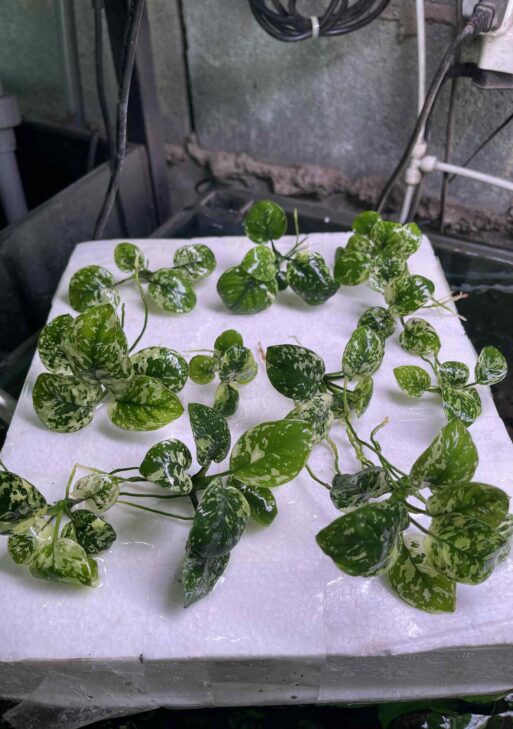
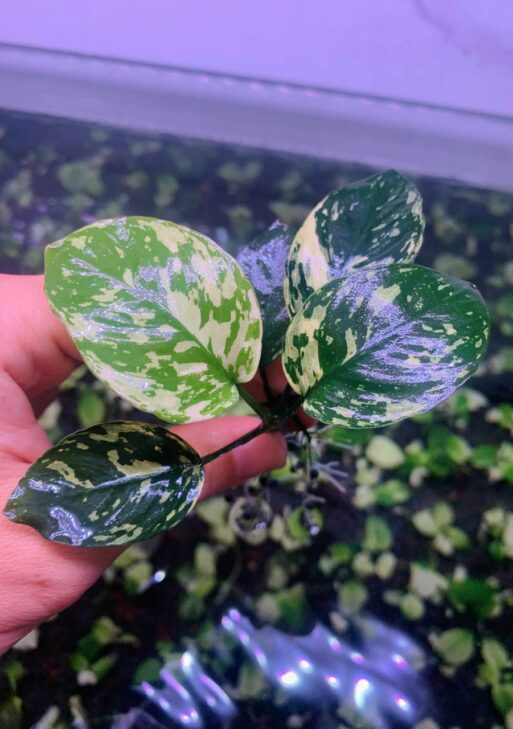
₹ 1,650 ₹ 4,500
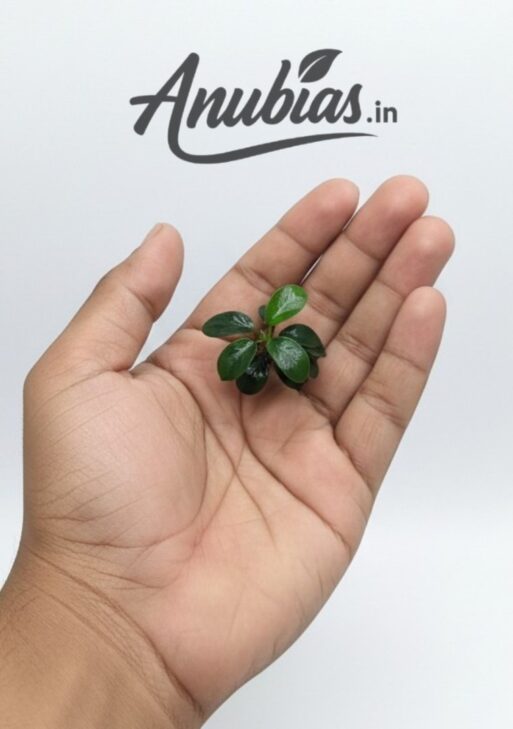
Price range: ₹ 90 through ₹ 250
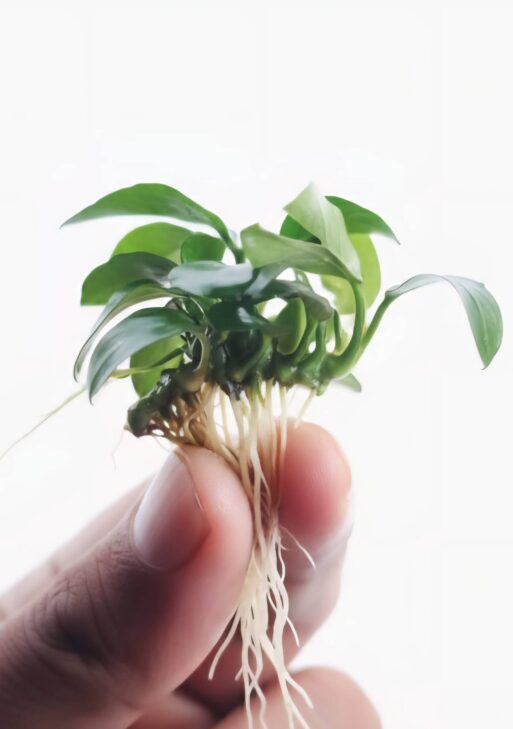
Price range: ₹ 90 through ₹ 250
Price range: ₹ 90 through ₹ 250
Frequently asked questions
Which Anubias gets the biggest?
Among the varieties sold on Anubias.in, Anubias King and Congensis are the largest, with Barteri var. glabra close behind.
Can large Anubias go in the background?
Yes. Congensis and Barteri work well in the midground to background of big tanks, and King makes a strong centrepiece.
Do large Anubias need special substrate?
No. Like all Anubias they grow on wood or rock and feed from the water column.
Bigger tank? See the best plants for a 3-feet aquarium.
Choosing between them? Read Anubias Nana vs Barteri.
Do large Anubias need to stay tied down forever?
No, only until the roots grip the hardscape, which usually takes two to three months. After that you can cut the thread or line away and the plant will hold itself in place. Large specimens carry more leverage in the current, so use two or three tie points rather than one while they attach.
Will large Anubias survive with cichlids or goldfish?
They are among the better choices for rough tanks because the leaves are tough and leathery rather than soft. Determined diggers can still knock a plant loose, which is another reason to fix the rhizome firmly to heavy wood or rock instead of leaving it propped against the substrate. Persistent leaf-grazers will still nibble the edges, but rarely destroy the plant.
How long does a large Anubias take to fill out?
Expect around one new leaf every few weeks, so noticeably fuller growth takes the better part of a year. Liquid fertiliser and stable warmth help, but there is no way to make this plant fast. Buying a mature specimen is the only real shortcut.