
Anubias is one of the most popular aquarium plants in India, and a common question from pet owners and parents is whether it is poisonous. The short version: Anubias is safe for fish, shrimp and snails in the aquarium, but like many plants in the aroid family it should not be eaten by cats, dogs or children. Here is what you need to know.
Quick answer: Anubias is safe for aquarium fish, shrimp and snails. It belongs to the aroid family (Araceae), whose plants contain calcium oxalate crystals, so chewing or eating the leaves can irritate the mouth and stomach of cats, dogs and people. It is not considered dangerous in the tank, but keep trimmed leaves away from pets and children, and contact a vet or doctor if a large amount is eaten.
Is Anubias safe for fish and shrimp?
Yes. Anubias is one of the safest aquarium plants you can keep. Fish rarely eat it because the leaves are thick and bitter, and shrimp and snails graze the biofilm on its surface without harm. It does not release anything toxic into the water and is widely used in betta, shrimp, goldfish and community tanks. See Anubias tank mates.
Is Anubias toxic to cats and dogs?
Anubias is an aroid, the same plant family as philodendron, pothos and dieffenbachia. Plants in this family contain insoluble calcium oxalate crystals that can cause mouth irritation, drooling, pawing at the mouth or vomiting if a pet chews them. Because Anubias usually lives underwater, pets rarely get access to it, but take care with:
- Trimmed leaves left on a table or in a bin.
- Anubias grown out of water in paludariums, jars or vases.
- Outdoor tubs that pets can reach.
If your pet has eaten Anubias leaves and shows symptoms, contact a veterinarian.
Is Anubias safe to touch?
Handling Anubias is generally safe. The crystals only cause irritation when the plant tissue is chewed or crushed and contacts sensitive skin or the mouth. If you have sensitive skin, rinse your hands after trimming, and keep cuttings away from young children.
Safer alternatives for open setups with pets
For open-top bowls or emersed jars where pets or children can reach the plants, many keepers choose non-aroid plants such as Java moss, Vallisneria or Water Wisteria instead. Inside a closed aquarium, Anubias remains an excellent, low-risk choice.
How Anubias compares with other common aquarium plants
Anubias is an aroid, and so are several other plants people keep in and around aquariums. It is worth knowing which of your plants share that chemistry.
Also aroids: Bucephalandra, Cryptocoryne, Lagenandra and the various Pothos and Monstera cuttings people grow out of the back of a tank. All contain calcium oxalate crystals in their tissue, so the same mild chewing risk applies to each of them.
Not aroids: Java fern, mosses, Vallisneria, Rotala, Ludwigia, Bacopa and Amazon sword. These do not carry the same irritant crystals, though that does not make any of them food.
The practical point is that if you keep a planted tank with Pothos trailing from the rim, the trailing stems above the water are far more likely to be chewed by a cat than anything growing inside the tank.
Precautions for open-top tanks and paludariums
Risk rises when leaves grow out of the water where they can be reached.
- Keep emersed Anubias and Pothos growth on the side of the tank furthest from countertops and shelves that pets jump onto.
- Put trimmings straight into a closed bin rather than leaving them on the rim. Cut leaves release more sap and are the most likely thing to be chewed.
- Wash your hands after a long trimming session, particularly before touching your eyes.
- In a paludarium with a mesh lid, keep aroid growth below the mesh line where possible.
- If you keep the tank in a child’s room, favour non-aroid emersed plants along the rim.
None of this makes an Anubias tank dangerous. It is a low-risk plant kept in a place pets and children rarely reach, and sensible handling covers the remaining gap.
Plants in this guide
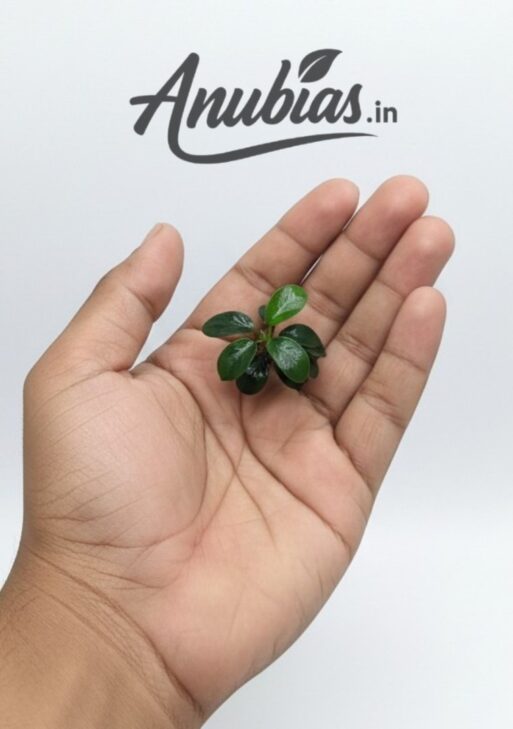
Price range: ₹ 90 through ₹ 250
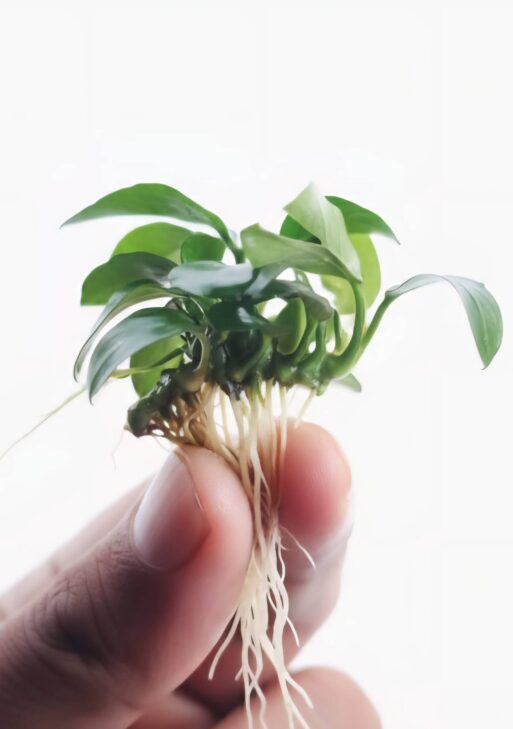
Price range: ₹ 90 through ₹ 250
Price range: ₹ 90 through ₹ 250

₹ 250
Frequently asked questions
Do fish eat Anubias?
Very few fish eat Anubias because its leaves are tough and bitter, which is why it survives with goldfish and cichlids. See plants goldfish won’t destroy.
Is Anubias safe in a betta tank?
Yes. Bettas often rest on Anubias leaves, and the plant is completely safe for them.
What should I do if a child eats an Anubias leaf?
Rinse the mouth with water and contact a doctor or poison information service for advice, especially if there is swelling, drooling or vomiting.
Browse safe, hardy Anubias plants for your aquarium, and read the full Anubias care guide.
Thinking of adding a money plant? Read how to grow money plant in an aquarium.
Can Anubias sap irritate my skin when I divide the rhizome?
Cutting the rhizome releases sap that contains the same calcium oxalate crystals as the leaves, and it can cause mild itching on sensitive skin. Most people notice nothing at all. Rinse your hands after propagating a batch and avoid rubbing your eyes until you have, which is enough for almost everyone.
Are Anubias flowers safe in the tank?
Yes, the small white spathe an Anubias produces underwater is harmless to fish, shrimp and snails. It does not release anything into the water and can simply be left in place. Many keepers trim it because it collects detritus and can attract algae, but that is a maintenance choice rather than a safety one.
Is Anubias safe to keep with aquatic turtles?
It is one of the better choices for a turtle tank because the leaves are thick and unappealing to eat, and it releases nothing harmful into the water. The real problem is physical, since turtles tear and uproot plants while moving around. Attach the rhizome firmly to a heavy piece of wood or stone and accept that some leaf damage is likely.
Thinking about liquid carbon? Read whether liquid carbon is safe for Anubias, moss and shrimp first.
Keeping a turtle? See which plants actually survive a turtle tank.