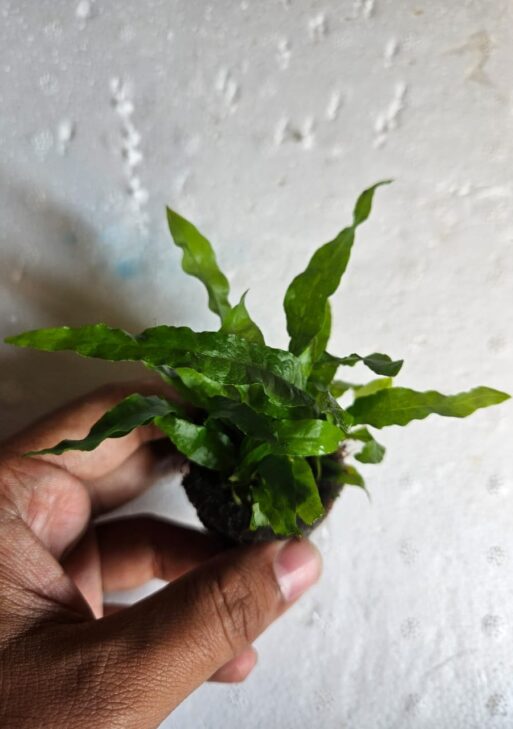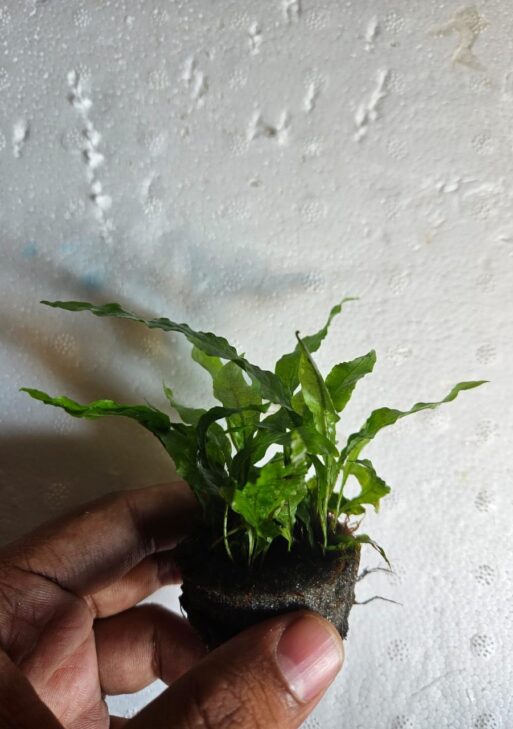

Few things worry a new Bucephalandra owner more than watching expensive leaves turn transparent and drop off. “Buce melt” is common, and most of the time the plant recovers. This guide explains why Bucephalandra melts, how long it lasts, and when to actually worry.
Quick answer: Bucephalandra usually melts in the first weeks after planting because it is adjusting to new water, light and temperature, or switching from emersed (nursery) to submerged growth. Remove melting leaves, keep the rhizome attached and uncovered, avoid moving the plant and keep conditions stable. If the rhizome stays firm, new leaves normally appear within a few weeks; a soft, brown rhizome means rot.
Why Bucephalandra melts
- New water: differences in pH, hardness and temperature from the nursery stress the plant.
- Emersed to submerged: leaves grown in air are not suited to underwater life and are shed.
- Transit stress: days in the dark during shipping use up stored energy.
- Buried or damaged rhizome: leads to rot rather than temporary melt.
- Sudden changes: big water changes, moving the plant or rearranging hardscape.
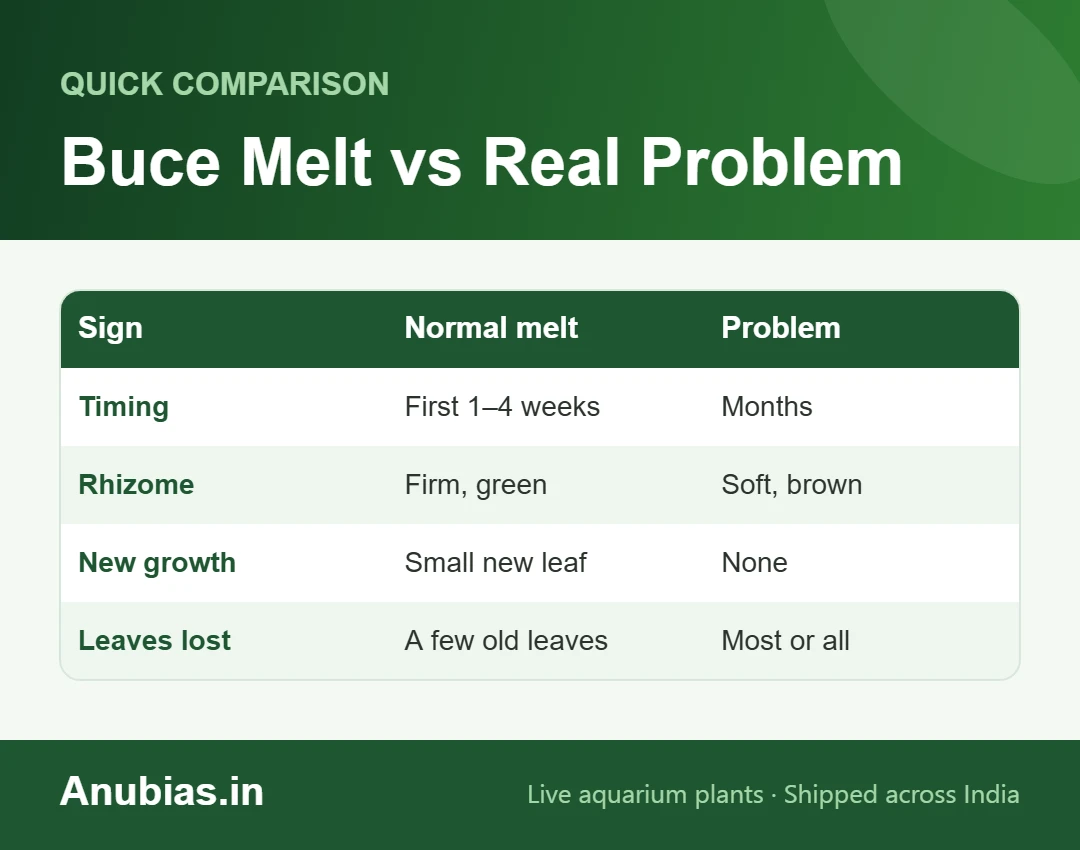
Normal melt vs a real problem
| Sign | Normal buce melt | Real problem |
|---|---|---|
| Timing | First 1–4 weeks after planting | Continues for months |
| Rhizome | Firm and green | Soft, brown or smelly |
| New growth | Small new leaf appears at the tip | No new growth at all |
| Leaves lost | A few older leaves | Most or all leaves |
How to help Bucephalandra recover
- Trim leaves that are fully transparent or mushy.
- Keep the rhizome attached to rock or wood and never bury it.
- Keep light low to moderate while it adjusts.
- Avoid moving it or rearranging the tank.
- Keep water changes small and consistent for the first weeks.
- Dose a light liquid fertiliser once new growth starts.
If the rhizome has soft sections, cut them away and re-attach the firm part, the same way as rescuing Anubias rhizome rot.
More Bucephalandra guides:
What the first month actually looks like
Most panic about buce melting comes from not knowing what a normal month looks like. Here is the usual pattern for a plant arriving from a nursery or from shipping.
- Days 1 to 5: leaves may look fine, or one or two may develop translucent patches. Attach the plant and leave it alone.
- Week 2: the peak of leaf loss. Older leaves go soft at the edges and detach. The rhizome should still be firm and green underneath.
- Week 3: melting slows. Remaining leaves stabilise, often with some damage they will keep permanently.
- Weeks 4 to 8: a small new leaf pushes out of the rhizome tip, usually pale or reddish before hardening into its adult colour.
A plant that loses every leaf but keeps a firm rhizome is not dead, it is just slow. Bucephalandra regrows from the rhizome, so as long as that stays hard and green when scratched lightly, patience is the correct treatment.
Mistakes that turn normal melt into a dead plant
The biggest one is intervening repeatedly. Moving the plant to a different spot each week, changing light levels, and adding new products all restart the adjustment clock the plant was working through.
The second is burying the rhizome to “anchor it better” while it looks bare. A rhizome under substrate rots, and a plant already low on energy will not survive that.
The third is heavy dosing during melt. Fertiliser does not speed recovery when the plant has no leaves to use it, and the surplus nutrients in a bright tank simply grow algae over the bare rhizome, which then blocks the new growth point.
The fourth is heat stacking. If the plant arrives during an Indian summer and goes into water already at 30°C, it is handling shipping stress and heat stress at once. Aim a fan across the surface for those first few weeks and keep the light modest.
Plants in this guide

Frequently asked questions
How long does buce melt last?
Usually a few weeks. Slow growth means new leaves can take time, so judge health by the firmness of the rhizome.
Will a Bucephalandra with no leaves grow back?
Sometimes, if the rhizome is firm and green, but recovery is slow. Plants that keep a few leaves recover faster.
Does CO2 stop Bucephalandra melting?
Not directly. Stable conditions matter more; CO2 simply speeds growth once the plant has settled.
Shop Bucephalandra and read the Bucephalandra care guide.
Buy Bucephalandra online in India: Wavy Green, Kedagang, Catherinae, Godzilla, Skeleton King and more.
Should I move a melting buce to a different tank?
No, moving it adds another round of adjustment to a plant that is already struggling. Melt is a response to change, so more change makes it worse. The only reason to move it is if the current tank has a clear problem such as water above 32°C or an ongoing algae bloom smothering the rhizome.
Does high temperature make melting worse?
Yes. Sustained water above roughly 30°C is one of the most reliable ways to extend melt and push a weakened plant into rhizome rot. During Indian summers, keep surface agitation strong, run a clip fan if you can, and accept that new growth will pause until the water cools.
Can I attach a buce to wood while it is still melting?
Yes, and it is better than leaving it loose. Tie it with cotton thread or use a small dot of aquarium-safe glue on the underside of the rhizome, avoiding the growing tip. Getting attachment done once, early, is far less stressful than handling the plant again in a few weeks.