

Quick answer: Most turtles eat, uproot or shred aquarium plants, so the realistic goal is choosing tough species and protecting them. Rhizome plants like Anubias, Java fern and Bucephalandra tied high on wood survive best, while cheap floaters such as water lettuce and anacharis work as a sacrificial food crop. Carpets, soft stems and mosses are a waste of money.
The honest starting point: turtles and plants are not natural allies
Most turtles kept in Indian homes will eat, uproot or shred most aquarium plants within days. That is not a failure of your setup; it is what an omnivorous reptile does when you fill its enclosure with soft green food and loose substrate.
So the useful question is not which plants can I keep in a turtle tank, but which plants survive long enough to be worth the money, and how do I protect them. Answered that way, a planted turtle tank is achievable; it just looks different from a scaped community tank.
Do turtles eat aquarium plants?
Yes, and the pattern is fairly predictable. Young red eared sliders are strongly carnivorous and do more damage by climbing, digging and tearing than by deliberate grazing. As the same turtle matures it eats far more plant matter, so a tank that survived the first year often gets stripped in the second.
Damage comes in three forms and they need different answers. Grazing is a turtle biting leaves; uprooting is a turtle digging up a planted bed; shredding is incidental damage from claws and shell as a heavy animal clambers over whatever is in its path. A plant can be thoroughly unpalatable and still be destroyed by the third kind.
The plants that actually survive: tough rhizome plants, mounted high
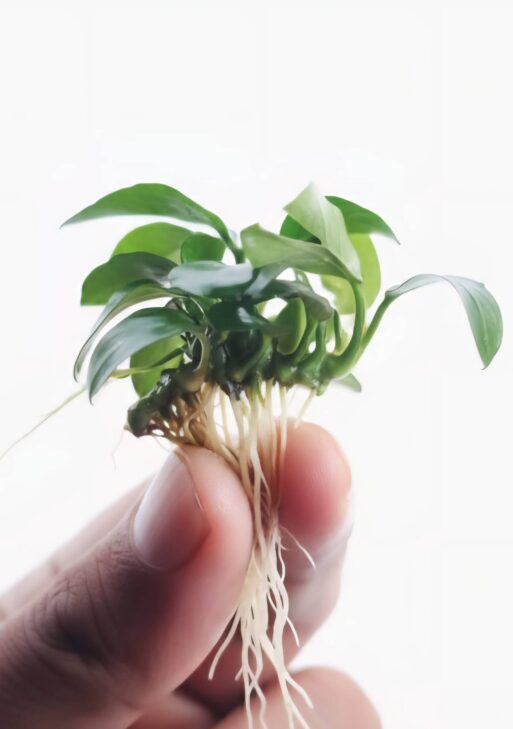
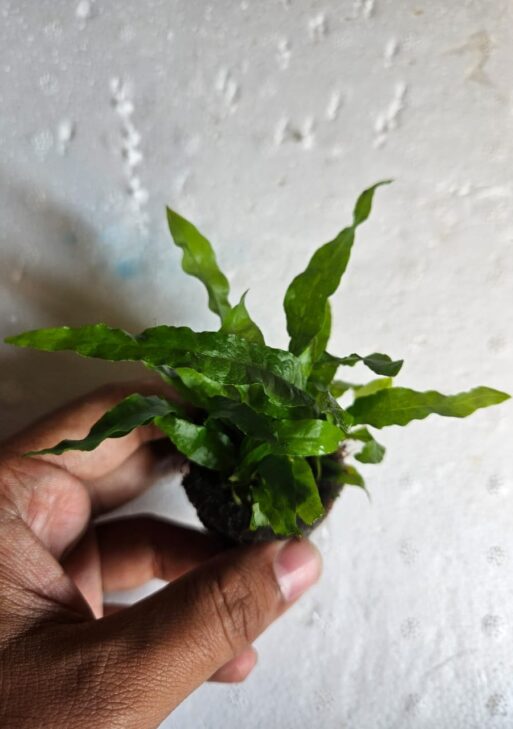
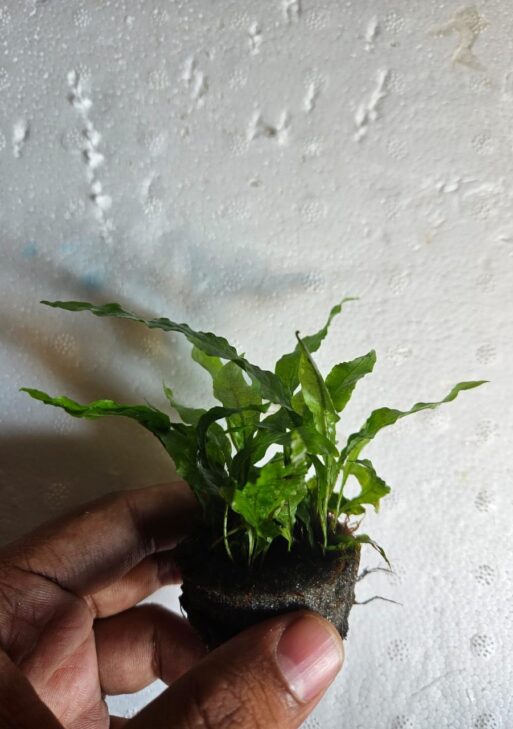
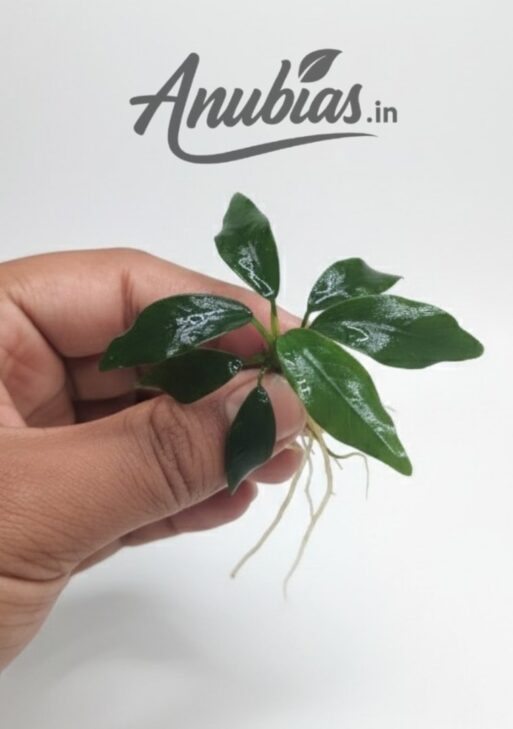
The survivors are the same three families that survive goldfish and large cichlids: Anubias, Java fern and Bucephalandra. All three are rhizome plants, tied to wood or rock rather than planted in substrate, so a digging turtle cannot uproot them. All three also have thick, leathery, unappetising leaves that most fish refuse and many turtles ignore in favour of easier food.
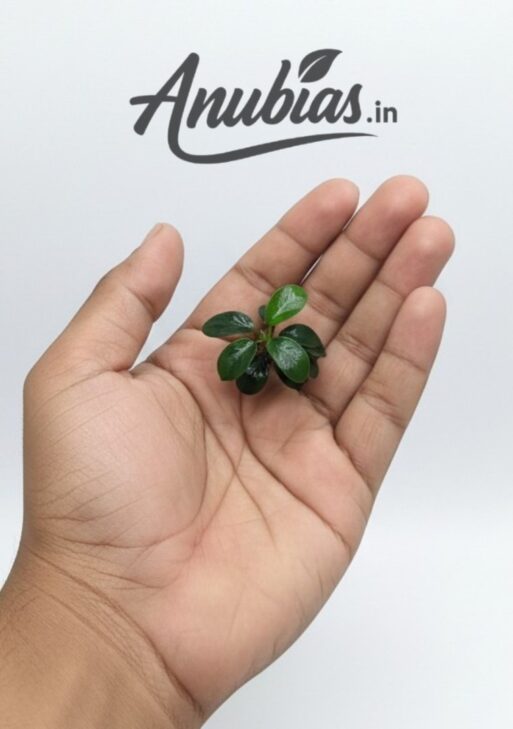
Anubias barteri var. glabra (₹90) and Anubias nana (₹90) are the sensible starting point: tough leaves, a hard rhizome, and a price low enough that losing one is annoying rather than painful. Java fern (₹175) is equally hardy and its long leaves can be mounted where a turtle has to work to reach them. Bucephalandra (from ₹299) has the hardest leaves of the three but also the highest price, so treat it as a reward for a setup that has already proved it can keep Anubias intact.
The word “mounted” is doing most of the work here. Tie the rhizome to driftwood or a heavy stone with thread or glue, and position that wood so the leaves sit in the upper third of the water, ideally in a corner the turtle does not use as a ramp. Plants on an open bottom get walked over; plants on a raised branch often do not.
Floating plants: a sacrificial crop you grow on purpose
The other strategy is to stop defending and start farming. Fast-growing floating plants are cheap, grow at the surface with unlimited access to atmospheric CO2, and can be replaced weekly without much thought. If the turtle eats them, that is the plan working, not failing.
Water lettuce (₹90), Amazon frogbit (₹90) and water hyacinth (₹90) are the obvious candidates in Indian tanks: all three grow quickly in warm water and all three are commonly grazed. Duckweed (₹60) multiplies fastest of all but follows every water change into your bucket and clogs filter intakes, so keep it only if you can live with it permanently. Anacharis (Egeria densa, ₹60) is not a floater by nature but works loose at the surface and regrows very fast, which makes it the classic living snack plant.
Corral floaters behind a loop of airline tubing so they do not shade out your mounted Anubias, and thin them weekly. Strong surface movement and a hot lamp overhead make a turtle tank a demanding home for floaters, so expect to top up occasionally.
Plants that are simply a waste of money in a turtle tank
Some plants are not a gamble; they are a donation. Skip them until you have a turtle-free tank.
- Carpets — Monte Carlo (₹150), dwarf hairgrass (₹150) and Hydrocotyle Japan (₹170) need undisturbed substrate. A turtle digs. There is no version of this that works.
- Delicate stems — Rotala, Cabomba (₹70), Ludwigia and Myriophyllum are soft, tasty and snap under any weight. They go first.
- Mosses within reach — Java moss (₹120), Christmas moss and Flame moss get torn loose by claws, then spread in fragments that clog your filter.
- Expensive collector Anubias — Pinto, Stardust, Panda and similar (₹310 to ₹1,650) do survive, but with torn leaves and scratched rhizomes. There is little sense in paying variegated prices for plants treated as furniture.
- Unprotected rooted plants — Amazon sword (₹180) and Vallisneria (₹80) are strong enough to live in a turtle tank but not to stay rooted in one.
Protecting plants: planters, cages, mesh and placement
Protection is what separates a planted turtle tank from a bare one. Four methods do most of the work.
- Weighted planters. Put sword or Vallisneria in a terracotta pot with substrate capped by large pebbles the turtle cannot flick out, heavy enough that it cannot be tipped.
- Rock cages. Build a low wall of large, stable stones around a planter so the crown is out of reach. Stones must be big; a turtle shifts anything it can get a foot under.
- Mesh and dividers. A plastic-mesh panel or egg-crate divider across one end gives you a plant section the turtle cannot enter. This is the most reliable method by far.
- Height and position. Mount rhizome plants high, away from the basking ramp and off the route between water and platform. Turtles repeat the same paths, so watch for a week and plant where they do not go.
The filtration reality: plants help a little, not a lot
Turtles are extremely messy. They eat protein-heavy food, tear it apart while eating, and produce far more waste than fish of comparable size. A handful of Anubias and a corral of frogbit will take up some nitrate, but they cannot come close to processing that load.
Treat plants as a bonus on top of a filter rated well above your tank volume, plus weekly water changes of a third or more. Floaters are the only plants that grow fast enough to matter, and even they supplement water changes rather than replace them.
Safe plants, and plants to avoid, for a grazing reptile
Be careful with the word “safe” here. Our own position is that Anubias is not known to be toxic to aquarium fish, shrimp or snails and does not release anything harmful into the water. That is a statement about fish tanks, not a clearance for a reptile’s diet.
Anubias is an aroid, and aroids contain insoluble calcium oxalate crystals that can irritate the mouth and stomach of mammals that chew them. We do not have reliable data on what regular grazing does to a turtle, so if yours eats a plant persistently, ask a reptile vet rather than an aquarium forum. The same applies to anything you intend to offer as food.
Two things are worth avoiding outright: plants collected from local ponds or drains, which may carry pesticide residue, leeches or parasites; and the ornamental “aquarium plants” some shops sell that are actually houseplants such as Dracaena or Syngonium, which are not aquatic, rot underwater, and have no place in a tank an animal eats from.
A realistic planting plan for a common Indian setup
For a typical three-to-four-foot tank with one slider, a basking platform and a canister or large internal filter, this plan usually holds.
| Role | Plant | Price | How to use it |
|---|---|---|---|
| Backbone | Anubias barteri var. glabra | ₹90 | Two or three, tied high on driftwood |
| Backbone | Java fern | ₹175 | Tied to rock in a back corner |
| Food crop | Water lettuce or frogbit | ₹90 | Corralled at the surface, thinned weekly |
| Food crop | Anacharis | ₹60 | Loose bunch, replaced as eaten |
| Protected | Amazon sword | ₹180 | Weighted pot behind a mesh divider |
That is roughly ₹600 to ₹800 of plants, of which perhaps ₹150 is consumable. Run it for two months before adding anything dearer. If the Anubias is still intact and the floaters are keeping up, you have earned the right to try Bucephalandra.
Keeping plants alive under a basking lamp
A basking lamp adds heat, so a shallow turtle tank through a Surat summer can climb past 30°C, which stresses Anubias and encourages rhizome rot. Keep the water level reasonable, run good surface movement, and check temperature in the afternoon rather than the morning.
It also drives evaporation, dropping the level away from floaters and mounted plants alike, so top up little and often instead of letting the level swing. Light spill from the lamp is not useful plant light either — it mostly grows algae on the nearest glass. Give the tank its own low-to-moderate aquarium light on a six-to-seven hour timer and accept slow growth; slow, intact plants are the goal here, and fast growth is what the floaters are for.
Plants in this guide

Frequently asked questions
Do turtles eat aquarium plants?
Most do, eventually. Young red eared sliders are largely carnivorous and damage plants by digging and climbing, while adults graze far more heavily. Assume anything soft will be eaten and anything rooted will be uprooted, and plan around tough rhizome plants plus cheap floaters you are happy to lose.
Which plants are best for a red eared slider tank?
Anubias (from ₹90), Java fern (₹175) and Bucephalandra (from ₹299), all tied to driftwood or rock and mounted high rather than planted. Add water lettuce, frogbit or anacharis at the surface as a fast-growing crop the turtle can graze without touching your mounted plants.
Is Anubias safe for turtles to eat?
Anubias is not known to be toxic to aquarium fish, shrimp or snails, and it does not release anything harmful into the water. It is an aroid, though, and aroids contain calcium oxalate crystals, so we would not present it as reptile food. If your turtle grazes it regularly, ask a reptile vet.
Can plants replace a filter in a turtle tank?
No. Turtles produce far more waste than fish of similar size, and a few plants cannot process that load. Use a filter rated well above your tank volume and change at least a third of the water weekly; plants are a helpful extra, not a substitute.
How do I stop my turtle destroying plants?
Use four tactics together: tie rhizome plants high on heavy wood, pot rooted plants in terracotta capped with large pebbles, ring those pots with big stones, and fence off one end of the tank with a mesh or egg-crate divider for plants you actually care about.
Tough plants worth trying
Anubias and Java fern tied high on wood, plus cheap floaters as a sacrificial crop, are the realistic choices. Browse them in the shop.