
Quick answer: Fast-growing plants reduce nitrate because growth and nitrogen uptake are the same thing. Floating plants such as frogbit, water lettuce and duckweed lead, followed by stem plants like Egeria densa, water wisteria, rotala and vallisneria. Anubias, Bucephalandra and Java fern grow too slowly to matter. Plant roughly a third of the tank volume with fast growers, thin them weekly, and expect fewer water changes rather than none.
How plants take up nitrogen, and why they prefer ammonia to nitrate
Fish waste, uneaten food and decaying leaves all break down into ammonia. In a filtered tank, bacteria convert that ammonia into nitrite and then into nitrate, the form that quietly accumulates between water changes. Plants sit inside that same chain and can pull nitrogen out of it at more than one point.
Given the choice, most aquarium plants take ammonium first. Nitrate has to be converted back into a usable form inside the leaf, and that costs the plant energy, whereas ammonium can be built into protein almost directly. It is simply the cheaper meal, which is why a heavily planted tank often shows blunted ammonia readings before its bacterial colony is fully established.
The practical consequence matters more than the biochemistry. Nitrogen a plant intercepts as ammonium never becomes nitrate at all. What your test kit shows is the leftover, the portion the plants could not use quickly enough.
The rule that decides everything: growth rate equals nitrogen uptake
A plant only removes nitrogen while it is building new tissue. Leaves, stems and roots are made largely of protein, and protein needs nitrogen, so what a plant exports is tied directly to how much new growth it puts on each week. There is no separate filtration function running in the background. Growth is the filtration.
That single rule sorts the entire plant list for you. A stem plant that needs trimming every fortnight is doing real work. A rhizome plant that unfurls one leaf a month is doing almost none, however large and handsome it looks.
It also explains why uptake stops when growth stops. Plants melting after shipping, starved of light, or sitting in a tank with no iron and trace elements are not removing nitrate, and as older leaves break down they may briefly put nitrogen back.
Top performers, ranked
Floating plants sit at the top for one reason: their leaves are in open air with unlimited atmospheric CO2, so they are never carbon-limited the way submerged plants are. That is why they can double their coverage in days and strip nutrients faster than anything rooted in the substrate.
- Amazon frogbit, water lettuce and duckweed — the strongest nutrient exporters available to most Indian hobbyists. Duckweed is the fastest and the hardest to remove once introduced, so add it deliberately.
- Egeria densa (Anacharis) — the best value submerged grower on this list. It grows planted or floating, tolerates cooler water, and handles ammonia and nitrate spikes well, which is why goldfish keepers lean on it.
- Water wisteria — fast, leafy and forgiving across low to high light. A good first fast grower for anyone who does not want to think about lighting too hard.
- Vallisneria nana — spreads by runners and fills the background, so uptake rises over the first few months as it multiplies.
- Rotala rotundifolia, Ludwigia repens, Bacopa caroliniana and red myriophyllum — dependable stem plants that respond to trimming with faster growth.
- Cabomba — genuinely fast, but only under medium to high light, and it does best with CO2. In low light it sheds leaves and adds to the waste load instead of reducing it.
- Brazilian pennywort — flexible, since it grows floating or planted, and it keeps moving even in modest light.
- Amazon sword and dwarf sagittaria — heavier root feeders, moderate rather than rapid, useful in tanks with rich substrate or root tabs.
Prices at our Surat shop, for reference:
| Plant | Role | Price |
|---|---|---|
| Duckweed | Floating, fastest | ₹60 |
| Egeria densa (Anacharis) | Submerged, very fast | ₹60 |
| Cabomba caroliniana | Stem, light-hungry | ₹70 |
| Red myriophyllum | Stem, fast | ₹70 |
| Vallisneria nana | Background runner | ₹80 |
| Brazilian pennywort | Floating or planted | ₹80 |
| Amazon frogbit | Floating | ₹90 |
| Water lettuce | Floating, larger tanks | ₹90 |
| Water wisteria | Stem, forgiving | ₹120 |
| Rotala rotundifolia | Stem | ₹120 |
| Ludwigia repens | Stem | ₹140 |
| Amazon sword | Root feeder | ₹180 |
Two plants often recommended online for nitrate control, hornwort and salvinia, are not currently in our catalogue. If you cannot find them listed on the shop, assume they are out of stock rather than hidden, and use Egeria densa or frogbit in their place.
Slow growers barely move the needle
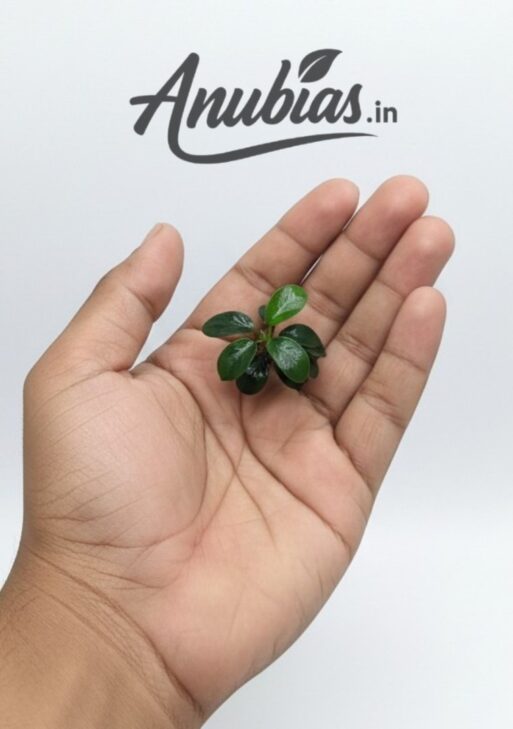
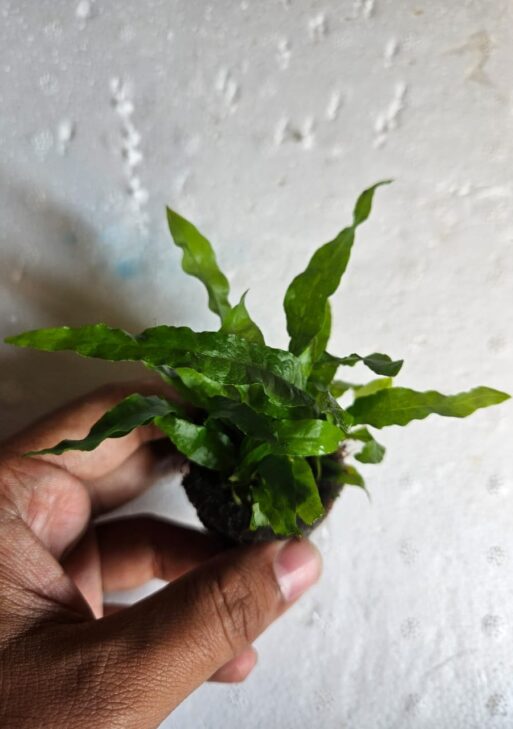
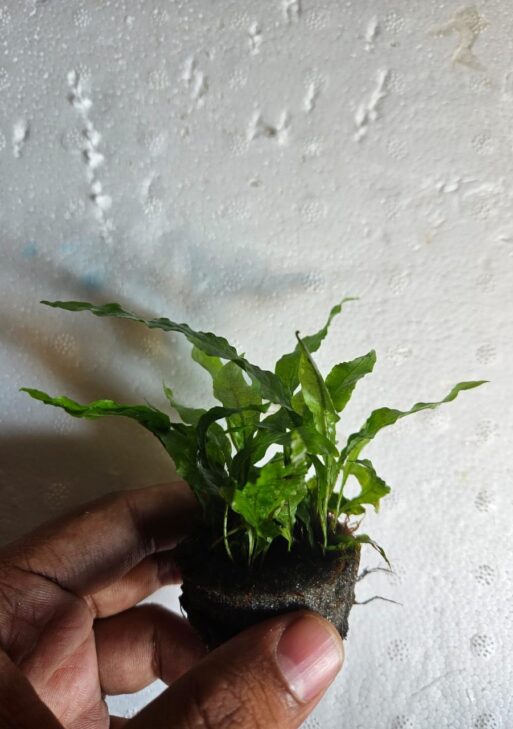
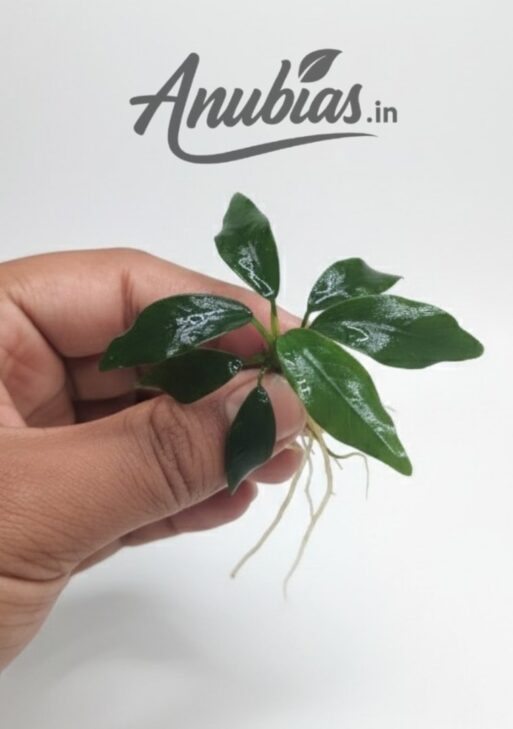
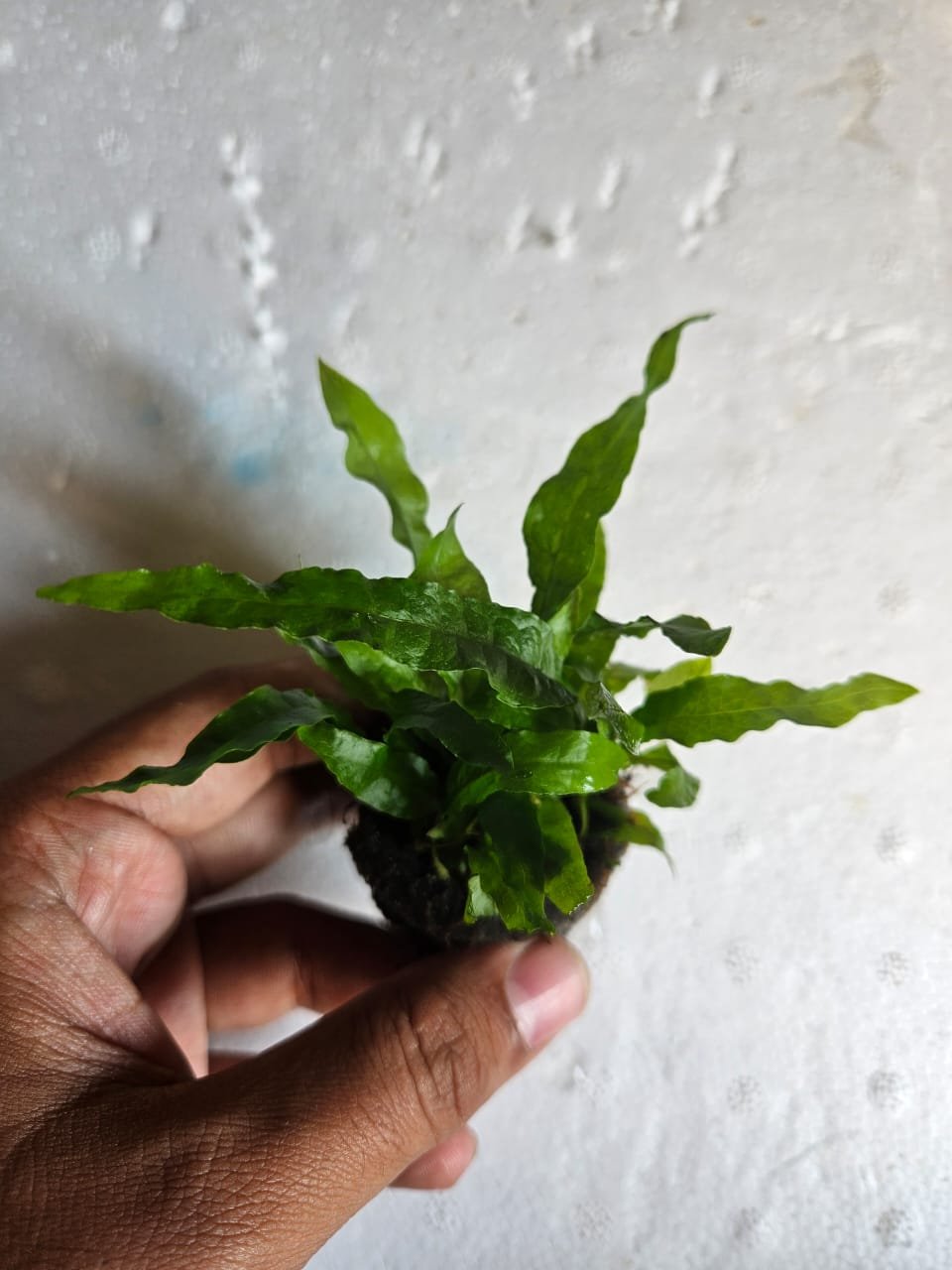
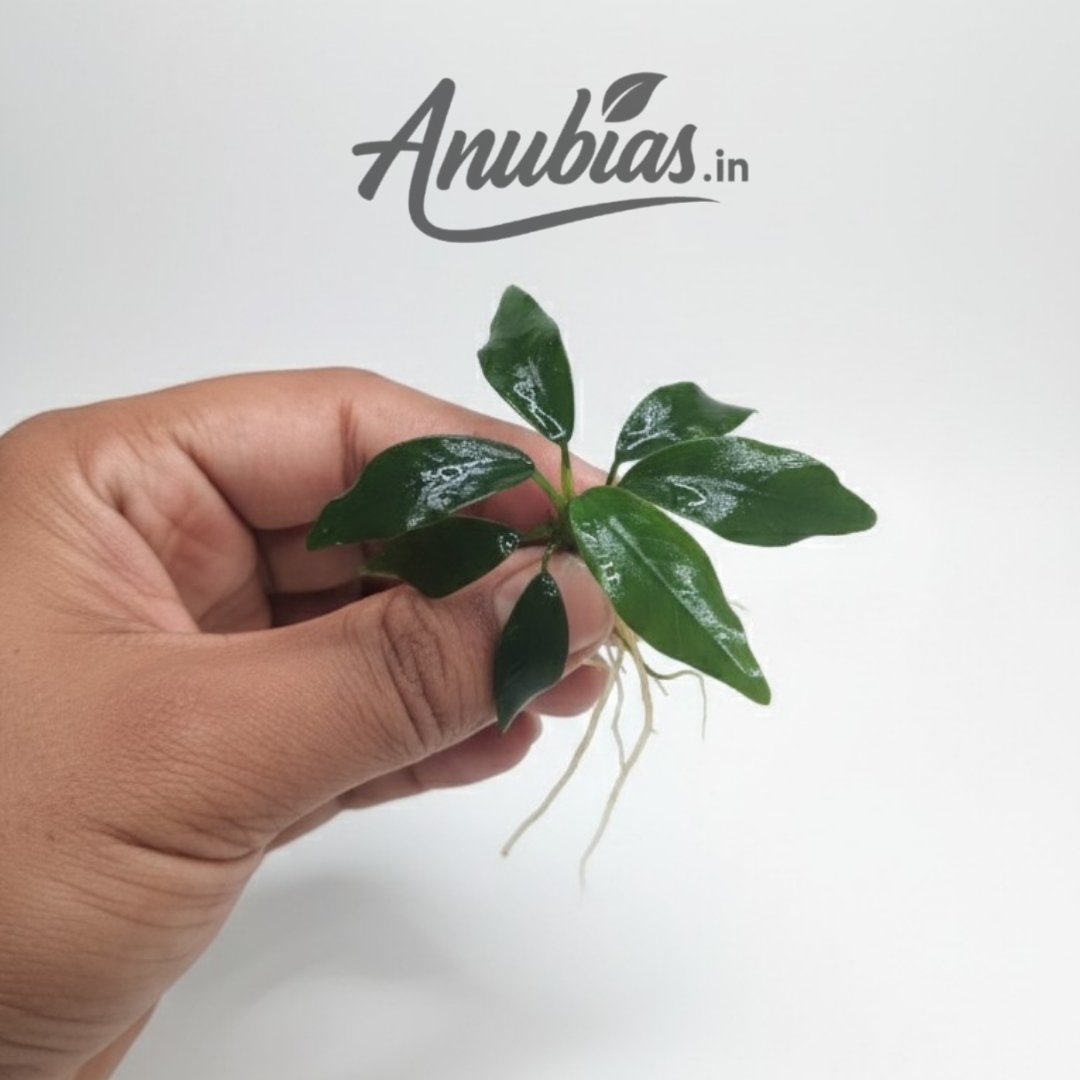
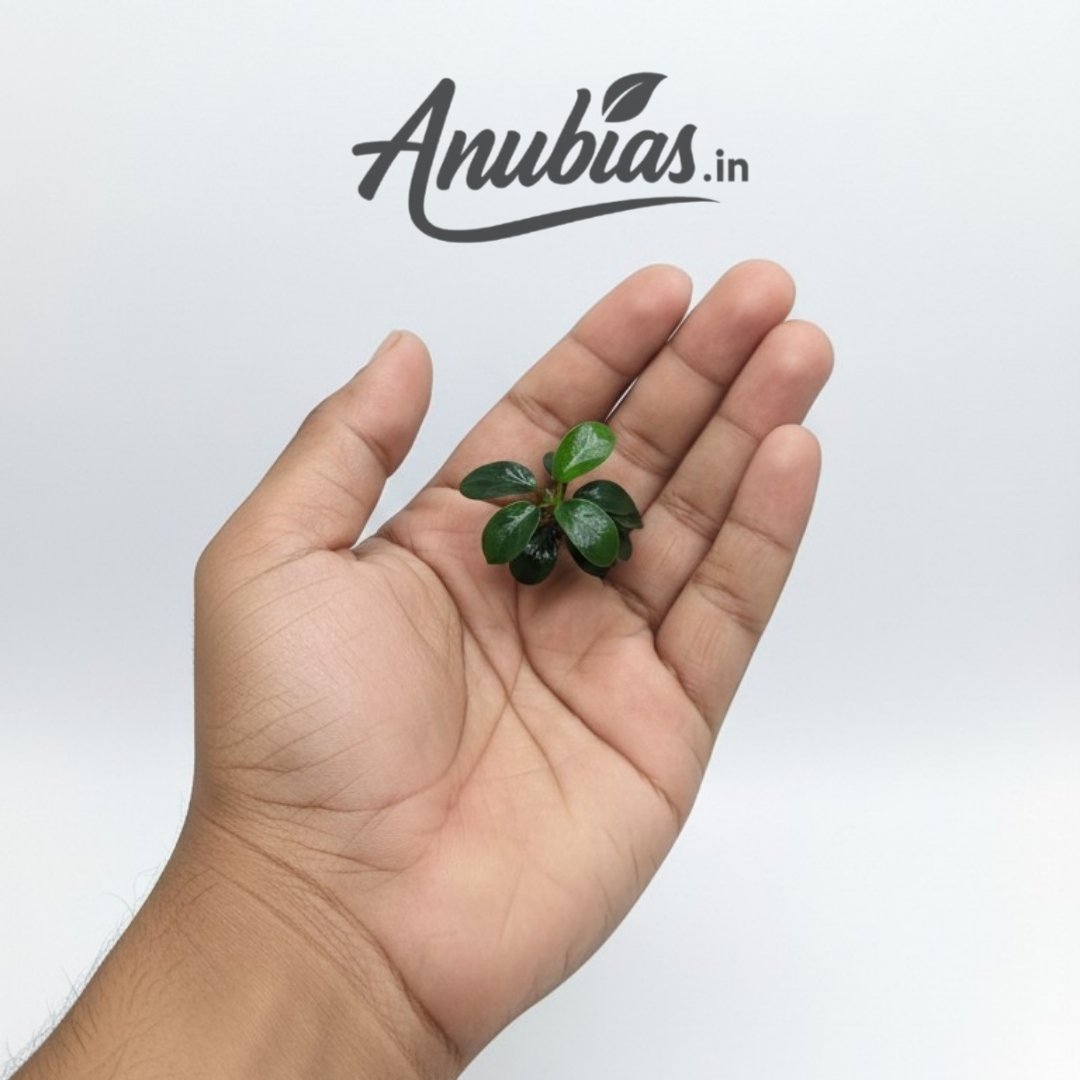
Anubias, Bucephalandra and Java fern are the backbone of most Indian planted tanks, and they deserve to be. They are tough, they tolerate low light, they attach to wood and stone, and fish do not shred them.
What they are not is a nitrate solution. A mature Anubias might add a leaf every few weeks, and that tiny amount of new tissue is all the nitrogen it takes up in that time. You could fill a tank with Anubias Nana at ₹90, Java fern at ₹175 or Bucephalandra from ₹299 and see almost no change on a nitrate test.
Treat them as decoration and shelter, then add fast growers separately for the nutrient work. One more point worth repeating: the rhizome on all three is never buried. Tie or glue it to hardscape and let the roots find their own way, or it will rot.
How much planting it takes to see a real nitrate drop
Token planting does nothing measurable. As a working target, aim for fast growers occupying roughly a third of the tank volume before you expect nitrate to respond, and give floaters a sensible share of the surface.
With floating plants, keep at least half the surface open at any time. Full coverage starves the plants below, reduces gas exchange and can leave a stocked tank short of oxygen overnight, which is a real risk in Indian summers when tanks sit at 28-32 °C and water holds less oxygen to begin with.
The step most people skip is export. Nitrogen only leaves the tank when the plant mass does, so thin floaters and trim stems weekly and take the cuttings out. Trimmings left to rot in a corner simply return their nitrogen to the water.
Can plants replace a filter, or only reduce water changes?
They cannot replace a filter, and it is worth being blunt about why. A filter provides flow, mechanical removal of solids and a bacterial colony that works continuously. Plants work only while the lights are on, which in a healthy tank means a 6-8 hour photoperiod, and they consume oxygen at night like everything else.
What plants genuinely do is reduce how often and how heavily you need to change water. A well-planted, lightly stocked tank may sit comfortably on a smaller weekly change where a bare tank of the same size would need much more.
Water changes still earn their place. They replace minerals plants and fish consume, dilute dissolved organics that no plant removes, and correct the slow drift in water chemistry that no test kit in a typical home setup tracks. Fewer and smaller, yes. Never, no.
Using plants to silent-cycle a new tank
Silent cycling means planting heavily from day one so that plants absorb ammonia while the bacterial colony builds, keeping the spikes low rather than eliminating them. It works best with fast growers and floaters, precisely because they are the ones taking up ammonium at speed.
It does not let you skip cycling. Bacteria still have to establish, and a clear tank is not the same as a cycled one. Keep testing until ammonia and nitrite both read zero within a day of adding a nitrogen source, run the light for 6-8 hours rather than longer, and stock slowly once the readings are stable.
Shrimp deserve extra patience here, as they react to ammonia and nitrite spikes far more sharply than most fish do.
A nitrate reading of zero is not automatically good
In a heavily planted tank, zero nitrate usually means the plants have run out of nitrogen rather than that the tank is exceptionally clean. The symptoms follow quickly: pale or stunted new growth, yellowing on the older leaves as the plant moves nitrogen to its tips, and algae moving into the gap left by struggling plants.
Before you act on a zero, check the test itself. Nitrate kits are the least reliable in most hobby sets, and the reagent bottles need vigorous shaking before use or they read low.
If the zero is genuine and your plants look unhappy, the fix is to add nitrogen, not remove it — feed the fish a little more generously, or dose a nitrogen-containing fertiliser alongside your trace mix. A planted tank running at a modest, steady nitrate level is healthier than one scrubbed bare.
Plants in this guide
Grown in Surat · graded by leaf count and photographed before dispatch · live-arrival guarantee on every order · ₹99 shipping, free from ₹2,000

Frequently asked questions
Do aquarium plants actually reduce nitrate?
Yes, but only in proportion to how fast they grow. Nitrogen goes into new leaves, stems and roots, so a plant that visibly grows each week is removing measurable nitrate. Slow growers such as Anubias and Java fern remove very little.
Which plants absorb ammonia fastest in an aquarium?
Floating plants like Amazon frogbit, water lettuce and duckweed are the quickest, because their leaves reach open air and are never short of CO2. Among submerged plants, Egeria densa and water wisteria are the strongest performers and the easiest to source in India.
Can plants replace my filter completely?
No. A filter provides flow, mechanical removal and round-the-clock bacterial processing, while plants only take up nutrients while the lights are on. Plants reduce how often you change water and how heavily the tank is loaded, but they are not a substitute for filtration.
How many plants do I need to see nitrate fall?
Aim for fast growers filling roughly a third of the tank volume before expecting a visible change on a test kit. A few stems in a corner will not shift the reading. Keep at least half the water surface clear if you are using floaters.
My nitrate reads zero in a planted tank. Is that good?
Usually it means the plants have exhausted the available nitrogen rather than that the tank is unusually clean. Look for pale new growth, yellowing older leaves and creeping algae. Re-test carefully, then feed more or dose a nitrogen fertiliser if the zero is real.
Stock the fast growers
Floaters and fast stems do most of the nitrogen work. Browse them in the shop, or compare growth rates in the plant care chart.
Bubbles on the leaves? Read what pearling actually means.