
White, cotton-like fuzz is one of the most common surprises in a new planted tank. Most of the time it is harmless, but on plants it can point to decaying tissue. Here is how to tell the difference.
Quick answer: White fuzz on new driftwood is usually a harmless bacterial and fungal biofilm that feeds on sugars in the wood; wipe or siphon it off and it normally fades within a few weeks. White fuzz on plants usually grows on dead or decaying tissue, such as melting leaves or a rotting rhizome, so trim the damaged parts, remove uneaten food, and keep up regular water changes. It is rarely a disease of the plant itself.
White fuzz on driftwood
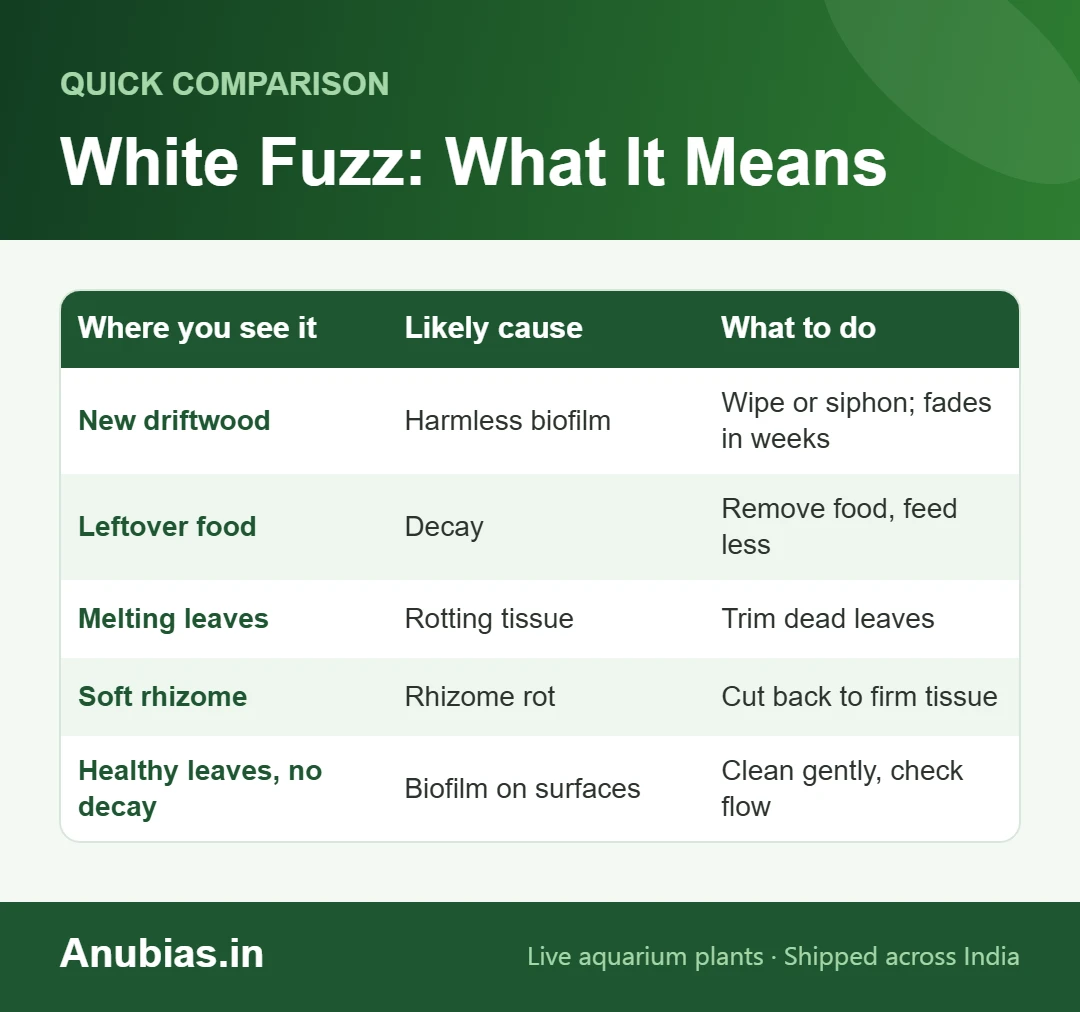
Fresh driftwood releases organic compounds that feed a slimy white or grey biofilm. It looks alarming but does not harm fish or plants. Siphon it during water changes, scrub the wood if you like, and it will usually disappear as the wood settles. Many shrimp and snails will graze on it.
White fuzz on aquarium plants
On plants, fuzz typically appears where tissue is already dying: leaves that melted after planting, damaged stems, or a soft, rotting rhizome. Remove the dead parts and check the rest of the plant. Why new plants melt after delivery.
Is it rhizome rot?
If the fuzz sits on a mushy, smelly Anubias or Java fern rhizome, cut back to firm green tissue and reattach the healthy piece to wood or rock. Never bury the rhizome. Anubias rhizome rot guide.
How to prevent it
- Soak or boil new driftwood before use where practical.
- Feed only what fish eat in a couple of minutes.
- Remove melting leaves promptly.
- Keep regular water changes and good surface flow: maintenance checklist.
Telling fuzz apart from the things it resembles
Several different problems look like white fuzz at a glance, and the treatment differs completely, so it is worth a closer look before doing anything.
- Slimy, jelly-like white or clear coating on new wood that shrimp and snails graze at is biofilm, and it clears on its own.
- Fine grey-white or pale hairs growing stiffly outward from leaf edges and equipment are more likely to be an algae, which needs a nutrient and flow fix rather than patience.
- Cotton-wool tufts on a dead leaf, a leftover food pellet or a dead animal are a water mould that lives on dead matter. Remove what it is growing on and it goes.
- A milky haze through the whole water column, rather than fuzz on surfaces, is a bacterial bloom in a young tank and is unrelated.
A simple test helps. Poke it gently with tweezers. Biofilm and mould smear and come away in slimy strands. Algae resists and springs back.
The first two weeks of a new tank
Most fuzz complaints come from tanks under a month old, and a little structure in that period prevents most of them.
- Soak or boil new wood before it goes in, and change the soak water daily until it stops going brown.
- Feed very little in the first fortnight, since in a new tank there is nothing to process the surplus and leftovers are what mould colonises.
- Siphon the visible fuzz off wood during each water change rather than scrubbing, which just spreads it around.
- Remove melting and dying leaves from newly planted stock promptly, because dead plant tissue is the second most common thing mould grows on.
- Delay adding shrimp until the worst of the bloom passes, then let them graze what remains.
- Leave it otherwise alone, because the growth peaks in roughly the second week and fades over the following month as the tank matures.
In the monsoon this all runs a little faster and heavier, since warm water accelerates both the biofilm and whatever is decaying under it.
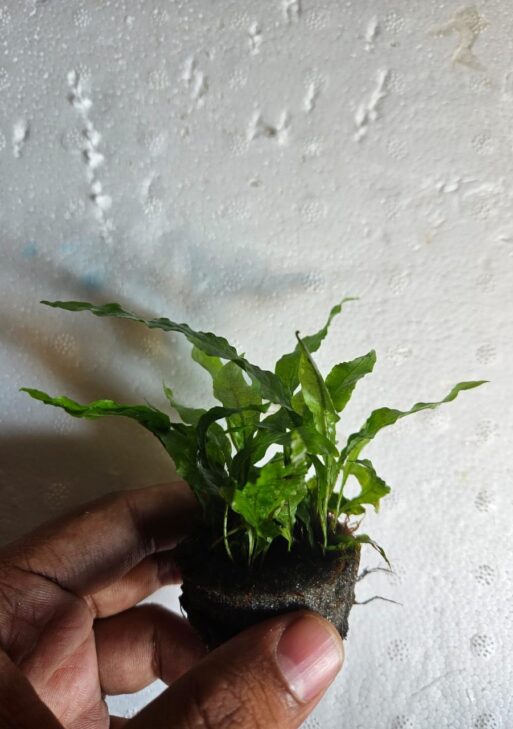
Plants in this guide


Frequently asked questions
Is white fuzz on driftwood harmful to fish?
Usually not. It is a biofilm that fades as the wood ages, and many shrimp and snails eat it.
How long does white fuzz on driftwood last?
It typically fades within a few weeks as the wood releases fewer sugars.
Should I treat white fuzz with medication?
Generally no. Removing decaying material and cleaning the surface is enough in most planted tanks.
Shop healthy plants on Anubias.in.
Will shrimp and snails eat white fuzz?
Yes, biofilm on new driftwood is a genuine food source and shrimp in particular will strip it steadily. This is one of the easiest ways to clear it without intervening. They will not, however, remove fuzz that is growing on dead plant tissue or a rotting rhizome, which you have to cut out yourself.
Can white fuzz spread to my fish?
The biofilm and moulds that grow on new wood do not attack healthy fish, so a fuzzy log is not a threat by itself. Cotton-like growth on a fish is a different matter and usually points to an injury or an existing health problem, which needs treating on its own terms. If both appear together, look at water quality rather than assuming one caused the other.
Does white fuzz mean my water is dirty?
Not necessarily. On new driftwood it is a normal stage that even spotlessly maintained tanks go through, driven by compounds leaching out of the wood. On plants and leftover food it does suggest something is decaying that should have been removed, so check for dying leaves, uneaten food and any waste trapped behind the hardscape.