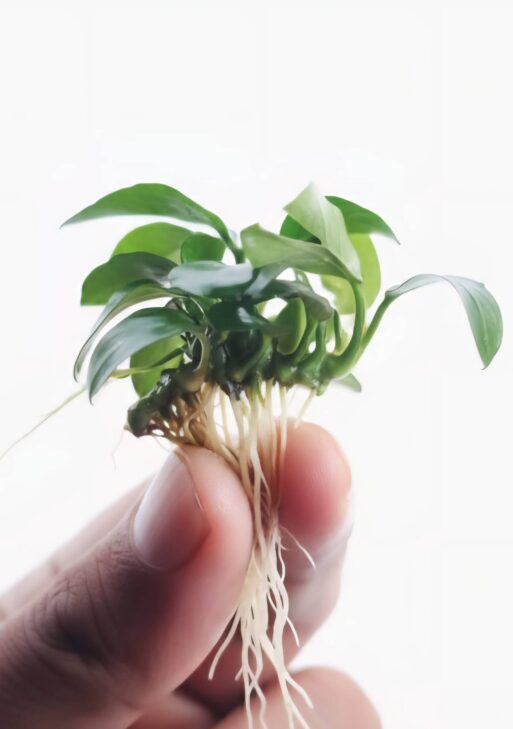


Quick answer: Hard water is not a barrier to a planted aquarium in India. Calcium and magnesium are plant nutrients, so Anubias, Java fern, Vallisneria, Cryptocoryne wendtii, Bacopa and Hygrophila all grow well in high-TDS borewell water without RO. The genuine hard-water issues are green spot algae, calcium crust and a high KH that holds pH up, and each is managed through light, fertiliser and how you top up.
What “hard water” actually means in Indian terms
Most hobbyists in India meet hard water through a TDS pen, because TDS meters are cheap and hardness kits are not. TDS measures every dissolved substance, so it is a rough signal rather than a direct measure of hardness — two samples reading the same TDS can behave quite differently in a tank.
The numbers that matter are GH and KH. GH (general hardness, in dGH) is dissolved calcium and magnesium; KH (carbonate hardness, in dKH) is carbonates and bicarbonates, which buffer pH and stop it swinging. A typical community planted tank is comfortable around 3–8 dGH, 3–6 dKH and pH 6.5–7.5, and plenty of Indian tanks sit well above that and still grow plants happily.
Water quality changes street by street and season by season, so precise city figures would mislead. Think in terms of source instead, and treat the bands below as broad approximations.
| Water source | Approximate TDS | Hardness character | What it means for plants |
|---|---|---|---|
| Municipal supply from a river or reservoir | Low to moderate | Soft to moderately hard | Almost every plant will grow |
| Municipal supply blended with groundwater | Moderate | Moderately hard, KH often high | Most plants fine; soft-water reds struggle |
| Inland borewell water | High to very high | Hard, high KH, pH above 7.5 | Stick to the hardy list; pH stays high |
| Coastal or saline-affected borewell | High, variable | Hard, may carry chloride | Test first; dilution often needed |
| RO water | Near zero | Almost no GH or KH | Remineralise or blend; never use neat |
Test your own tap or borewell water with a liquid GH/KH kit before it goes into a tank; that single test beats any city average. Dechlorinate municipal water before it touches plants, fish or shrimp.
Why hard water is not a problem for most plants
The minerals that make water hard are plant nutrients. Calcium builds cell walls and new leaf tissue, and magnesium sits at the centre of every chlorophyll molecule. A tank at 10 or 12 dGH supplies both for free — soft-water keepers buy GH booster to get what you already have from the tap.
What hard water genuinely changes is pH behaviour. A high KH holds pH up around 7.5 to 8.2 and refuses to let it fall, which reduces the availability of some micronutrients, iron above all. That is an inconvenience for a narrow group of demanding species, not a problem for the rest.
In practice, far more Indian tanks fail from too much light, no fertiliser or a buried rhizome than from hardness.
Plants that thrive in hard Indian water
Rhizome plants: Anubias and Java fern
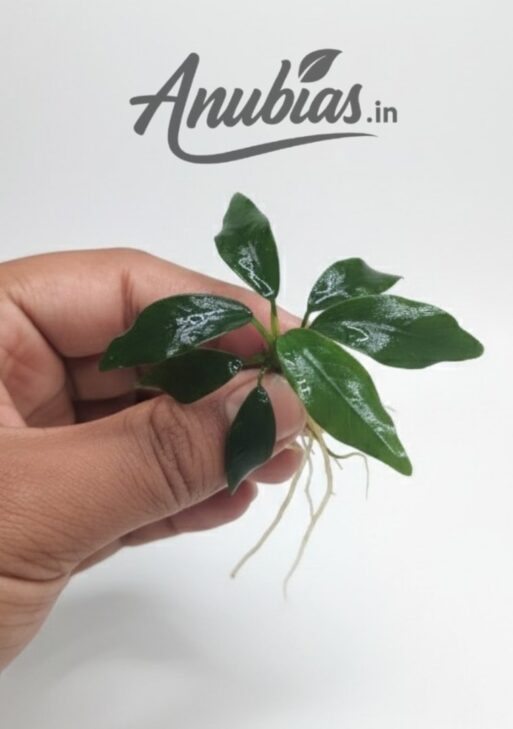
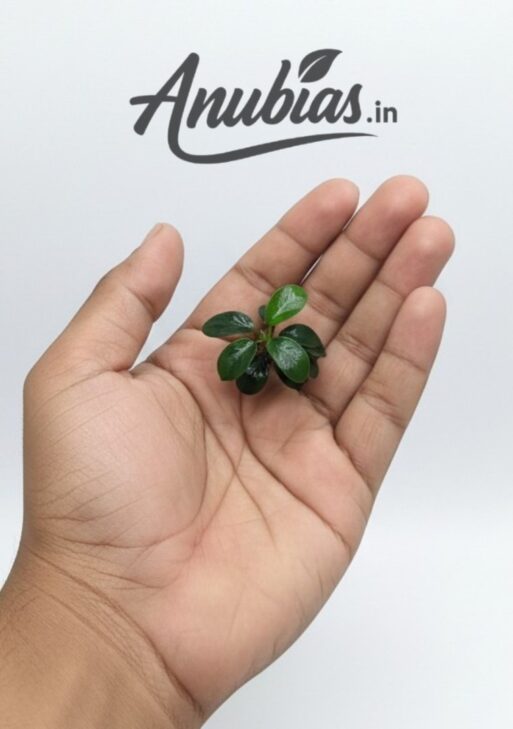
Anubias is the most reliable plant for high-TDS borewell water. It grows slowly from a thick horizontal rhizome, feeds largely from the water column, needs no CO2 and is untroubled by pH above 8. Anubias Nana, Nana Petite and Barteri var. glabra start at ₹90, with Congensis at ₹200 and ‘Coffeefolia’ at ₹250.
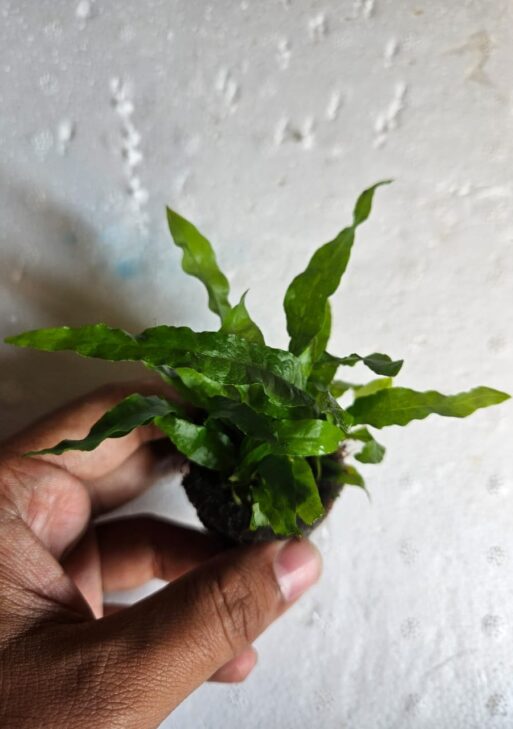
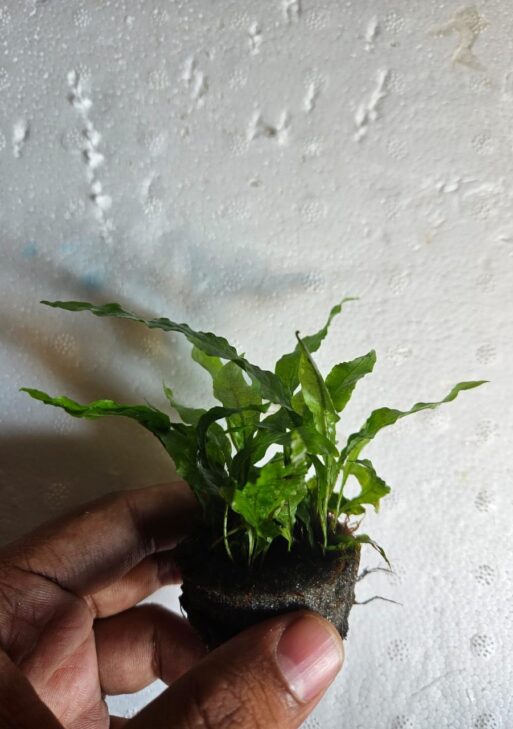
Java fern tolerates an equally broad pH range; the standard, Philippine, Wrinkled Leaf and Dwarf ‘Green Gnome’ forms are ₹175 each. Both are rhizome plants, so attach them to driftwood or rock with cotton thread or a dab of super-glue gel and never bury the rhizome, which rots when covered.
Rooted background plants: Vallisneria and Cryptocoryne wendtii
Vallisneria positively likes hard, alkaline water — it is one of the few aquarium plants able to use bicarbonate as a carbon source, so a high KH works in its favour. Vallisneria Nana (Jungle Val) is ₹80 and sends runners along the back of a tank once rooted.
Cryptocoryne wendtii is the other workhorse, ₹150 for the Green and ₹170 for the Red (Bronze). Expect it to melt back after it arrives, because crypts shed leaves following any move and regrow from the roots within a few weeks. Leave the roots undisturbed and it returns stronger.
Stem plants: Bacopa and Hygrophila
These two give height and movement without needing soft water. Bacopa Caroliniana (₹120) is thick-stemmed, slow enough to stay tidy and indifferent to hardness, while Water Wisteria (Hygrophila difformis, ₹120) grows fast enough to mop up surplus nutrients in a new tank. Hygrophila Pinnatifida (₹220) adds fern-like leaves and will attach to wood.
Plants that struggle in hard water
Be honest before you spend. Rotala Wallichii (₹90) is a beautiful needle-leaved stem, but it wants soft, acidic, CO2-injected water; in high-KH conditions it thins out and drops its lower leaves. The demanding soft-water reds behave the same way, staying green and stretching rather than colouring.
Bucephalandra is subtler. It grows in hard water, but the compact rare forms colour best in softer conditions and are more prone to white mineral spotting on the leaf. On neat borewell water, start with ‘Wavy Green’ at ₹299 or ‘Kedagang’ at ₹399 before committing to ‘Godzilla’ at ₹549 or ‘Skeleton King’ at ₹649.
Carpeting plants are not ruled out by hardness, but Dwarf Hairgrass (₹150) and Monte Carlo (₹150) need strong light plus CO2 — and strong light in hard water is what feeds green spot algae.
The real hard-water problems
Hardness rarely kills plants. It creates three specific nuisances instead.
Green spot algae. Hard, high-pH tanks under strong light grow hard green dots on the glass and on slow leaves, with Anubias the usual victim. The fix is not softer water but a photoperiod of 6 to 8 hours, less intensity and, counter-intuitively, keeping phosphate available rather than starving it.
Calcium crust. Evaporation removes water and leaves the minerals behind, so you get a white rim on the glass and a chalky film on older leaves. Top up with RO or distilled water rather than more tap water, and clean above the waterline with a cloth dipped in white vinegar.
KH holding pH high. At 8 dKH and above, CO2 injection barely shifts the pH and pH-down products are wasted money, because the buffer absorbs them and the pH bounces back. A stable pH of 8 beats a pH of 6.8 that moves every day.
Should you buy an RO unit?
For a single hobby tank growing the plants above, almost certainly not. An RO unit is a running cost as well as a purchase: membranes need replacing, several litres go to waste for every litre produced, and the output still has to be remineralised. Pure RO is not soft water, it is empty water, and it starves plants.
RO earns its keep in three situations — breeding Caridina shrimp, growing demanding soft-water reds seriously, or borewell water so mineral-heavy that nothing settles. Even then, most keepers blend rather than replace: mix RO into tap water to reach a workable GH and KH, and test before every water change. If you are simply tired of white glass and sluggish growth, a test kit, fertiliser and a light timer give a far better return.
Fertiliser adjustments for high-GH water
First rule: do not add more calcium or magnesium. You have both in quantity, so any product designed to boost GH for soft-water tanks is redundant here and only pushes your TDS higher.
Second, iron is the nutrient that suffers. Above roughly pH 7.5 iron drops out of solution quickly, which is why pale new leaves with darker veins are common in hard-water tanks. Dose trace elements little and often: three or four small doses a week beat one large one, which is where a two-part system such as Green Plus + Trace helps, at ₹250 for the 100 ml pair and ₹410 for the 250 ml pair.
Third, feed the roots. Vallisneria, Cryptocoryne and Amazon Sword (₹180) are heavy root feeders and respond to root tabs or a nutrient substrate far more than to water-column dosing. Keep nitrate measurable but under about 30 to 40 ppm, and hold the photoperiod at 6 to 8 hours so the nutrients go into leaves rather than algae.
Two ready-made plant lists
Pure borewell tank: no RO, no CO2
- Anubias Nana ₹90 and Nana Petite ₹90, glued to wood in the midground
- Java Ferns ₹175, tied to a branch for background height
- Vallisneria Nana ₹80 in the back corners
- Cryptocoryne wendtii ‘Green’ ₹150, allowing for the usual melt and regrowth
- Bacopa Caroliniana ₹120 as a stem group on one side
- Java Moss ₹120 on a stone or as a low foreground patch
- Amazon Frogbit ₹90 floating, to shade the tank and slow algae
Mixed RO and tap tank: moderate hardness, CO2 optional
- Everything above still applies; hardy plants do not object to softer water
- Bucephalandra ‘Wavy Green’ ₹299 or ‘Kedagang’ ₹399, attached to hardscape
- Ludwigia Repens ₹140 and Rotala Rotundifolia ₹120 for reliable colour
- Staurogyne Repens ₹180 as a low, bushy midground
- Hydrocotyle Tripartita ‘Japan’ ₹170 to fill gaps quickly
- Red Tiger Lotus ₹250, one bulb as a centrepiece
- Rotala Wallichii ₹90, but only once light and CO2 are dialled in
Plants in this guide


Frequently asked questions
Can I keep a planted aquarium with borewell water in India?
Yes, and a great many Indian hobbyists do. Test the GH, KH and iron content of the water first, then build the tank around hardy species such as Anubias, Java fern, Vallisneria and Cryptocoryne wendtii. A high TDS reading on its own is not a reason to avoid live plants.
Which aquarium plants grow best in high pH water?
Anubias, Java fern, Vallisneria, Cryptocoryne wendtii, Bacopa Caroliniana, Water Wisteria and Egeria Densa all handle a pH above 7.5 comfortably. Vallisneria actively benefits from it, since it can use bicarbonate as a carbon source. Stability matters far more than hitting an exact number.
Do I need an RO unit for aquarium plants in India?
For most hobby planted tanks, no. RO is worth its purchase and running cost mainly for breeding Caridina shrimp, growing demanding soft-water red stems, or handling extremely mineral-heavy borewell water. If you do use it, blend RO into tap water rather than filling the tank with neat RO, which is nutritionally empty.
Why does green spot algae keep appearing in my hard water tank?
Green spot algae is driven by strong light over a long photoperiod, often alongside low phosphate, rather than by hardness itself. Cut the photoperiod to 6 to 8 hours, reduce light intensity, and keep phosphate available instead of starving it. Slow-growing leaves such as Anubias show it first.
How do I stop white calcium deposits on leaves and glass?
The deposits build up because evaporation removes water and leaves the minerals behind. Top up evaporation losses with RO or distilled water rather than more tap water, and keep surface agitation moderate so less water is lost. Above the waterline, a cloth dipped in white vinegar removes the crust, followed by a rinse.
Hard-water safe plants
Anubias, Java fern, Vallisneria and Cryptocoryne all handle Indian tap water. Browse them in the shop or compare them in the plant care chart.