
New plants can occasionally carry hitchhikers — pest snails, snail eggs, or algae. A quick quarantine routine protects your tank, especially sensitive shrimp setups. Here’s a simple, plant-safe approach.
Quick answer: Inspect the leaves and rhizome, trim damaged leaves and rinse the plant gently in dechlorinated water to wash off debris and snail eggs. Then hold it in a separate tub of dechlorinated water for one to two weeks and watch for pest snails or algae. Skip harsh chemical dips; they can damage mosses and are unsafe for shrimp.
How to quarantine new aquarium plants
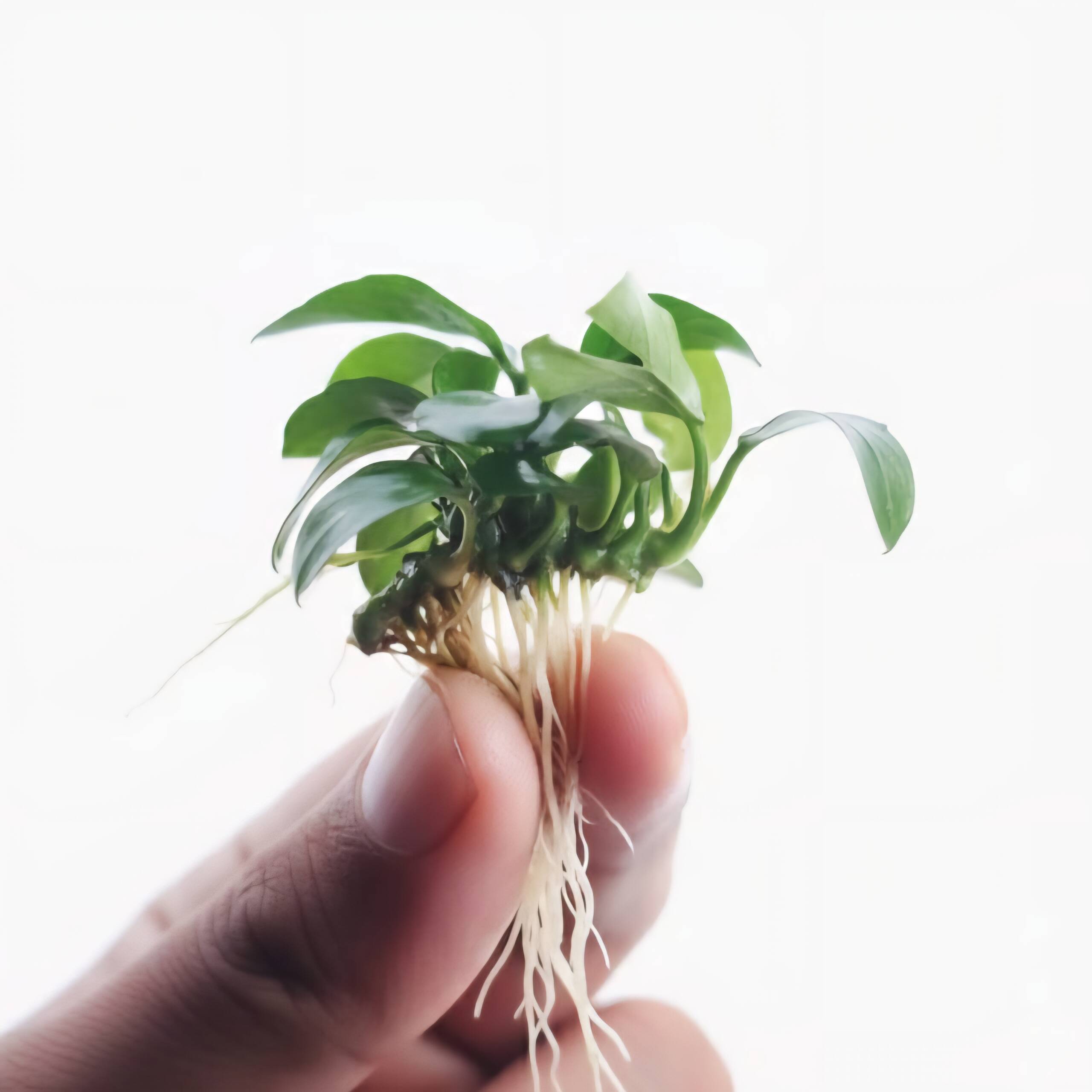
First, inspect the leaves and rhizome for snails and eggs. Second, trim damaged leaves and rinse the plant in dechlorinated water. Third, hold it in a lit tub of dechlorinated water for one to two weeks, changing half the water every 3–4 days. Finally, move it to the display tank if no snails or algae have appeared.
Found snails or eggs? See how to remove snails from new aquarium plants, and our guide to other hitchhikers on aquarium plants such as hydra and planaria.
Why quarantine?
Even healthy, hand-picked plants live in water and substrate before they reach you. Quarantining catches any unwanted snails or algae before they spread in your display tank.
Step 1: Inspect and rinse
Look over the leaves and rhizome, remove any damaged leaves, and rinse the plant gently in dechlorinated water to wash off debris and snail eggs.
Step 2: A short isolation (optional)
If you want to be thorough, keep new plants in a separate container of dechlorinated water for a week or two and watch for snails or pests before adding them to your main tank.
A note on dips
Some keepers use plant dips, but many are harsh and risky for delicate plants and unsafe for shrimp tanks. For most hobbyists, a careful rinse and inspection is enough — and far safer for soft plants like mosses.
How long should you quarantine aquarium plants?
Two weeks is enough for most home aquariums. Pest snail eggs usually hatch within 7–14 days, so a two-week hold in a bucket or spare tank shows you whether any hitchhikers came along. For a shrimp tank, or if you are adding plants from several sources at once, three to four weeks gives extra safety because it also lets any traces of chemicals from the plant’s previous home dilute away with water changes.
| Method | How it works | Safe for | Risk |
|---|---|---|---|
| Rinse and inspect | Wash under dechlorinated water, pick off eggs and debris | All plants | Low; may miss tiny eggs |
| Isolation (1–4 weeks) | Keep plants in a lit container with weekly water changes | All plants, best for shrimp tanks | Very low |
| Salt dip | Short dip in aquarium salt solution, then rinse | Hardy plants like Anubias and Java fern | Can damage mosses and soft stems |
| Alum dip | Soak in dissolved alum to kill snails, then rinse well | Hardy plants | Harmful to shrimp if not rinsed thoroughly |
| Diluted bleach dip | Very brief dip, then heavy rinse and dechlorinator | Anubias and Java fern only | High; easy to kill plants and shrimp |
Quarantine setup at home
- Use a clean bucket or plastic tub filled with dechlorinated tap water.
- Place it near a window or under a small LED so plants keep photosynthesising.
- Add an air stone if you have one; it keeps the water fresh.
- Change half the water every 3–4 days.
- Check the container walls and leaves for snails and eggs every few days.
Do tissue culture plants need quarantine?
Tissue culture plants are grown in sterile gel, so they arrive free of snails, algae and pesticides. You only need to rinse off the gel before planting. This makes them the safest choice for sensitive shrimp tanks. Read more in our tissue culture plants guide.
Shrimp-tank caution
Never add anything to a shrimp tank that you wouldn’t add to your shrimp. Stick to a rinse and quarantine rather than chemical dips. Start with healthy stock from our aquarium plant collection to make quarantine quick and easy.
Frequently asked questions
Can I skip quarantine for Anubias?
Many hobbyists just rinse and inspect Anubias because its tough leaves make snails and eggs easy to spot. For shrimp tanks, a short isolation is still worth it.
Are pest snails harmful?
Bladder and ramshorn snails do not harm fish, but they can multiply quickly when there is excess food. Many keepers treat a few snails as a clean-up crew.
Should I quarantine plants in a new tank that has no fish yet?
Not usually. If the tank is still cycling with no livestock, you can plant straight away and remove any snails you notice before adding fish or shrimp.
Grown in Surat (pre-order plants imported to order) · live-arrival guarantee with a 4-hour unboxing video · ₹99 shipping, free from ₹999