
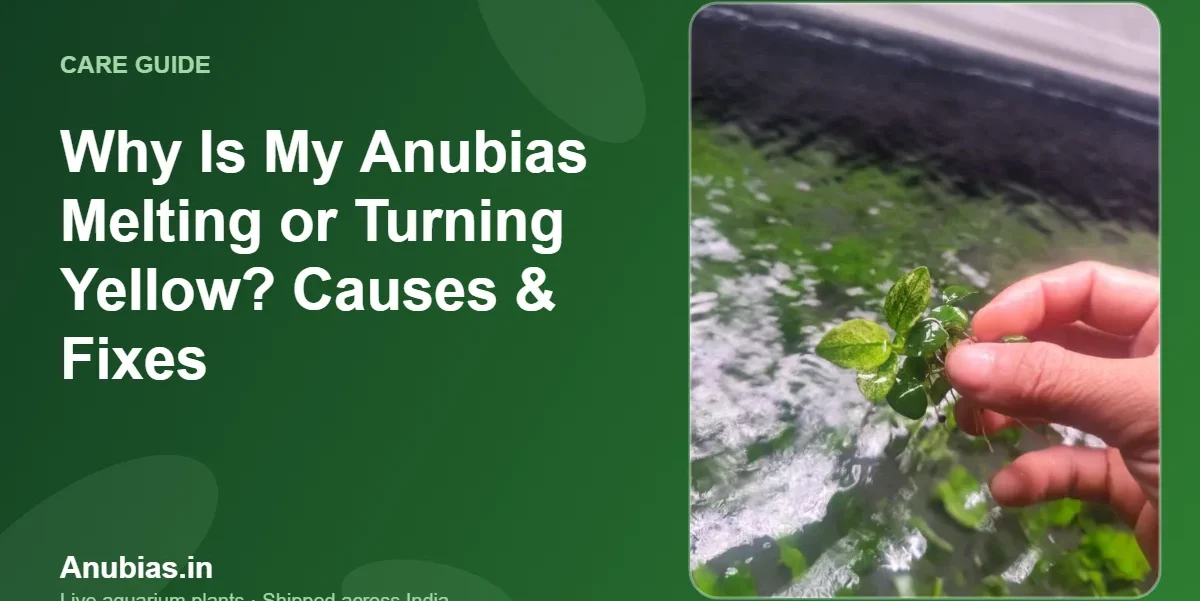
The Anubias aquarium plant is one of the toughest plants you can own, but even tough plants send distress signals. If yours is melting, yellowing, or growing algae, the good news is that almost every cause is simple to fix.
Quick answer: Anubias melting — translucent, mushy leaves with a soft or dark rhizome — usually means a buried or damaged rhizome: trim the soft parts and re-attach the firm rhizome to wood or rock. Yellow leaves usually mean low nutrients, old leaves or too much light: dose a weekly liquid fertiliser, trim spent leaves and reduce strong light.
What a healthy Anubias looks like
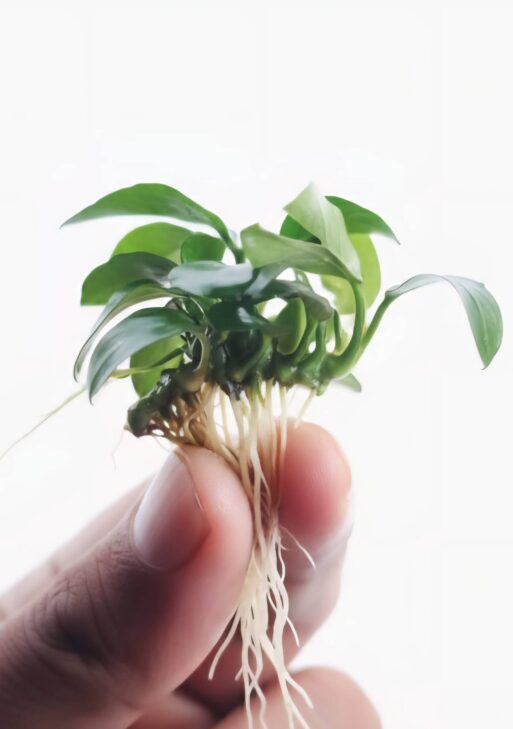
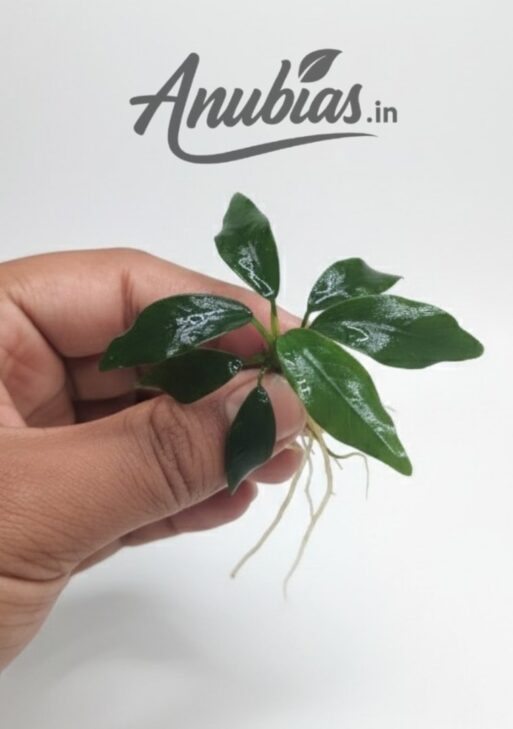
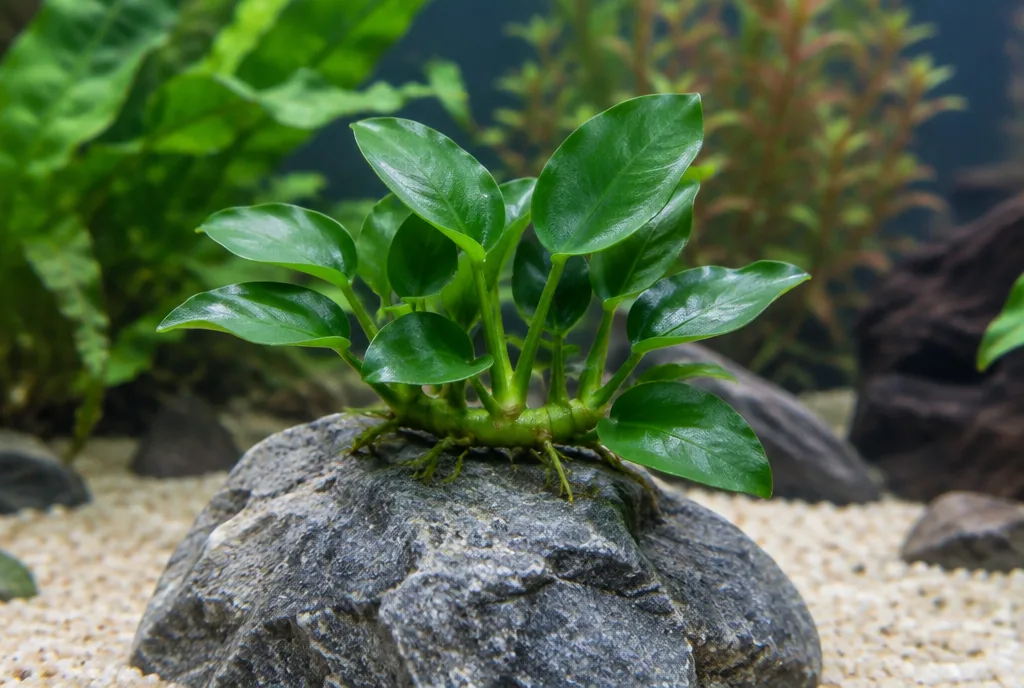
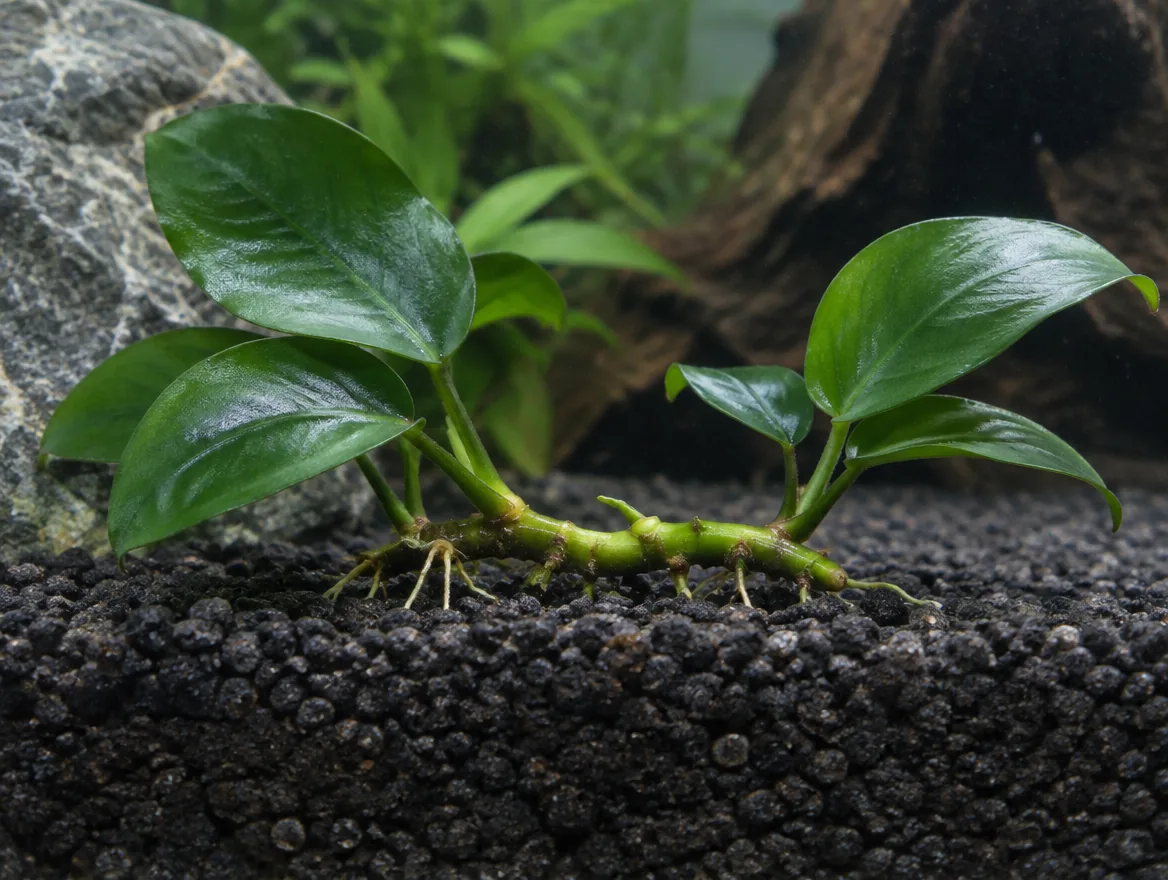
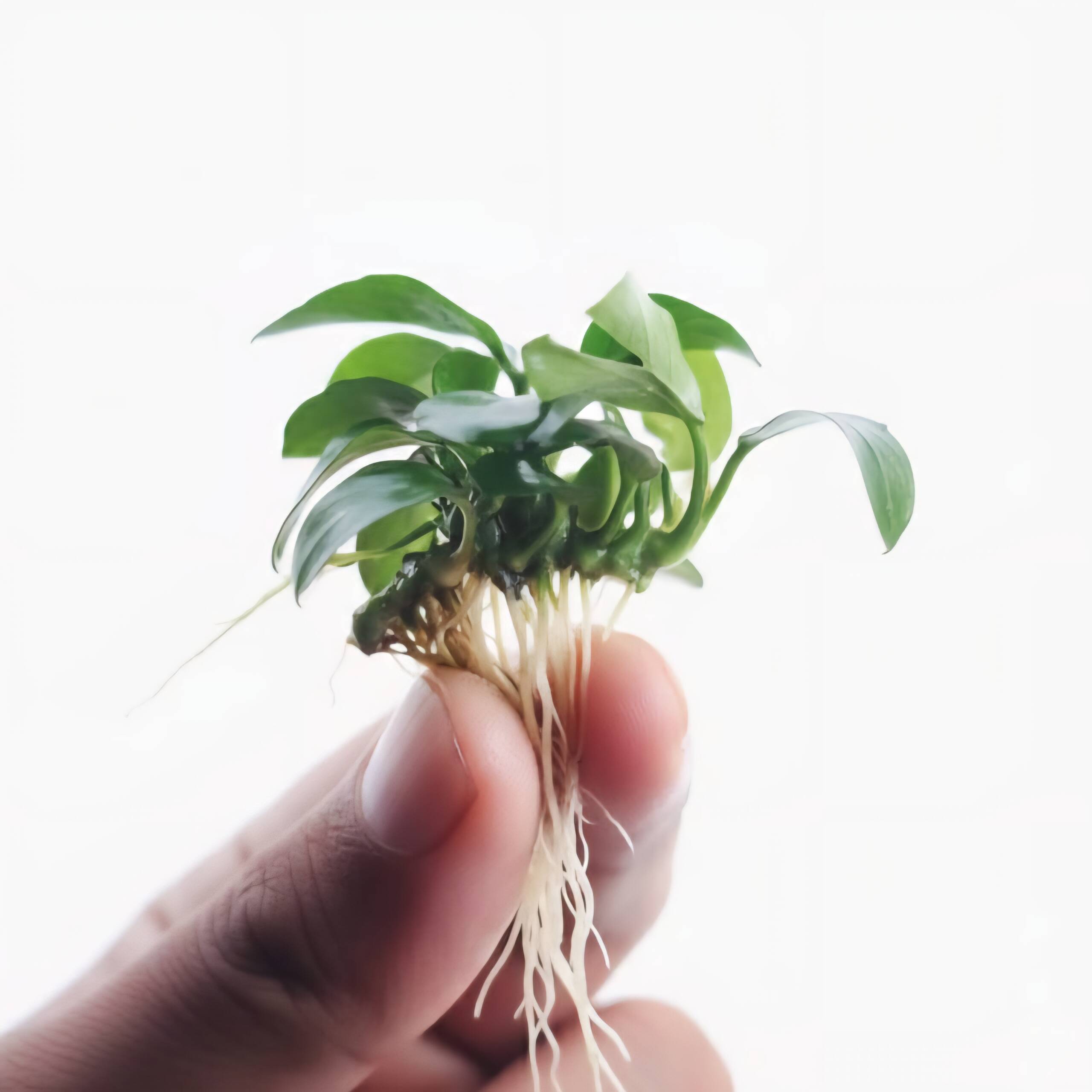
Before you look for a problem, compare your plant with a healthy one. A healthy Anubias has firm, dark green leaves that feel thick and leathery, and a firm green rhizome sitting on top of wood, rock or the substrate, never under it. White or light brown roots grip the hardscape. New leaves unroll from the growing tip every few weeks; they can start paler and darken as they harden. One old outer leaf turning yellow now and then is normal ageing, not a disease.
Why is my Anubias melting?
Anubias melts when its rhizome is buried, damaged or rotting, or when a new plant is adjusting to your tank. The leaves turn translucent and mushy and the rhizome goes soft or dark. Trim away every soft section, then re-attach the firm green rhizome to wood or rock, never under the substrate.
The leaves go translucent and mushy and the thick horizontal stem, the rhizome, turns soft or dark. The usual cause is a buried or damaged rhizome, because a rhizome buried in substrate is starved of oxygen and water flow, so it rots. The fix: lift the plant, trim away every soft or blackened section until only firm green rhizome remains, and re-attach it on top of wood or rock, never under the substrate.
New plants often melt in the first weeks while they adjust to your water, light and temperature; our guide to new aquarium plants melting after delivery explains what is normal and when to act. If the rhizome is soft or smells bad, follow the full rescue steps for Anubias rhizome rot.
How to rescue a rotting rhizome
- Lift the plant out and rinse it so you can see the whole rhizome.
- Press gently along the rhizome. Healthy tissue is firm and green; rot is soft, brown or black and often smells bad.
- With a clean, sharp blade, cut back until only firm green tissue is left. Remove leaves that have fully melted.
- Tie or glue the healthy piece to wood or rock, or rest it on top of the gravel with only the roots going in. Never bury the rhizome again.
- Keep the light low to moderate and leave the plant alone. New leaves can take several weeks to appear.
Save what you can by dividing it
If only part of the rhizome has rotted, you can often save the rest. Cut the healthy rhizome into pieces with a clean blade so that each piece keeps 3 or more firm, green leaves, and throw away the soft parts. Tie or glue each piece to wood or rock with the rhizome uncovered, and treat it like a new plant. Small pieces grow slowly at first, so expect a pause of a few weeks before new leaves appear.
Why are my Anubias leaves turning yellow?
Anubias leaves turn yellow for three main reasons: a nutrient gap, because the plant feeds from the water and runs short without fertiliser; natural ageing of old leaves; or too much light. Dose a liquid fertiliser weekly, trim fully yellow leaves at the base, and keep the light to 6–8 hours a day.
Leaves fade from green to yellow. The usual causes are a nutrient gap (Anubias feeds from the water column and slowly runs short without fertiliser), natural aging of an old leaf, or too much light bleaching the slow-growing leaves. The fix: dose a weekly liquid fertiliser, trim spent leaves at the base, and reduce light if it is strong.
Algae on the leaves
Green spot, fuzz, or black-brush algae coats the leaf surface. Because Anubias grows so slowly, each leaf sits in the tank for months, giving algae a long window, especially under bright light. The fix: lower lighting duration and intensity, improve flow, and add grazers like Amano shrimp, nerite snails, or otocinclus.
For dark, stubborn tufts that grip the leaf edges, see our guide to black beard algae on Anubias.
What is normal versus what is not
Normal: the occasional old leaf yellowing, very slow growth, and a short settling-in period after planting. Worth acting on: a softening rhizome, several leaves melting at once, or spreading algae.
For holes, spots or brown patches, match what you see in our Anubias leaf problems diagnosis chart. If the plant looks healthy but has stopped making new leaves, work through the seven common causes of Anubias not growing.
The first 2 to 3 weeks after delivery
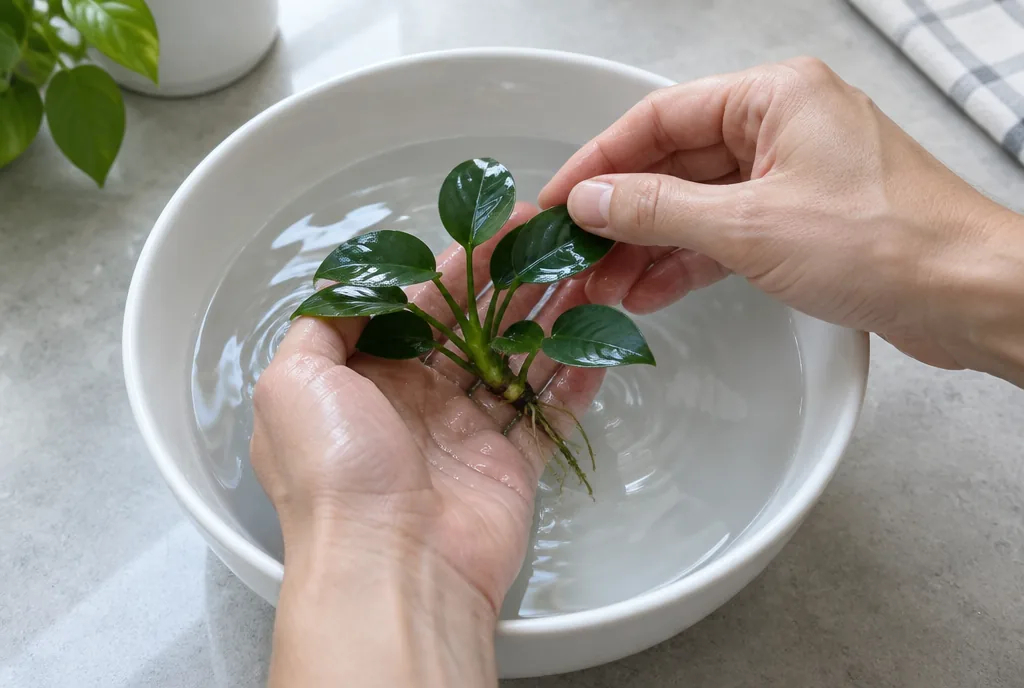
A new plant has to adjust to your water, light and temperature, so do not judge it in the first days. Rinse it in clean, dechlorinated water, trim any leaf that is torn or already soft, and attach it with the rhizome above the substrate. Over the next 2 to 3 weeks, one or two older leaves may yellow or go soft. That is normal as long as the rhizome stays firm and green. Keep conditions steady and avoid moving the plant around.
If a plant arrives dead, damaged, wrong or undersized, record one continuous unboxing video and send it within 4 hours of delivery on WhatsApp (+91 81416 96983) or by email (buyanubias@gmail.com). Photos alone are not accepted. We then refund or replace the plant. The details are in our returns and refunds policy.
Symptom, cause and fix at a glance
| Symptom | Likely cause | What to do |
|---|---|---|
| One old outer leaf turns yellow | Natural ageing | Trim it at the base; nothing else is needed |
| Several leaves yellow, new leaves pale | A nutrient gap (pale new leaves often mean iron) or too much light | Dose a weekly liquid fertiliser and keep the light to 6–8 hours |
| Soft, brown or black rhizome | A buried or damaged rhizome that is rotting | Cut back to firm green tissue and re-attach it above the substrate |
| Leaves yellow or drop in the first weeks | A new plant adjusting to your tank | Keep conditions stable, trim dead leaves and wait for new growth |
| Dark spots or fuzz on the leaves | Algae on slow leaves under strong light | Shorten or dim the light, add shade and grazers |
| Pinholes in older leaves | Often a potassium shortage | Use a complete liquid fertiliser that contains potassium |
Prevention checklist
Never bury the rhizome. Keep lighting low to moderate. Dose a liquid fertiliser weekly. Maintain gentle flow and regular water changes. Be patient, because Anubias is a slow, steady grower.
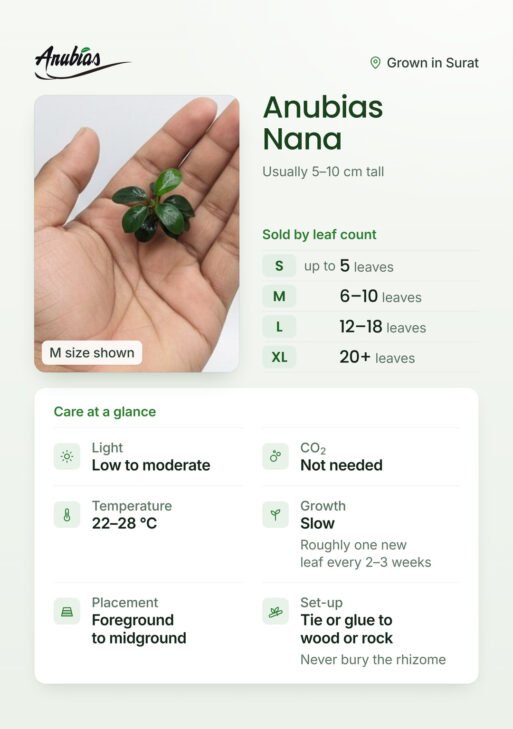
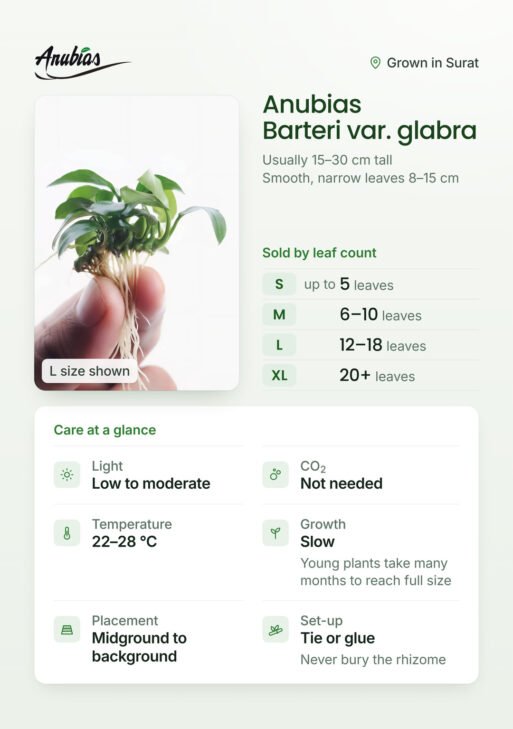
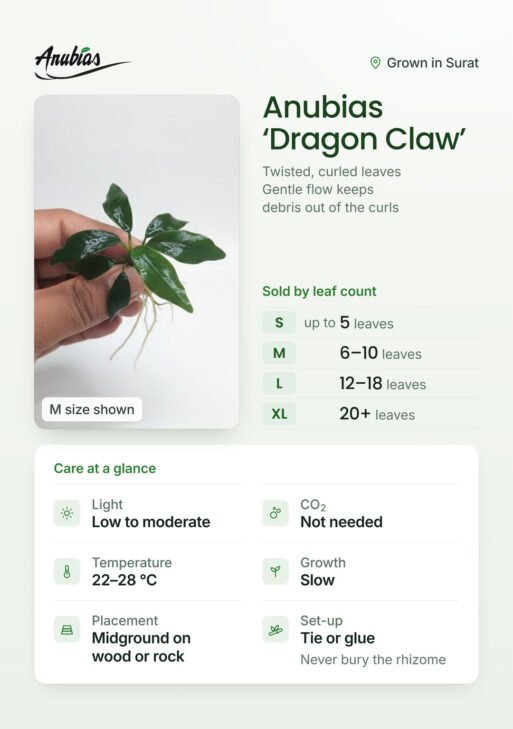
Care at a glance
If your plant keeps struggling, check your tank against these ranges first.
| Factor | Anubias |
|---|---|
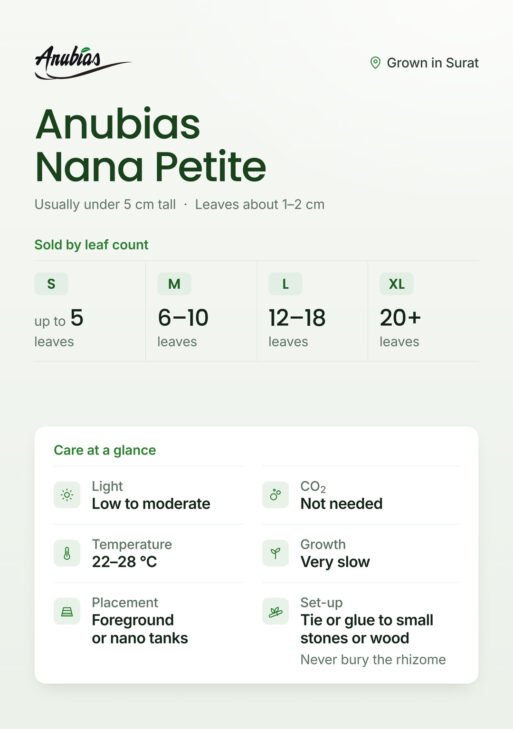
| Light | Low to moderate |
| CO2 | Not required |
| Temperature | 22–28 °C |
| pH | 6.0–7.5 |
| Growth | Slow, roughly one new leaf every 2–3 weeks |
| Placement | On wood or rock, out of strong direct light |
| How to attach | Tie or glue the rhizome to wood or rock; never bury it (roots may go into the substrate) |
Starting fresh with a healthy plant is half the battle. Browse our hand-picked Anubias collection, shipped across India with a live-arrival guarantee: shop Anubias
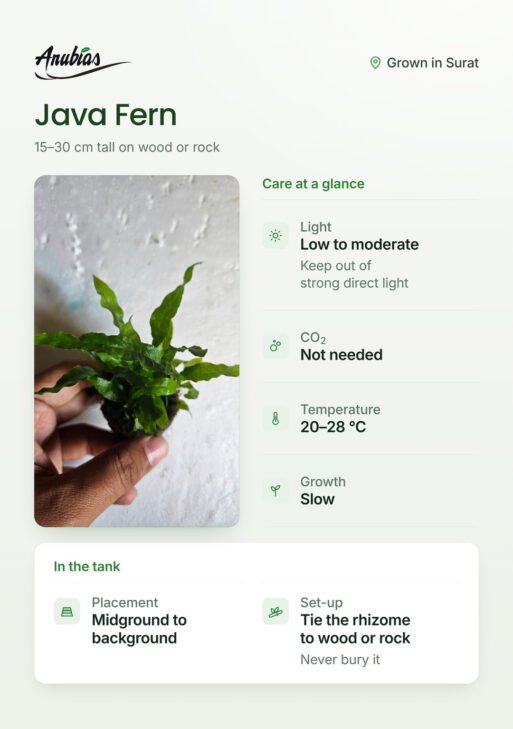
Replacing plants that melted? Our melt rescue kit pairs two Anubias and a Java fern with fast-growing Brazilian pennywort, which soaks up excess nutrients while the tank settles.
Melting is often worse when a plant goes straight into a new tank without acclimating — our quarantine guide explains how to avoid the shock, and the Anubias care guide covers ideal long-term conditions.
हिंदी में पढ़ें: पत्तियां पीली क्यों होती हैं · नए पौधे क्यों गलते हैं
Start with the Anubias Five
One of each of our five Surat-grown Anubias, sized by leaf count.
Build your setFrequently asked questions
Why is my Anubias melting?
Translucent, mushy leaves with a soft or dark rhizome are usually caused by a buried or damaged rhizome. Lift the plant, trim away every soft or blackened section until only firm green rhizome remains, and re-attach it on top of wood or rock, never under the substrate.
Why are my Anubias leaves turning yellow?
Yellowing usually comes from a nutrient gap, natural ageing of an old leaf, or too much light bleaching the slow-growing leaves. Dose a weekly liquid fertiliser, trim spent leaves at the base, and reduce the light if it is strong. One old yellow leaf is normal.
How do I get rid of algae on Anubias leaves?
Each slow-growing Anubias leaf stays in the tank for months, giving algae a long window, especially under bright light. Lower the lighting duration and intensity, improve flow, and add grazers such as Amano shrimp, nerite snails or otocinclus.
Will yellow Anubias leaves turn green again?
Usually not. Once an Anubias leaf has lost its green colour it rarely recovers. Trim leaves that are mostly yellow at the base of the stem, fix the cause (nutrients, light or a damaged rhizome), and new leaves will grow in green.
Grown in Surat (pre-order plants imported to order) · live-arrival guarantee with a 4-hour unboxing video · ₹99 shipping, free from ₹999
More Anubias troubleshooting: