

The High Cost of Green: Why Are Anubias Plants So Expensive?

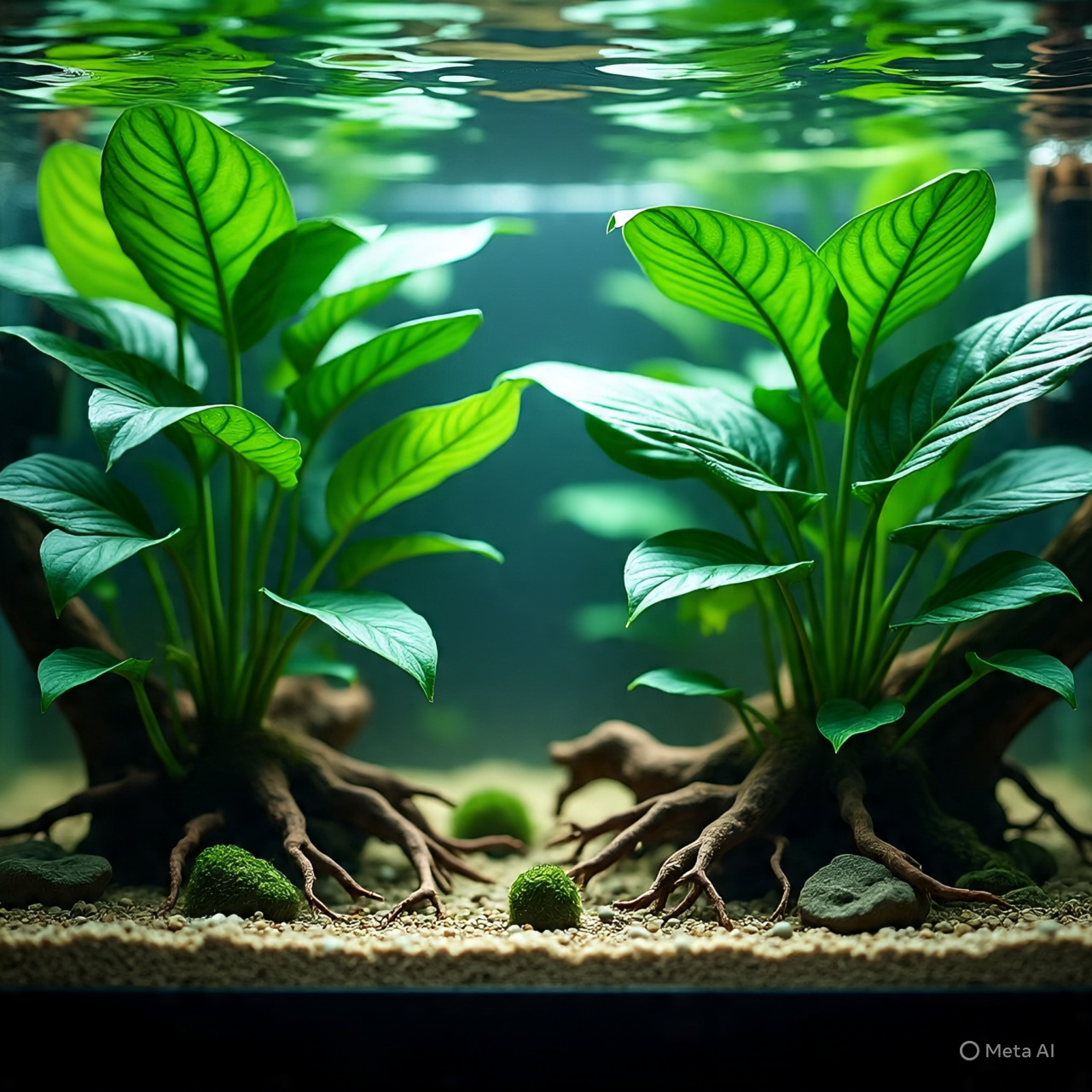
As you browse for aquarium plants, you might notice that Anubias species often carry a higher price tag compared to a bundle of fast-growing stem plants. A single, small Anubias Nana can cost as much as several bunches of Rotala or Hornwort. This price difference can be confusing, especially since Anubias is known as a hardy, “easy” plant. So, why are Anubias plants so expensive? The cost isn’t arbitrary; it’s a direct reflection of the time, difficulty, and resources required to bring them to market.
The #1 Factor: Incredibly Slow Growth
The single biggest reason for the high cost of Anubias is its extremely slow growth rate. This is the core of its biology and a topic we explore in our article, “Anubias Growth Rate Explained.”
Consider the economics from a nursery’s perspective:
- A fast-growing stem plant like Ludwigia can grow from a small cutting to a sellable bunch in just a few weeks. The nursery can produce a huge volume of plants in a short amount of time from a single mother plant.
- An Anubias, on the other hand, might only produce one new leaf per month. To grow a small cutting into a sellable plant with 5-7 leaves can take 6 months to over a year.
During that entire time, the nursery has to dedicate tank space, lighting, heating, and labor to care for that single plant. The final price reflects the many months of resources invested in its cultivation.
The Challenge of Propagation
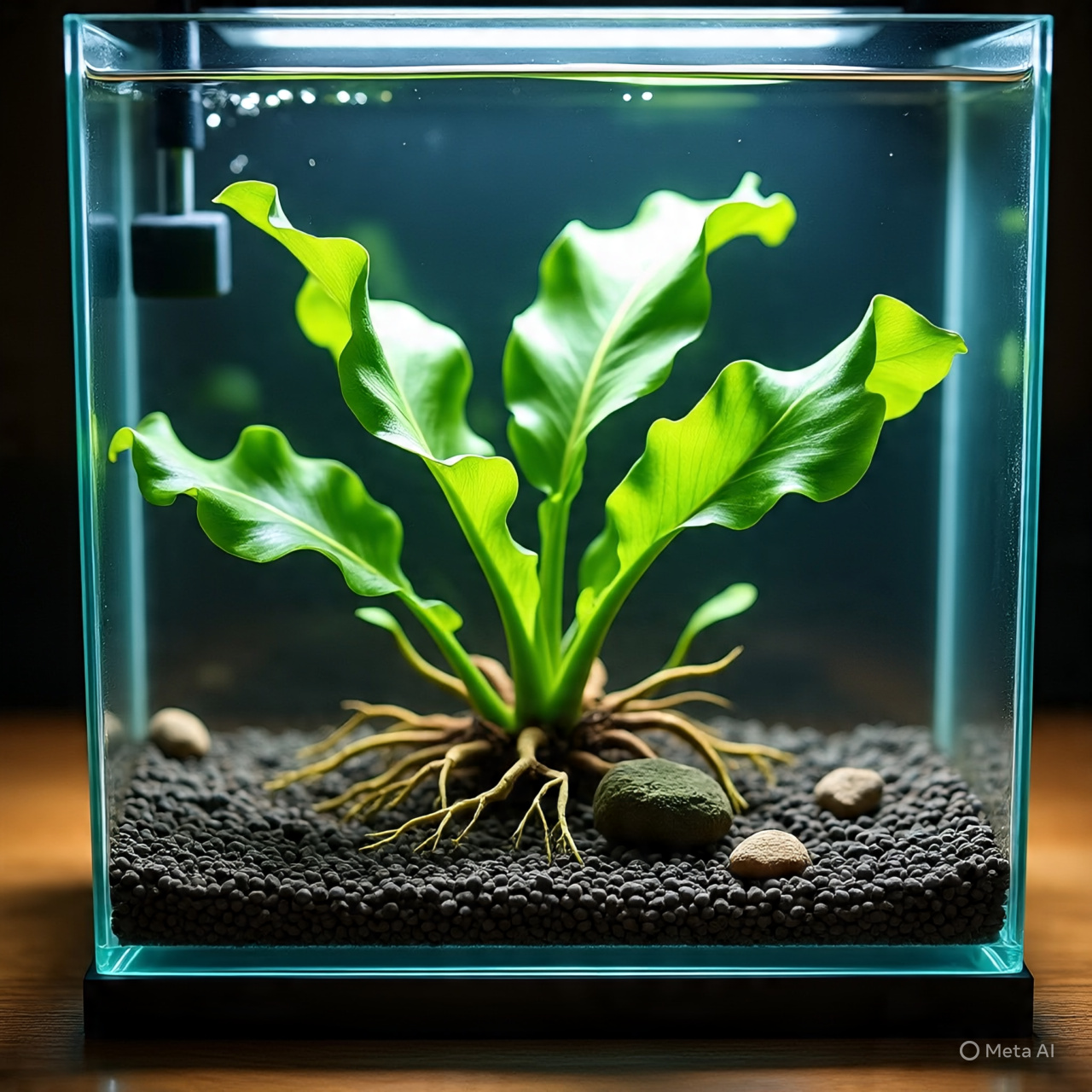
The slow growth rate also makes propagation a slow and deliberate process. Unlike stem plants where every trimmed piece can become a new plant, Anubias can only be propagated by dividing its rhizome.
- Limited Cuttings: A grower can’t just take dozens of cuttings from a mother plant. They must wait for the rhizome to grow long enough to be safely divided, a process that can take many months.
- High Risk: Each cut is a risk. A bad cut can introduce rot, potentially killing both the cutting and the valuable mother plant. This requires skilled labor and careful technique, as detailed in our guide to propagating Anubias.
The slow and risky nature of propagation means that the supply of Anubias can never keep up with the explosive speed at which stem plants are produced.
The Cost of Rarity: Specialty and Variegated Anubias
If a standard Anubias Nana is expensive, then rare varieties like Anubias Pinto or the highly sought-after Anubias Nana White are on another level entirely. Their price is magnified by several factors:
- Genetic Rarity: The mutations that cause these beautiful variegated patterns are rare and often unstable.
- Even Slower Growth: Variegated plants have less chlorophyll, which means they grow even more slowly than their green counterparts. An Anubias Nana White might take two or three times as long to reach a sellable size as a standard Anubias Nana.
- Tissue Culture Costs: To produce these rare plants consistently and free of pests, many growers use laboratory-based tissue culture. This is a highly technical and expensive process that requires a sterile environment and specialized equipment, adding significantly to the final cost. We explore this in our article on the science of variegation.
Durability and Long-Term Value
Finally, it’s important to think of the cost in terms of long-term value. An Anubias is not a disposable plant.
- A Plant for Life: A fast-growing stem plant might be cheap, but you will be constantly trimming and replanting it. An Anubias, once placed, can remain untouched as a beautiful centerpiece in your aquarium for years, or even decades.
- Hardiness: They are tough. They survive conditions that would kill more delicate plants, and they are resistant to being eaten by fish. You are less likely to have to replace an Anubias than almost any other plant.
When you buy an Anubias, you are not paying for a fast-growing weed. You are investing in a slow-growing, long-lasting piece of living art. The price reflects the immense time, patience, and resources required to cultivate it. It’s a “buy it for life” plant that, with proper care, will reward you with its steadfast beauty for many years, making it one of the best long-term values in the entire aquarium hobby.