
Troubleshooting: Why Is My Anubias Turning Yellow?

Anubias are known for their deep, rich green leaves, so it can be incredibly alarming to see them start to turn yellow. A yellowing leaf is a universal sign of stress in a plant, but it can be caused by several different issues. Is it a lighting problem? A nutrient deficiency? Or is the plant simply old? This troubleshooting guide will walk you through the most common causes of yellowing Anubias leaves and help you diagnose and fix the problem.
Cause #1: Nutrient Deficiency (The Most Common Reason)
By far, the most common cause of yellowing leaves in Anubias is a lack of essential nutrients, a condition known as chlorosis. This happens when the plant doesn’t have the necessary building blocks to produce chlorophyll, the green pigment that is vital for photosynthesis.
Identifying a Nutrient Deficiency:
- Nitrogen Deficiency: This is the most frequent culprit. It typically appears on the older leaves first. The entire leaf will start to fade from a deep green to a pale green, and then to a uniform, sickly yellow before eventually dying and falling off.
- Iron Deficiency: This looks slightly different. It usually affects the newest leaves first. The leaf tissue itself will turn yellow, but the veins of the leaf will often remain green, creating a distinct, web-like pattern.
The Fix:
Since Anubias is a “water column feeder,” the solution is to add nutrients directly to the water.
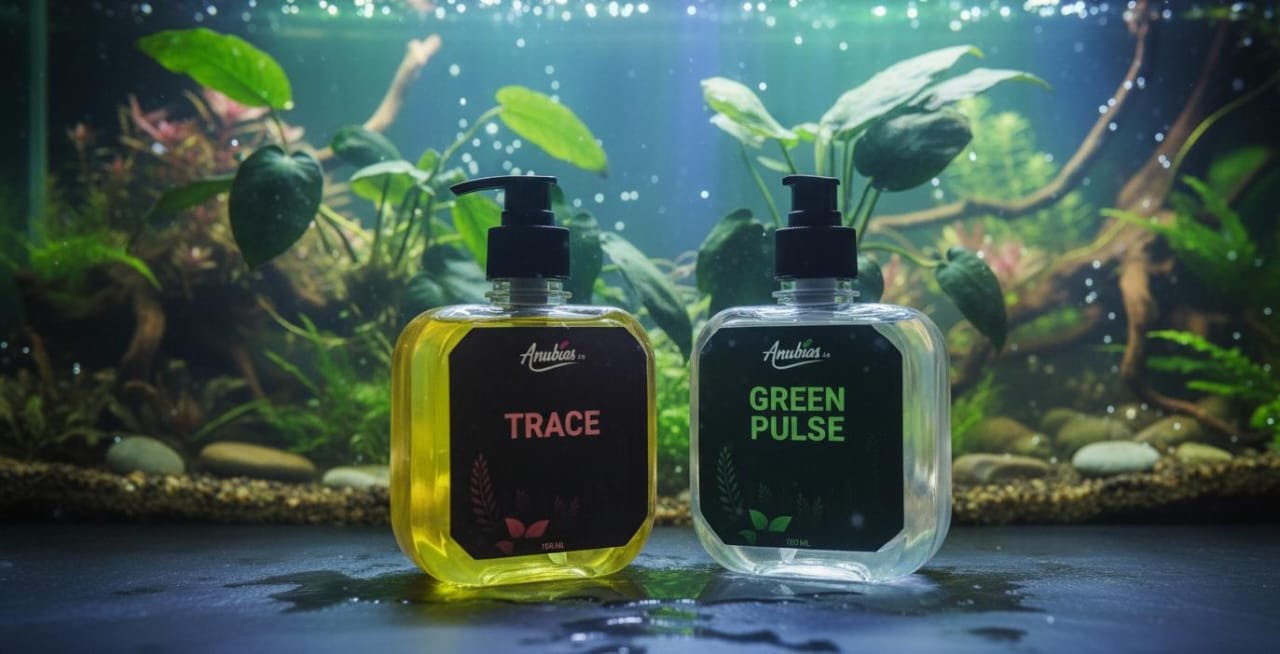
- Dose a Comprehensive Fertilizer: Start dosing a high-quality, comprehensive liquid fertilizer that contains both macronutrients (Nitrogen, Phosphate, Potassium) and micronutrients (Iron, Magnesium, etc.). For a tank with Anubias, dosing a half-dose 2-3 times per week is a great starting point.
- Check Your Fish Load: In a tank with very few fish, there may not be enough fish waste to produce the nitrates (nitrogen) the plant needs. A liquid fertilizer is essential in such clean tanks.
Note: Leaves that are already significantly yellow will likely not recover. The goal of fertilizing is to ensure that all future growth is healthy and green.
Cause #2: Old Age and Natural Leaf Shedding
Like all living things, an Anubias leaf has a finite lifespan. It is completely normal for the plant to occasionally shed its oldest leaves as it produces new ones.
How to Identify It:
- It is only affecting one or two leaves at a time, typically the oldest ones at the very back of the rhizome.
- The rest of the plant, including the rhizome and new growth, looks perfectly healthy and vibrant.
- The leaf yellows slowly and gracefully over a week or two before detaching.
The Fix:
No fix is needed! This is a natural and healthy process. Simply prune the yellowing leaf off at its base to keep the tank looking tidy and allow the plant to reabsorb any mobile nutrients from the dying leaf. Our guide on how to prune Anubias shows the correct technique.
Cause #3: Lighting Issues
While less common than a nutrient deficiency, incorrect lighting can also cause yellowing.
- Too Much Light: Extremely intense, direct light can “bleach” the leaves, causing them to turn a pale, washed-out yellow. This is often accompanied by the appearance of Green Spot Algae. The solution is to reduce the light intensity or move the plant to a shadier spot, as detailed in our Anubias lighting guide.
- Too Little Light: While rare, in almost complete darkness, a plant may begin to shed leaves to conserve energy. This is usually a last resort for the plant after its growth has been stalled for a very long time.
Cause #4: Acclimation and Melt
If your Anubias is new to your aquarium (within the last month ), yellowing leaves can be a sign of “melt.” This is a stress response as the plant acclimates to its new water parameters. Often, plants are grown emersed (out of water) at the nursery, and the transition to fully submerged life causes the old leaves to die off as the plant grows new, underwater-adapted leaves.
The Fix:
Be patient. As long as the rhizome remains firm and healthy, the plant will recover. Prune away the melting yellow leaves and ensure your water parameters remain stable. The plant will soon produce new, stronger growth.
Quick Diagnostic Chart
| Symptom | Likely Cause | Solution |
|---|---|---|
| Older leaves turning uniformly yellow. | Nitrogen Deficiency | Dose a comprehensive liquid fertilizer. |
| New leaves are yellow, but veins stay green. | Iron Deficiency | Dose a fertilizer with micronutrients. |
| Only one or two of the oldest leaves are yellow. | Natural Aging | Prune the old leaves and do nothing else. |
| Leaves are pale yellow and have green spots. | Too Much Light | Reduce light intensity or move the plant. |
| Plant is new and leaves are turning mushy. | Acclimation / Melt | Prune melting leaves and be patient. |
By carefully observing where and how the yellowing is occurring, you can accurately diagnose the problem. In most cases, a simple adjustment to your fertilizing routine is all that’s needed to solve the issue and bring your Anubias back to its beautiful, deep-green glory.