
The Complete Anubias Lighting Guide: How to Maximize Growth and Eliminate Algae

Anubias is celebrated throughout the aquarium hobby as the ultimate low-light plant. It’s tough, undemanding, and beautiful. However, “low-light” doesn’t mean “no-light,” and providing the wrong kind or amount of light is the number one reason hobbyists struggle with slow growth and persistent algae. This complete guide will teach you everything you need to know about providing the perfect lighting for all your Anubias varieties, from the classic Anubias Nana to the unique Anubias ‘Dragon Claw’.
Why Anubias is a Low-Light Plant
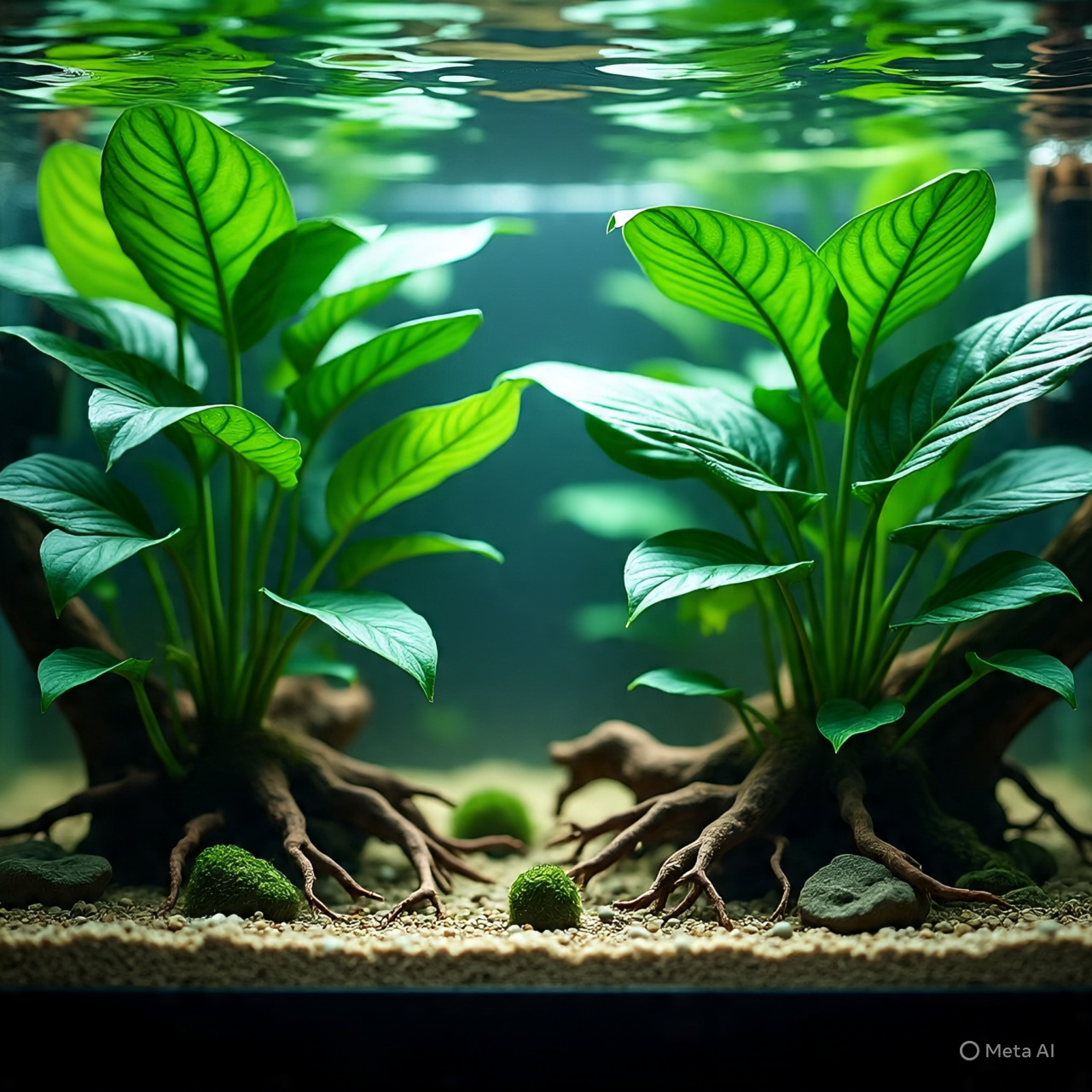
To understand its needs, we must look at its origins. Anubias species grow in the shaded rainforests of West Africa, often attached to rocks and logs along the banks of slow-moving rivers. They live their lives under the dense canopy of trees, receiving only dappled, indirect sunlight. They have evolved to be masters of efficiency, with a slow metabolism that allows them to thrive in these low-energy environments.
This slow metabolism is the key. Because they grow slowly, they also consume nutrients and CO2 slowly. Blasting them with intense light is like trying to force-feed a slow eater—it just creates a mess. In the aquarium, this “mess” takes the form of algae.
The #1 Problem with High Light: Algae
If you place an Anubias directly under a high-intensity light, you are creating a perfect storm for algae, particularly Green Spot Algae (GSA ) and Black Beard Algae (BBA). Here’s why:
- Algae are opportunistic and grow much faster than Anubias.
- The intense light provides a massive energy source for algae spores in the water.
- The slow-growing Anubias leaves provide a stable, unchanging surface for algae to attach to and colonize.
The Anubias simply cannot grow fast enough to shed the algae or outcompete it. The result is beautiful leaves covered in ugly, stubborn spots and tufts. For a detailed plan on how to deal with this, our guide to removing algae from Anubias is a must-read.
Finding the “Sweet Spot”: Low to Medium Light
The ideal lighting for Anubias is in the low to medium range. This provides enough energy for healthy, steady growth without fueling an algae outbreak.
- Using a PAR Meter: For advanced hobbyists, the target PAR value at the leaf-level of the Anubias should be between 15-50 µmol/m²/s. Anything higher dramatically increases the risk of algae.
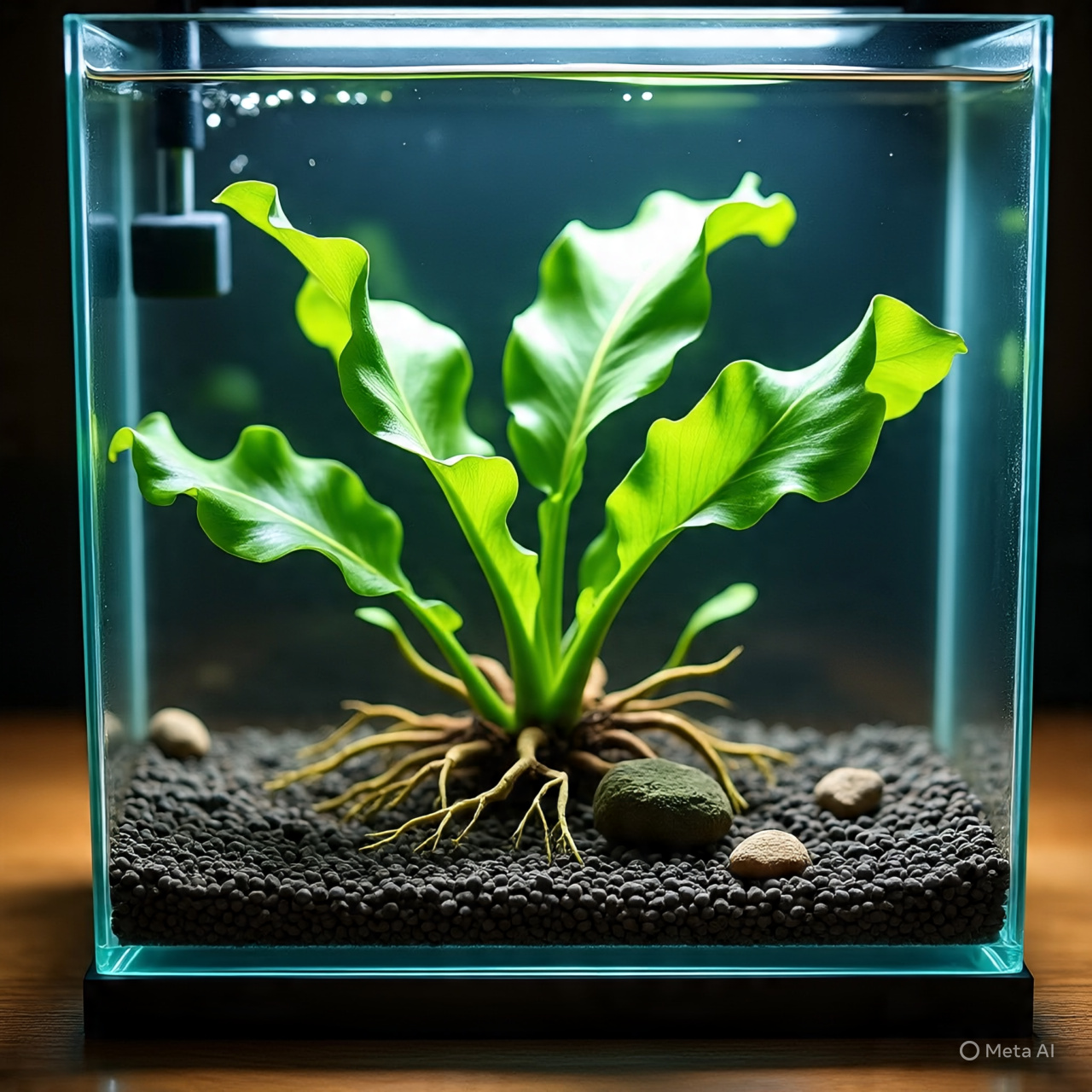
- Without a PAR Meter: A great practical approach is to use strategic placement. In a tank with a powerful light, don’t place your Anubias in the open. Instead, tuck it into shaded areas—under driftwood, behind rocks, or beneath the leaves of larger floating plants. This mimics its natural, shaded environment perfectly.
Photoperiod: How Long Should the Lights Be On?
The duration of your lighting is just as important as the intensity. A shorter, consistent photoperiod is best for Anubias and for overall algae management.
A recommended photoperiod for a tank with Anubias is 6 to 8 hours per day. Running your lights for 10-12 hours does not significantly benefit the Anubias but gives algae much more time to grow. Use an inexpensive outlet timer to ensure this schedule is kept consistently every single day. Stability is crucial for a healthy aquarium.
Signs of Incorrect Lighting
Your Anubias will give you clear signals if the lighting is wrong.
- Signs of Too Much Light: The most obvious sign is algae growth on the leaves. You may also see the leaves turning a pale, washed-out yellow, which is a sign of “bleaching” or stress.
- Signs of Too Little Light: While Anubias can survive in very dim conditions, extremely low light will cause its growth to stall completely. The plant may look healthy, but if you haven’t seen a new leaf in many months, it may be starving for a little more energy. This is a key topic in our article about Anubias growth rates.
By understanding that Anubias is a shade-loving plant, you can easily provide it with the ideal lighting conditions. Focus on providing gentle, indirect light for a consistent period of 6-8 hours daily. This simple strategy will reward you with deep green, healthy leaves, steady growth, and an algae-free plant that will be a cornerstone of your aquascape for years to come.