

Substrate Science: Does Anubias Nana Need Soil (or ADA Soil)?

When setting up a new planted aquarium, one of the biggest decisions is the choice of substrate. High-tech, nutrient-rich soils like ADA Aqua Soil are famous for promoting explosive growth in demanding carpeting plants and colorful stem plants. This leads many aquascapers to wonder: does a plant like Anubias Nana also need or benefit from being planted in these specialized soils? The answer is a definitive no, and understanding why is key to understanding the nature of the Anubias plant itself.
The Myth of Planting Anubias in Soil
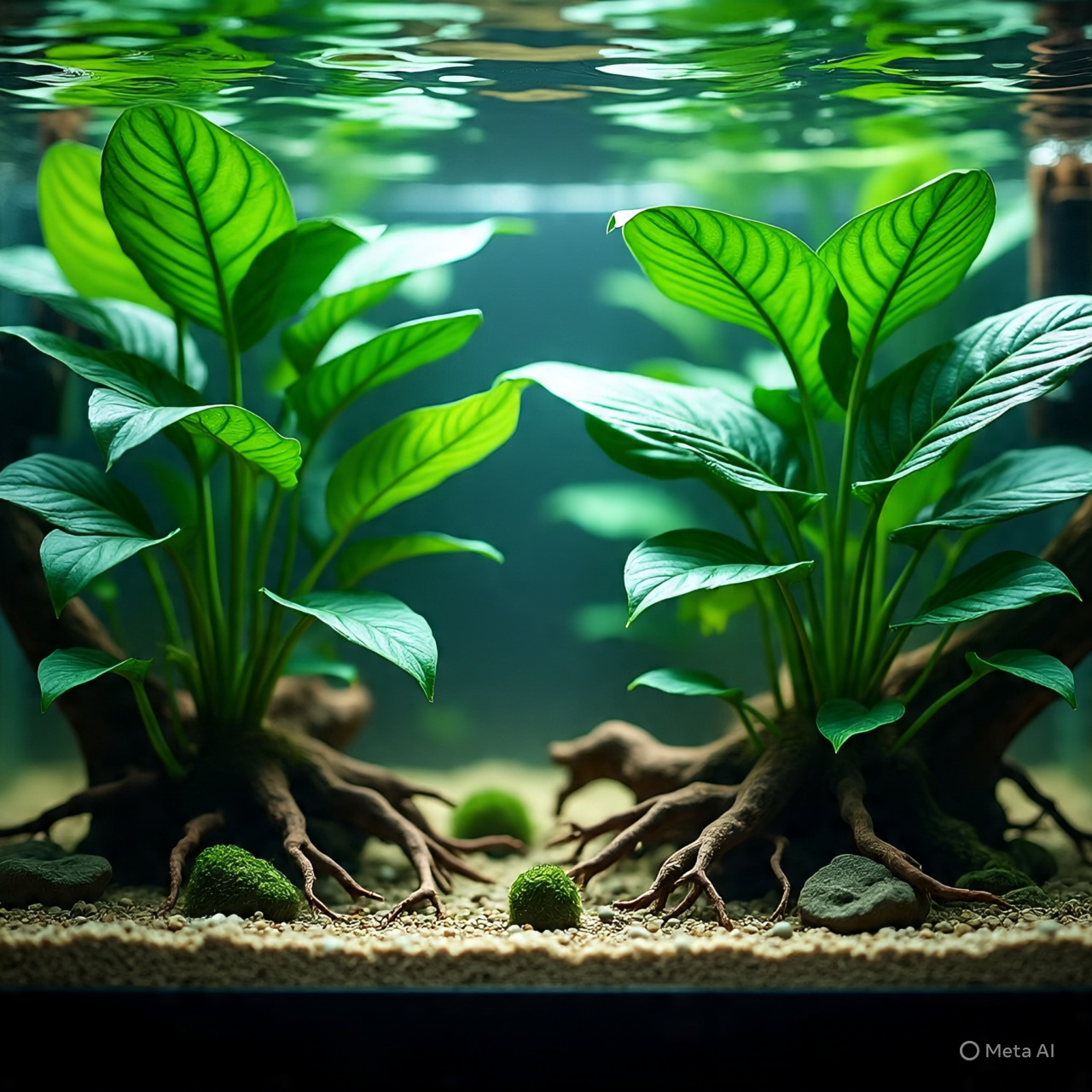
The fundamental mistake is thinking that Anubias should be “planted” in soil at all. Anubias is an epiphyte. In its natural habitat, it does not grow in the muddy riverbed. Instead, it grows attached to hard surfaces like rocks, tree roots, and fallen logs, with its roots and rhizome exposed to the flowing water.
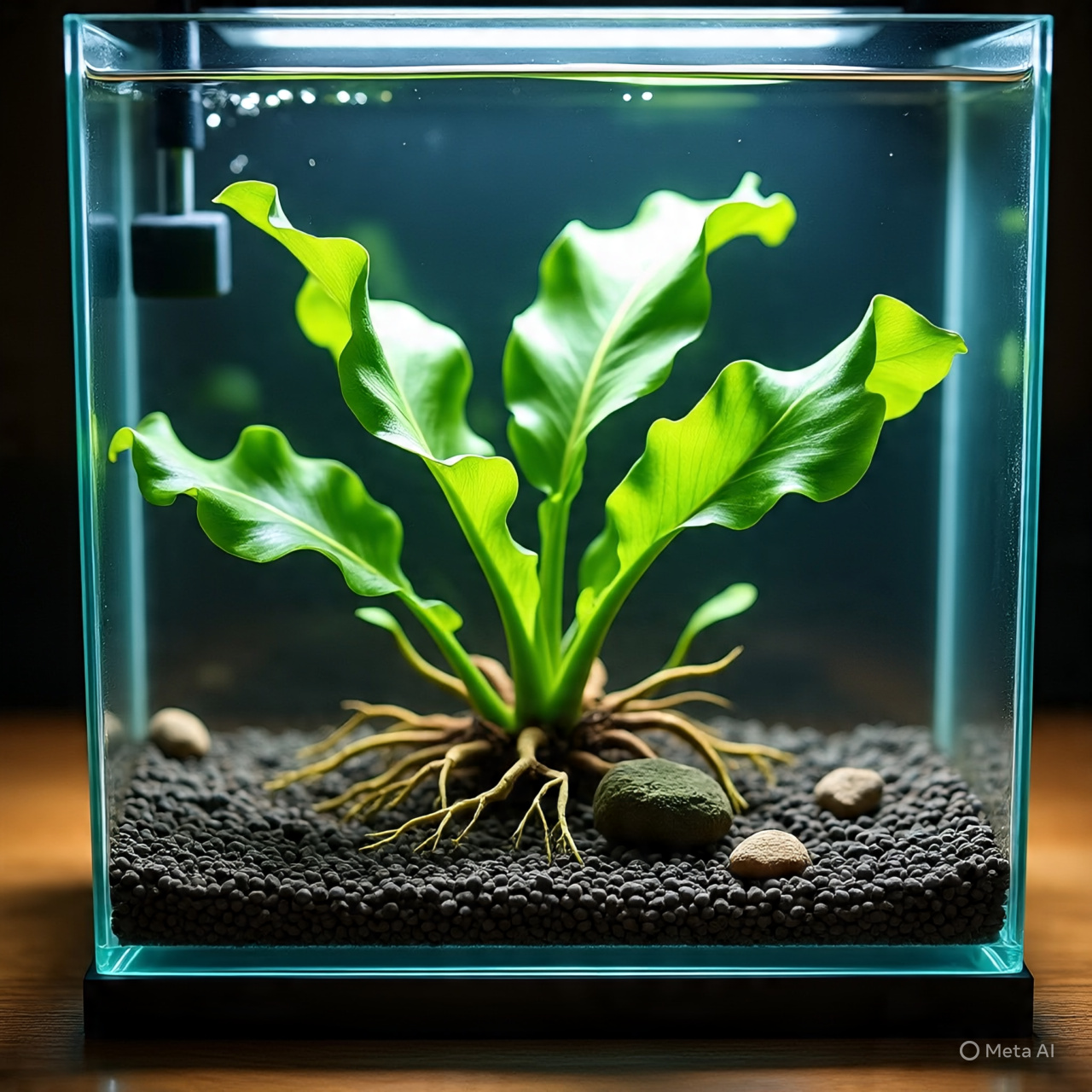
Its root system is designed for anchoring, not for nutrient absorption from the substrate. The plant feeds primarily by pulling nutrients directly from the water column through its leaves and rhizome. This is why the golden rule of Anubias care, which we cover in our guide on the #1 beginner mistake, is to never bury the rhizome. Burying the rhizome in any substrate—be it sand, gravel, or expensive soil—will cause it to suffocate and rot, eventually killing the plant.
Why ADA Aqua Soil Provides No Direct Benefit to Anubias
ADA Aqua Soil and similar products are “active” substrates. They are packed with nutrients and are designed to slowly release these nutrients into the root zone of plants that are heavy root-feeders (like Cryptocoryne, Echinodorus, or most carpeting plants ). They also typically lower the pH of the water.
For Anubias, these features are largely irrelevant:
- It’s Not a Root Feeder: Since the Anubias is attached to wood or rock high above the substrate, it cannot access the nutrients stored in the soil. Its anchor roots might eventually grow down and touch the soil, but their capacity for nutrient uptake is minimal compared to its leaves.
- It Needs Liquid Nutrients: To feed an Anubias, the nutrients must be in the water itself. This is why we always recommend using a comprehensive liquid fertilizer. Our guide, “Does Anubias Need Fertilizer?”, explains this in detail.
So, does Anubias Nana need soil? No. Does it benefit from ADA Aqua Soil? Not directly. The expensive, nutrient-rich soil provides no significant advantage over plain sand or gravel for an Anubias plant that is correctly attached to hardscape.
Can You Have Anubias in a Tank with Aqua Soil?
Absolutely! While the Anubias itself doesn’t need the soil, it can certainly thrive in a tank that uses it. In fact, this is one of the most common and beautiful combinations in modern aquascaping.
A typical high-end aquascape might use ADA Aqua Soil to support a lush carpet of Monte Carlo in the foreground and vibrant Rotala stems in the background. The Anubias, meanwhile, is attached to the central driftwood or rockwork, adding texture and a focal point to the design. In this scenario, the soil is for the *other* plants, while the Anubias benefits from the stable, nutrient-rich environment that is created for the entire tank.
The Correct “Substrate” for Anubias
The true “substrate” for an Anubias is not what’s on the bottom of your tank, but what it is attached to. The best options are porous and textured surfaces that the roots can easily grip onto over time.
- Driftwood: Varieties like Spiderwood, Manzanita, and Malaysian Driftwood are perfect.
- Porous Rock: Lava rock is an ideal choice due to its incredibly rough and pitted surface, which provides an excellent grip for the roots. Dragon stone and other textured rocks also work very well.
The Verdict
You do not need to buy expensive soil like ADA Aqua Soil for your Anubias Nana. The plant gets no direct benefit from it and should never be planted in it. Instead, invest your money in beautiful hardscape (rocks and wood ) to attach it to and a high-quality liquid fertilizer to feed it through the water column.
Save the nutrient-rich soil for the demanding carpeting and stem plants that truly need it. For Anubias, the key is to respect its epiphytic nature and give it a surface to cling to, allowing it to thrive the way nature intended.