
Specialty Anubias: Keeping Anubias Minima Small and Compact

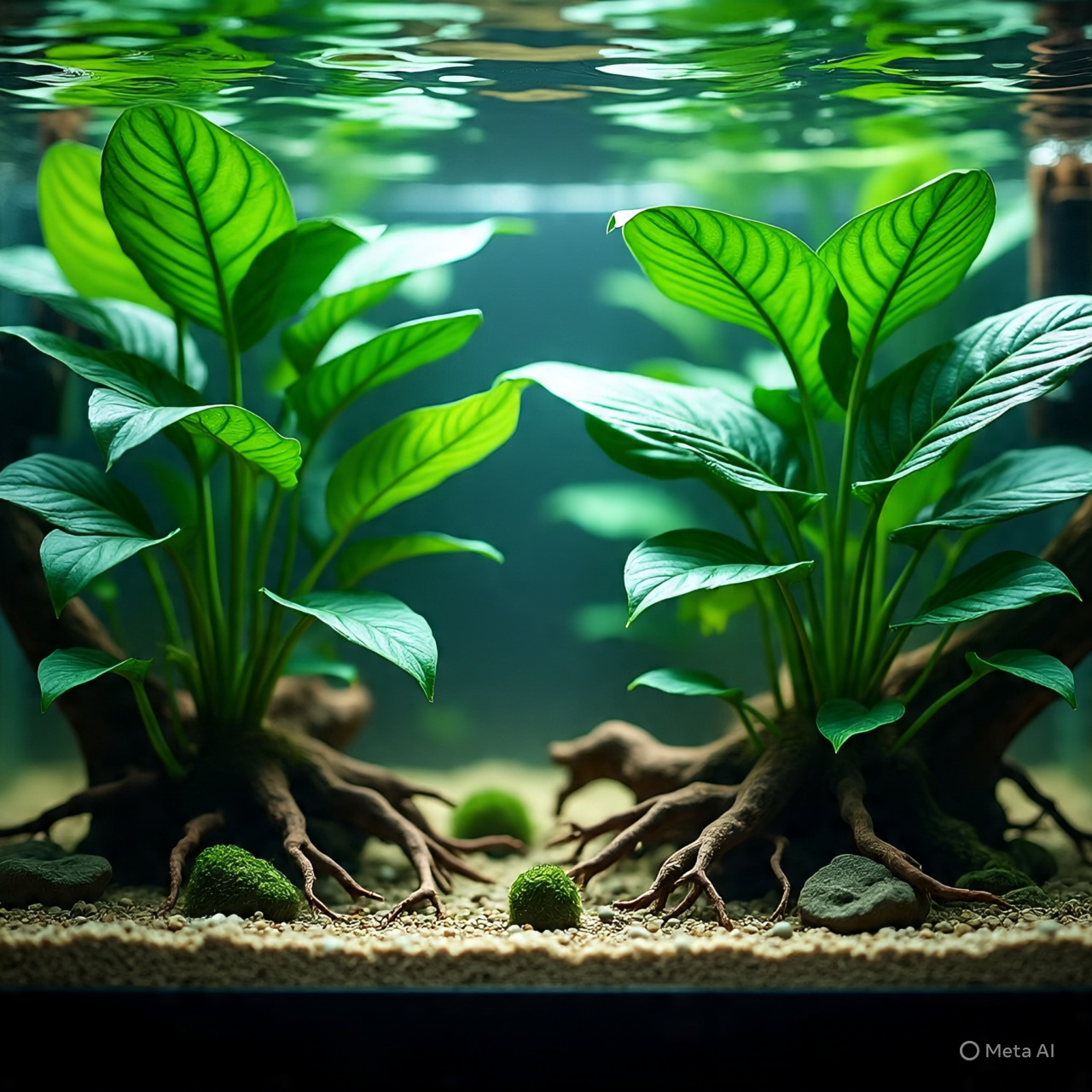
The Anubias family is celebrated for its diversity, offering plants for nearly every size and style of aquarium. Among the most elegant and sought-after varieties is Anubias Minima. Known for its slender, elongated leaves, it provides a unique texture that stands out from the classic rounded leaves of Anubias Nana. However, hobbyists are often drawn to its “mini” name, hoping for a tiny plant, only to find it can grow larger than expected. This guide will teach you the secrets to keeping your Anubias Minima looking its best by encouraging a small, dense, and compact growth habit.
What is Anubias Minima?
Anubias Minima, sometimes referred to as Anubias barteri var. glabra ‘Minima’, is distinguished by its narrow, lance-shaped leaves. Unlike the broad leaves of Anubias barteri or the oval leaves of Anubias Nana, Minima’s foliage creates a more delicate, grassy, or spiky texture in an aquascape. The term “Minima” refers to the narrowness of the leaves, not necessarily the overall size of the plant, which is a common point of confusion.
While it is smaller than its larger cousins like Anubias Congensis, it is not as tiny as Anubias Nana Petite. If left untrimmed, the rhizome can grow quite long, and the leaves can reach several inches in length, making it more of a mid-ground plant than a true foreground specimen.
The Key to Compact Growth: Strategic Pruning
You cannot change the genetic nature of the plant, but you can heavily influence its growth pattern through strategic pruning. The goal is to discourage long, “leggy” growth and encourage the plant to put out new leaves closer together, creating a denser, bushier appearance.
Technique 1: Rhizome Division and Replanting
This is the most effective method for controlling the overall footprint of the plant.
- Let it Grow: Allow your Anubias Minima rhizome to grow to a respectable length (e.g., 4-5 inches).
- Propagate Correctly: As detailed in our Ultimate Guide to Propagating Anubias, use a sharp, sterile blade to cut the rhizome into two or three smaller sections. Ensure each new section has at least 3-4 healthy leaves.
- Replant Densely: Take these new, smaller pieces and attach them close together on a piece of driftwood or rock. By grouping the smaller plants, you create a single, dense bush from what was once a long, single plant. This technique allows you to control the shape and size of the clump.
Technique 2: Pruning Old and Oversized Leaves
Regularly removing the oldest and largest leaves can help maintain a compact look and encourage new, smaller growth.
- Identify the Target: Look for the largest, oldest leaves, which are often at the back of the rhizome. These leaves may also have some algae or minor damage.
- Make a Clean Cut: Using sharp aquascaping scissors, snip the stem of the leaf (the petiole ) as close to the rhizome as possible without damaging the rhizome itself.
- Don’t Overdo It: Never remove more than 20-25% of the plant’s leaves at one time. Each leaf is a solar panel for the plant, and removing too many will starve it of energy. Prune one or two leaves every few weeks as needed.
Environmental Factors for Dense Growth
While pruning is the primary tool, your tank’s environment also plays a role.
- Moderate Lighting: In very dim light, Anubias can sometimes grow “leggy,” with longer stems as the leaves stretch towards the light source. Providing good quality, low-to-medium light encourages the plant to grow more compactly. Avoid high light, which will cause algae. Our Anubias Lighting Guide can help you find the right balance.
- Good Water Flow: A gentle current around the plant delivers nutrients and CO2 more effectively and can contribute to overall plant health, which supports a denser growth habit.
Is Anubias Minima a Foreground Plant?
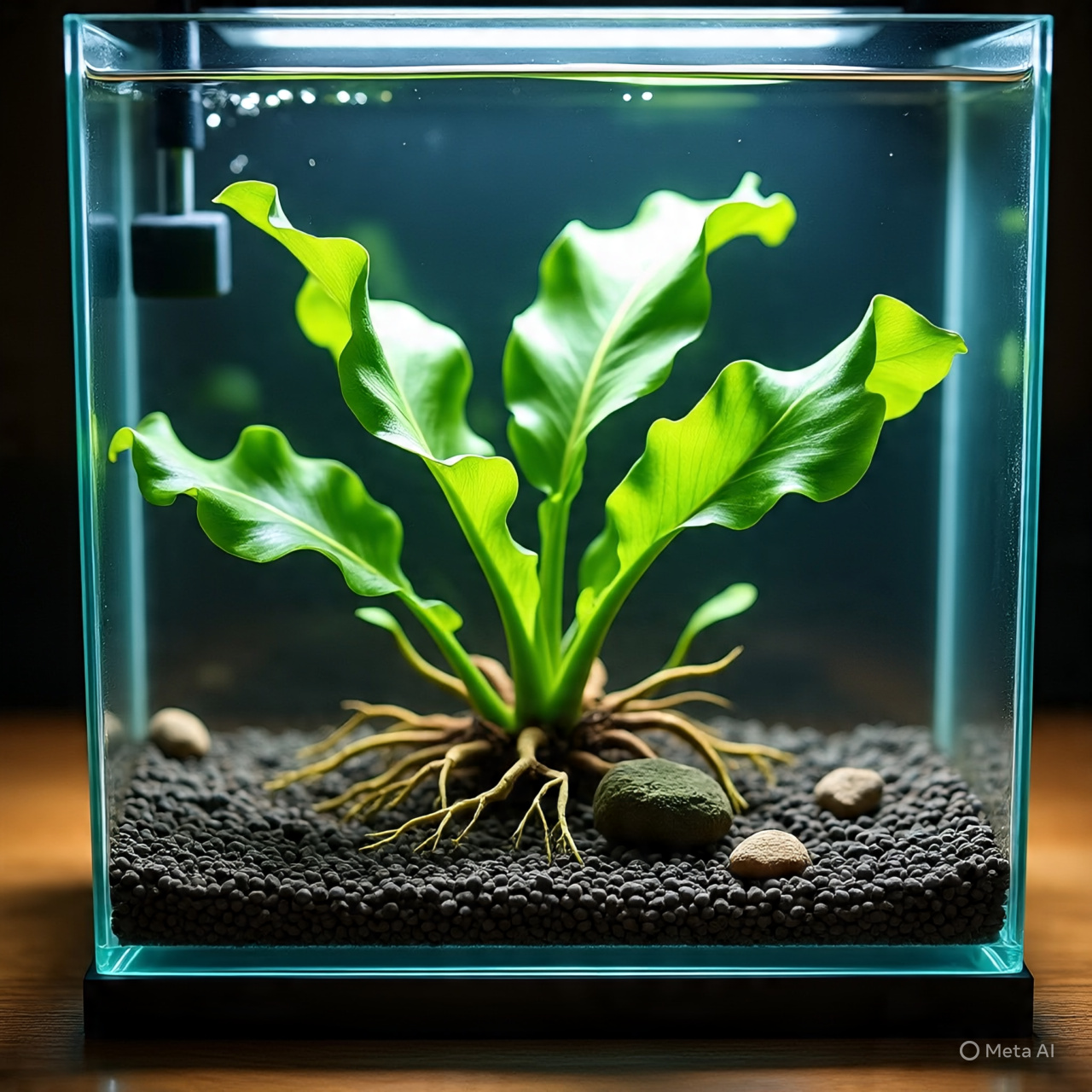
This depends on the size of your tank and how you manage its growth. In a large aquarium (50+ gallons ), a well-maintained, compact clump of Anubias Minima can work beautifully as a unique foreground or mid-ground feature. In a nano tank (under 10 gallons), its leaves may be too large for the foreground, and it is better suited as a mid-ground or even background element where its slender leaves can provide a nice contrast to other plants.
By combining smart pruning techniques with a healthy environment, you can control the shape and size of your Anubias Minima, transforming it from a potentially unruly plant into a dense, compact, and highly textured feature in your aquascape. It requires a bit more hands-on management than other Anubias, but the reward is a unique and elegant aesthetic that few other plants can offer.