

Beginner’s Guide: What is Anubias and How to Confirm it is Healthy

If you are new to the world of planted aquariums, the name “Anubias” is one you will hear again and again. It is universally recommended as the perfect beginner plant, and for good reason. It’s beautiful, incredibly hardy, and requires very little maintenance. But what exactly is an Anubias, and when you’re at the store or shopping online, how can you be sure you are choosing a healthy specimen? This beginner’s guide will answer both of those questions.
What is Anubias?
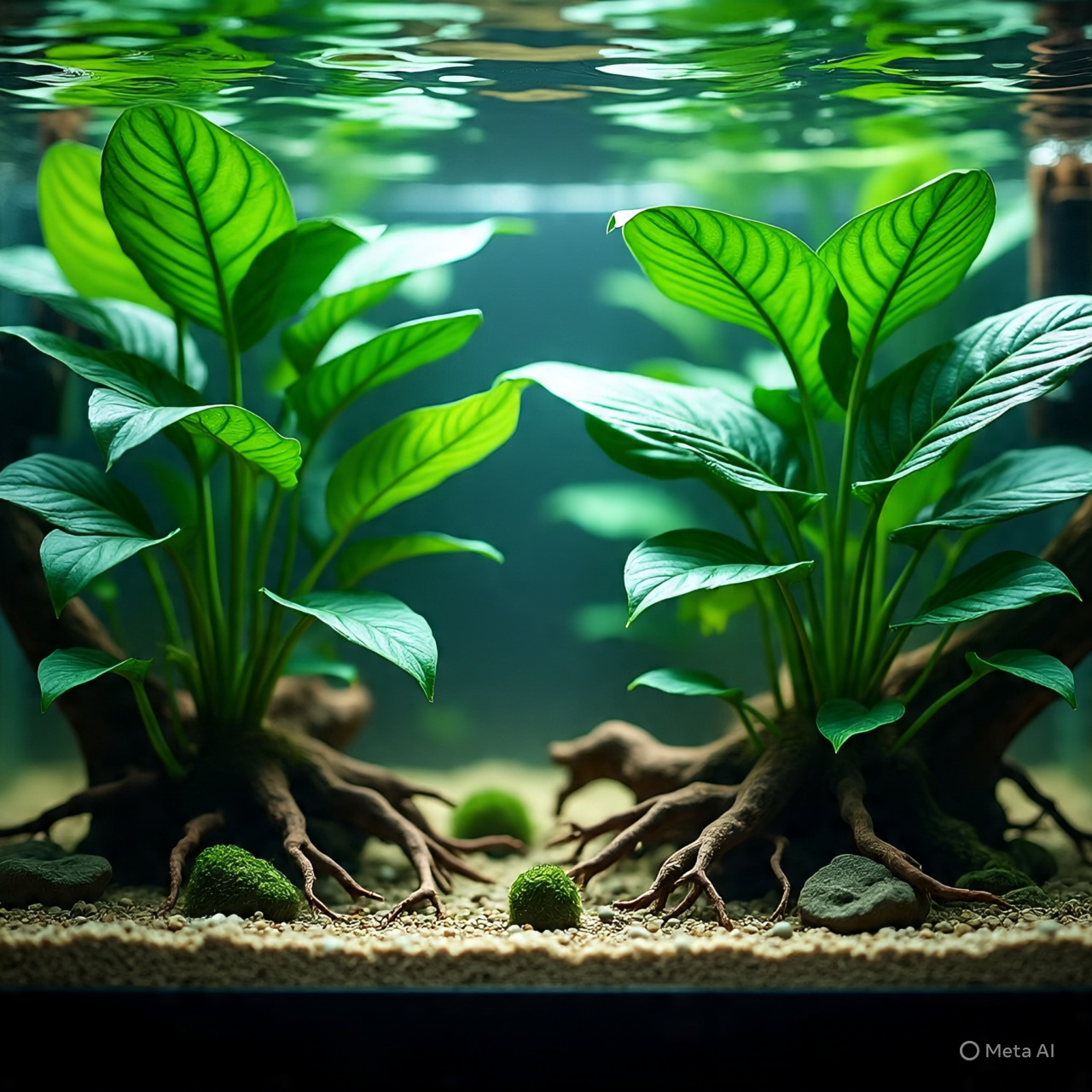
Anubias is a genus of aquatic and semi-aquatic flowering plants native to the tropical regions of central and western Africa. In their natural habitat, they grow along the banks of rivers and streams, often in the deep shade of the rainforest canopy.
What makes them so special for the aquarium hobby is their unique structure and growth habit:
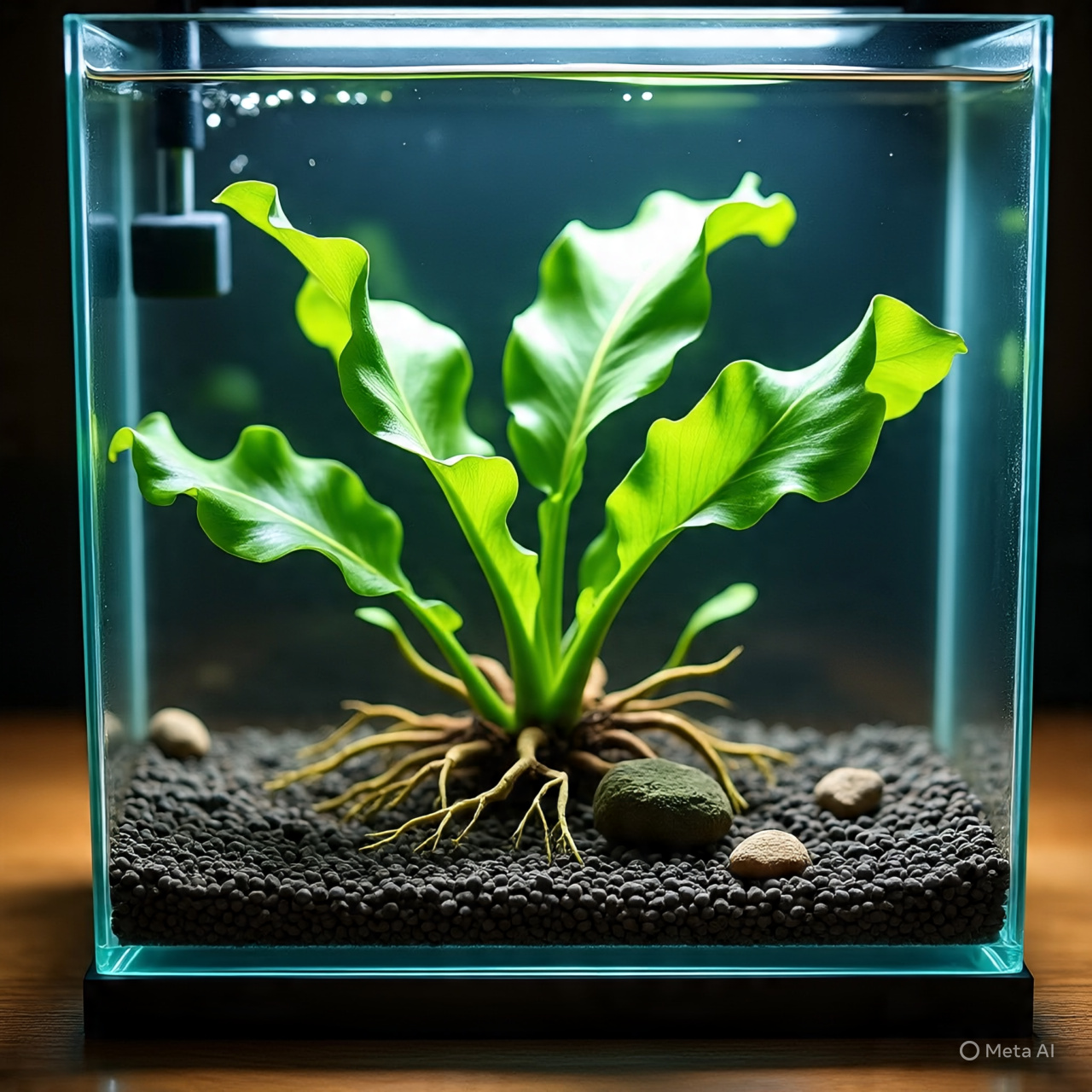
- The Rhizome: The most important part of the plant is the rhizome, a thick, horizontal stem from which everything else grows. This is the plant’s energy storage and life-support system.
- The Leaves: Anubias are famous for their thick, leathery, and durable leaves that come in a variety of shapes and sizes, from the small, rounded leaves of Anubias Nana to the slender, pointed leaves of Anubias ‘Dragon Claw’.
- The Roots: Thin, stringy roots grow downwards from the rhizome. Their primary purpose is not to absorb nutrients, but to anchor the plant firmly onto rocks, driftwood, and other surfaces.
Because of this structure, Anubias are known as “epiphytes.” They are not meant to be planted in substrate like sand or gravel. Instead, they are attached to hardscape, which is a critical piece of information we cover in our guide on the #1 beginner mistake.
How to Choose a Healthy Anubias: A 5-Point Checklist
When you are buying an Anubias, whether online or in-person, you are making an investment. A healthy plant will thrive for years, while a weak one may struggle and die. Use this checklist to confirm you are getting a quality specimen.
1. Check the Rhizome: Firm and Green
The rhizome is the heart of the plant. Gently feel it if you can. A healthy rhizome should be firm, solid, and typically a vibrant green color. Avoid any plant where the rhizome is soft, mushy, brown, or black. A soft rhizome is a sign of rhizome rot, which is almost always fatal.
2. Inspect the Leaves: Deep Color and Damage-Free
The leaves are the most visible indicator of health.
- Color: Look for leaves that have a deep, rich, and consistent green color. Avoid leaves that are yellow, transparent, or have large brown patches.
- Algae: A small amount of algae can be cleaned, but leaves that are completely covered in stubborn algae like Black Beard Algae (BBA ) may indicate the plant has been kept in poor conditions.
- Holes and Tears: Look for leaves that are intact. While a small tear is not a deal-breaker, numerous holes or shredded leaves could be a sign of nutrient deficiencies or physical damage.
3. Look for New Growth
A healthy, actively growing Anubias will often show signs of new growth. Look for a very small, tightly furled new leaf emerging from the tip of the rhizome. This new leaf will be a much lighter, almost translucent green compared to the older leaves. Seeing new growth is a fantastic sign that the plant is healthy and thriving.
4. Examine the Roots
Healthy Anubias roots are typically white, cream, or light green and should feel firm. They should be actively trying to grip onto whatever they can. Avoid plants with roots that are brown, black, and mushy, as this is another sign of rot.
5. Count the Leaves
A healthy plant should have a good number of leaves for its size. A small Anubias Nana Petite should have at least 5-7 leaves. A larger Anubias barteri should have a similar number of full-sized leaves. A plant with only one or two leaves is either a very young, fragile cutting or a larger plant that has lost most of its leaves due to stress. In either case, it will be more delicate and have a lower chance of survival.
By following this simple checklist, you can confidently select a healthy, strong Anubias that is ready to become a beautiful and low-maintenance addition to your aquarium. Starting with a healthy plant is the first and most important step to long-term success in the planted tank hobby.