
Anubias Growth Rate Explained: How to Keep Your Plant Healthy (and Be Patient

One of the first questions new hobbyists ask after getting an Anubias is, “Is it growing?” Weeks can pass with little visible change, leading many to worry that their plant is unhealthy or dying. The truth is, Anubias is famous for its slow, deliberate growth, a trait that is both a huge advantage and a source of anxiety for the impatient. This guide will explain the normal growth rate for Anubias and what you can do to ensure its slow journey is a healthy one.
What is a “Normal” Growth Rate for Anubias?
Let’s set the expectation right away: Anubias is one of the slowest-growing plants in the aquarium hobby. In a healthy, well-maintained low-tech tank, a typical growth rate is about one new leaf every 3 to 6 weeks. Yes, you read that right. Sometimes, especially after being added to a new tank, an Anubias might not show any new growth for a couple of months as it acclimates to its new environment.
This slow pace is a direct result of its evolution in the shaded, low-nutrient rivers of West Africa. Its entire biology is designed for survival and efficiency, not for speed. It has a slow metabolism that allows it to thrive in conditions where faster-growing plants would starve, a topic we cover in our guide about why Anubias doesn’t need CO2.
The Benefits of Slow Growth
Before you get discouraged, it’s important to recognize that its slow growth is actually one of its best features, especially for beginners and for aquascaping.
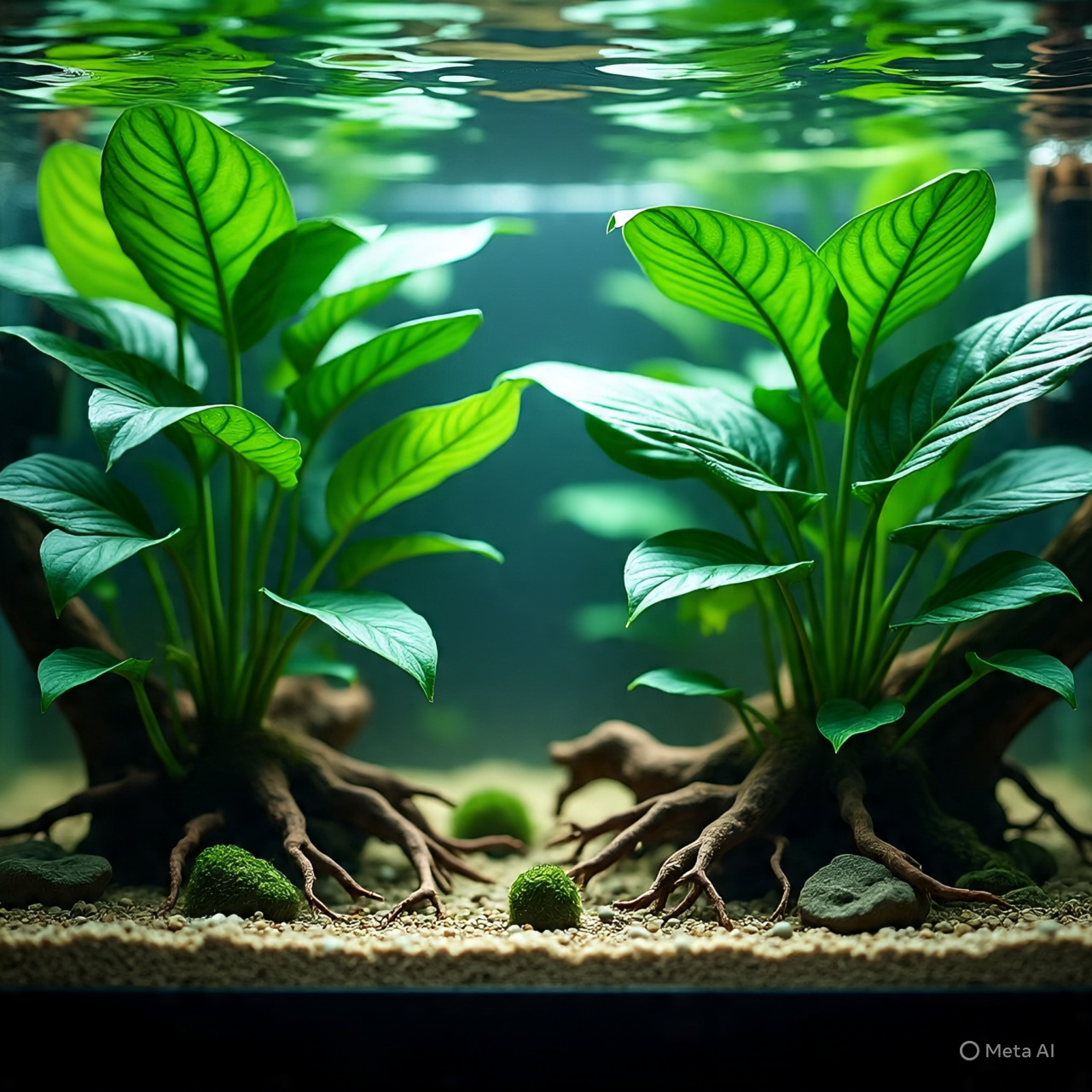
- Extremely Low Maintenance: Unlike stem plants that need weekly trimming, an Anubias can be left untouched for months or even years. Your aquascape design, like the one you might create with a unique Anubias ‘Dragon Claw’, will remain stable and look the same for a very long time.
- Perfect for Low-Tech Tanks: Its low demand for light and nutrients means it won’t quickly deplete the resources in a low-tech setup, making the entire system more stable and less prone to issues.
- Durable and Hardy: The slow growth results in thick, tough, and robust leaves that are resistant to damage and are often unappealing to herbivorous fish.
Factors That Influence Anubias Growth
While you can’t turn an Anubias into a fast-growing stem plant, you can ensure its environment is optimized for its best possible (but still slow ) growth. If your plant seems completely stalled for many months, one of these factors might be the cause.
1. Lighting
While Anubias is a low-light plant, “low-light” is not “no-light.” If the plant is in almost complete darkness, it may not have enough energy to produce new leaves. It will survive for a long time on its reserves, but it won’t grow. Ensure it receives at least 6-8 hours of gentle, indirect light daily. For a full breakdown, our Complete Anubias Lighting Guide is essential reading.
2. Nutrients
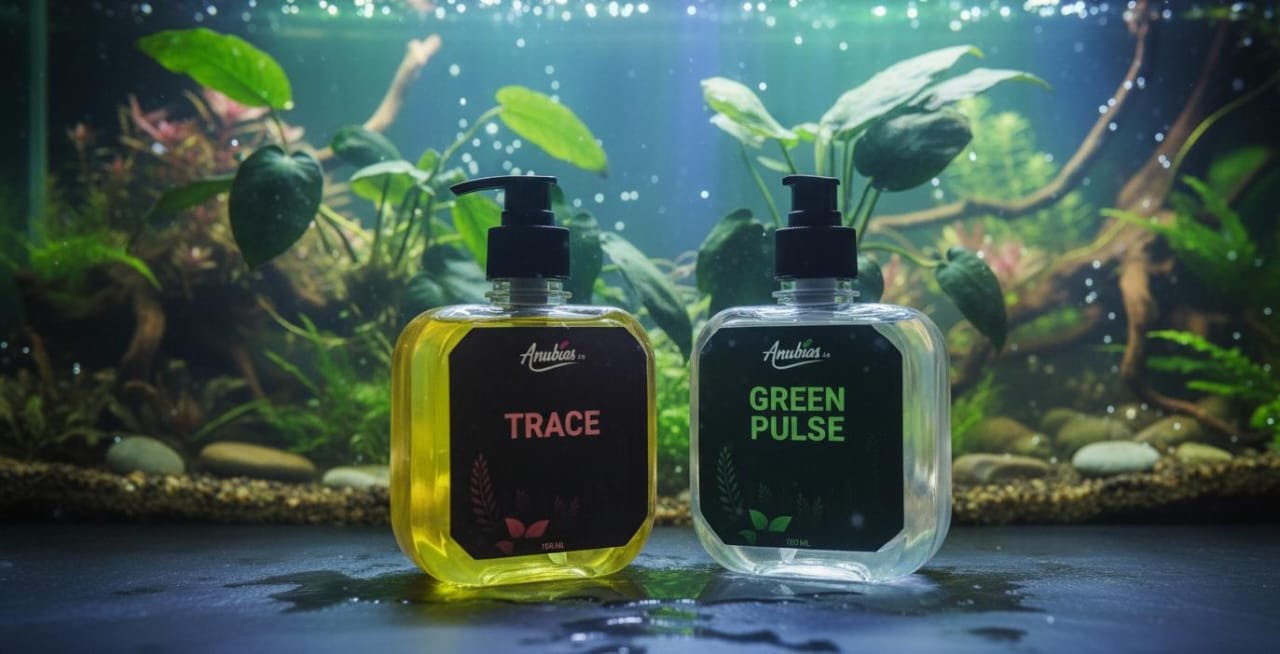
Anubias is a “water column feeder,” meaning it absorbs nutrients primarily through its leaves. In a tank with a healthy fish load, their waste often provides enough nitrogen and phosphate. However, it can sometimes lack essential micronutrients (like iron, magnesium, etc. ). If your leaves look pale or new growth is stunted, dosing a comprehensive liquid fertilizer once or twice a week can provide the missing building blocks and encourage healthier growth.
3. Planting Technique
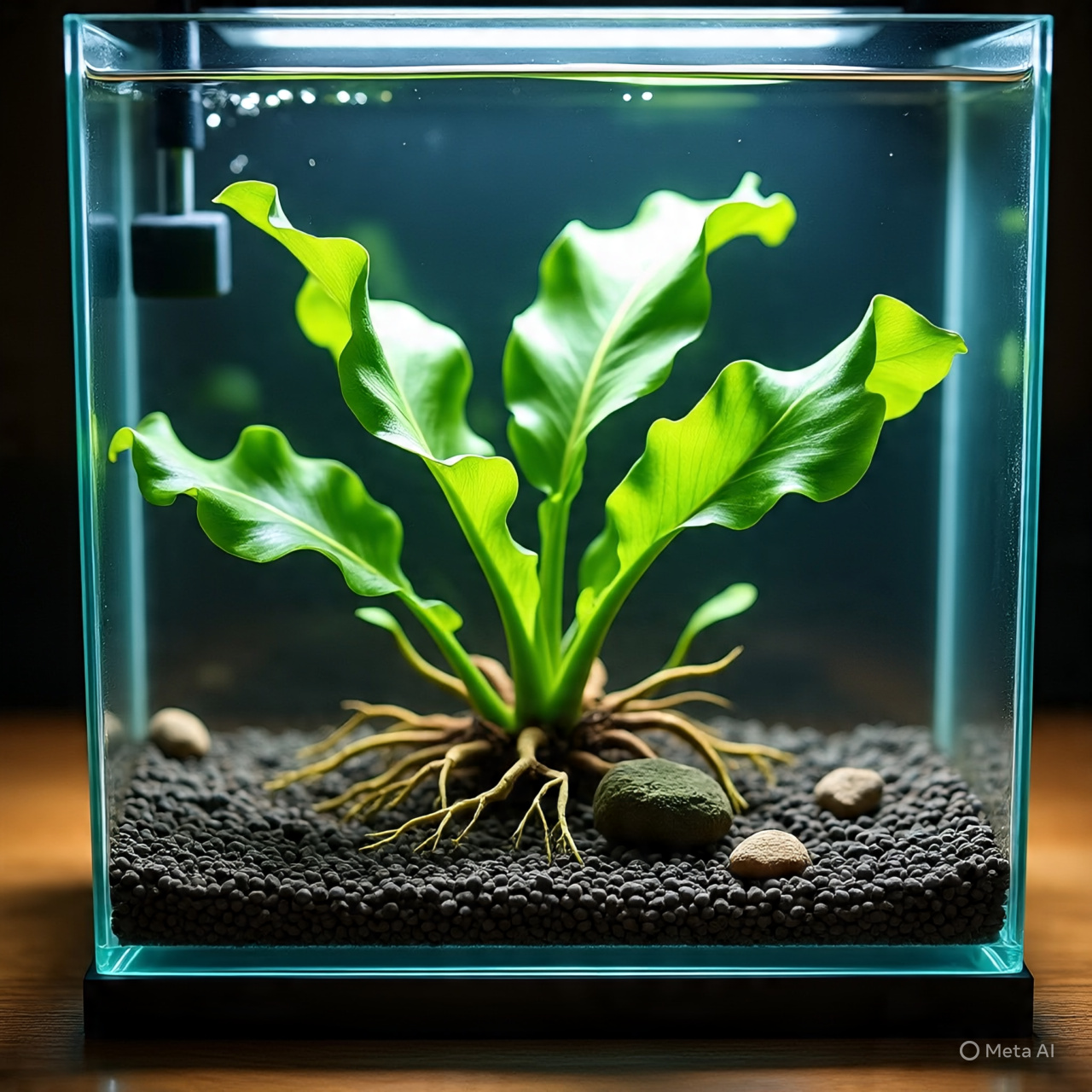
This is a critical factor. If the rhizome (the thick, horizontal stem) is buried under the substrate, it will begin to rot. A rotting plant is a dying plant, not a growing one. It will focus all its energy on survival, and growth will cease completely. Always ensure the rhizome is attached to rock or wood, fully exposed to the water. Our guide on how to plant Anubias correctly covers this in detail.
4. Stability
Anubias hates change. A tank with fluctuating temperatures, pH swings, or inconsistent CO2 levels is a stressful environment. In a stressed state, the plant will prioritize survival over growth. A stable, mature aquarium is the best environment for steady Anubias growth.
Embracing the slow, deliberate nature of Anubias is key to enjoying it. Don’t check for new leaves every day. Instead, take a photo once a month. Over time, you’ll be able to see a clear progression of new leaves and roots. This patient approach allows you to appreciate the plant for what it is: a steadfast, low-maintenance, and beautiful cornerstone of your underwater world.