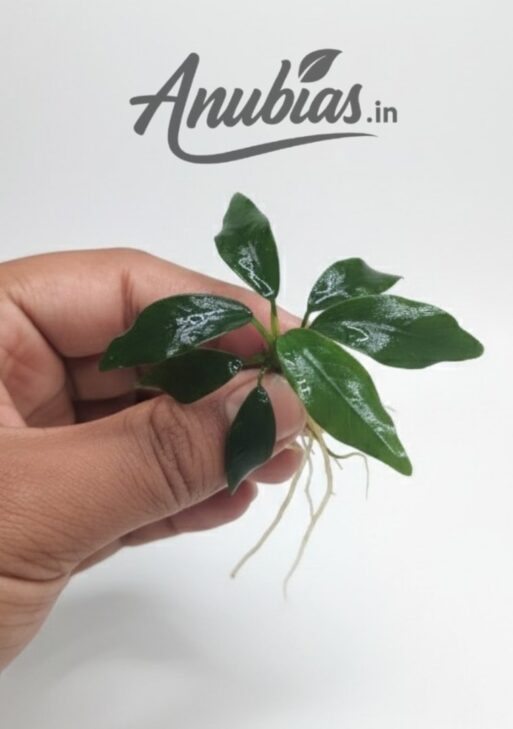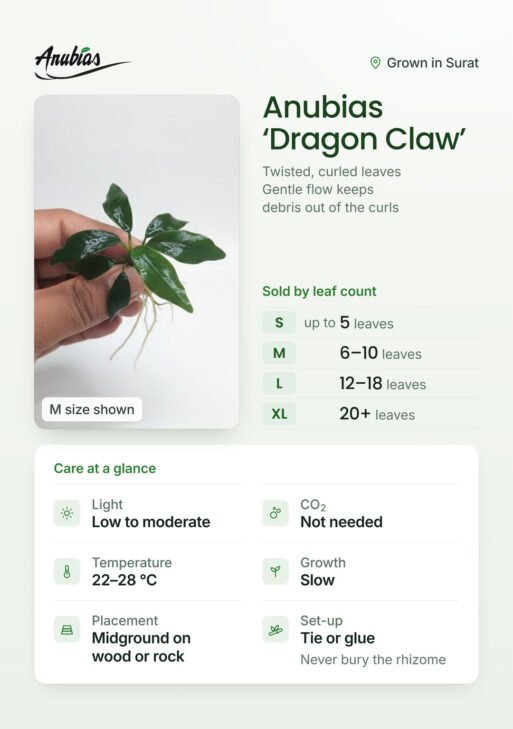


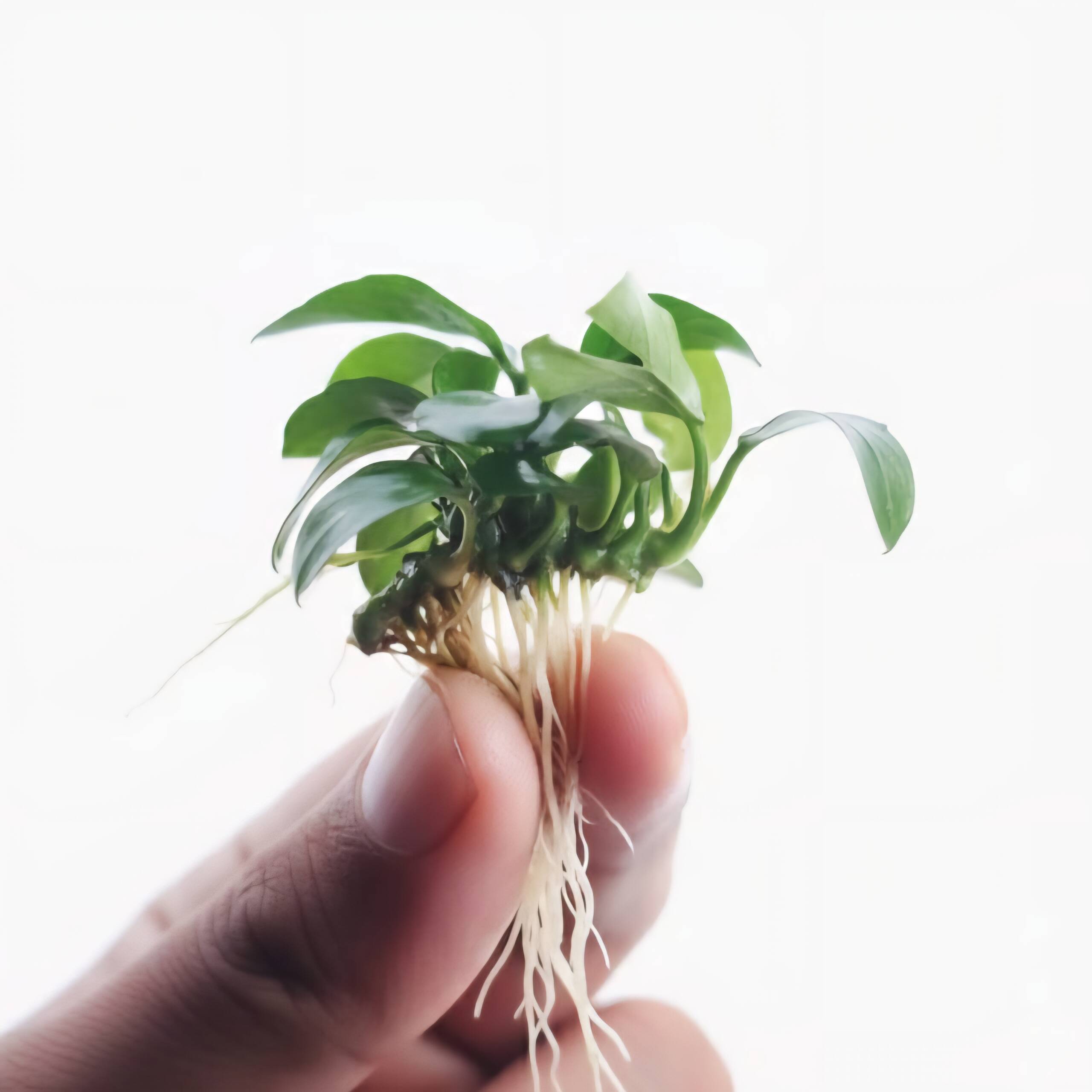
Bucephalandra (or “buce”) has a reputation as an advanced plant, but the truth is it’s about as easy as Anubias. It’s a compact rhizome plant with bronze-green leaves and a subtle blue sheen that instantly elevates a nano tank or aquascape. Here’s how to keep it thriving.
Once the basics are covered and you want to choose a specific cultivar — Kedagang, Wavy Green, Skeleton King and more — see our Bucephalandra Varieties Guide.
Quick answer: Bucephalandra (“buce”) is a slow-growing epiphyte that tolerates low to moderate light and needs no CO2, making it about as easy to keep as Anubias despite its “advanced plant” reputation. Attach it to driftwood or rock and never bury the rhizome; brighter light and CO2 are optional extras that speed growth and boost colour.
Is Bucephalandra hard to grow?
No. Buce is a slow, hardy epiphyte that attaches to wood and rock and tolerates low light. The “difficult” label mostly comes from its higher price and the natural melt it can go through after a move — both easy to manage once you know what to expect.
Light and CO₂
Bucephalandra does well in low to moderate light without CO₂. Brighter light and CO₂ speed up growth and intensify colour, but they aren’t required. Too much light on such a slow grower invites algae, so start modest.
Attaching to hardscape
Like Anubias, never bury the rhizome. Attach buce to driftwood or rock with cotton thread or super-glue gel and let its roots take hold. It’s perfect for detailing crevices and the front of an aquascape.
“Buce melt” is normal
After arriving in a new tank, Bucephalandra may drop a few leaves — this is normal “melt” as it adjusts to your water. Don’t panic and don’t throw it out: keep the rhizome attached and healthy, and new, acclimatised growth follows.
Growth and propagation
Buce grows slowly. To propagate, cut the rhizome into sections, each with a few leaves and roots, and attach them elsewhere. Patience is rewarded with a dense, jewel-like clump.
Explore our Bucephalandra collection and pair it with Anubias for a low-tech aquascape — shipped across India with a live-arrival guarantee.
Ready to pick a variety? See our Bucephalandra varieties guide, comparing Brownie Ghost, Kedagang and more.
Grown in Surat (pre-order plants imported to order) · live-arrival guarantee with a 4-hour unboxing video · ₹99 shipping, free from ₹999

More Bucephalandra guides:
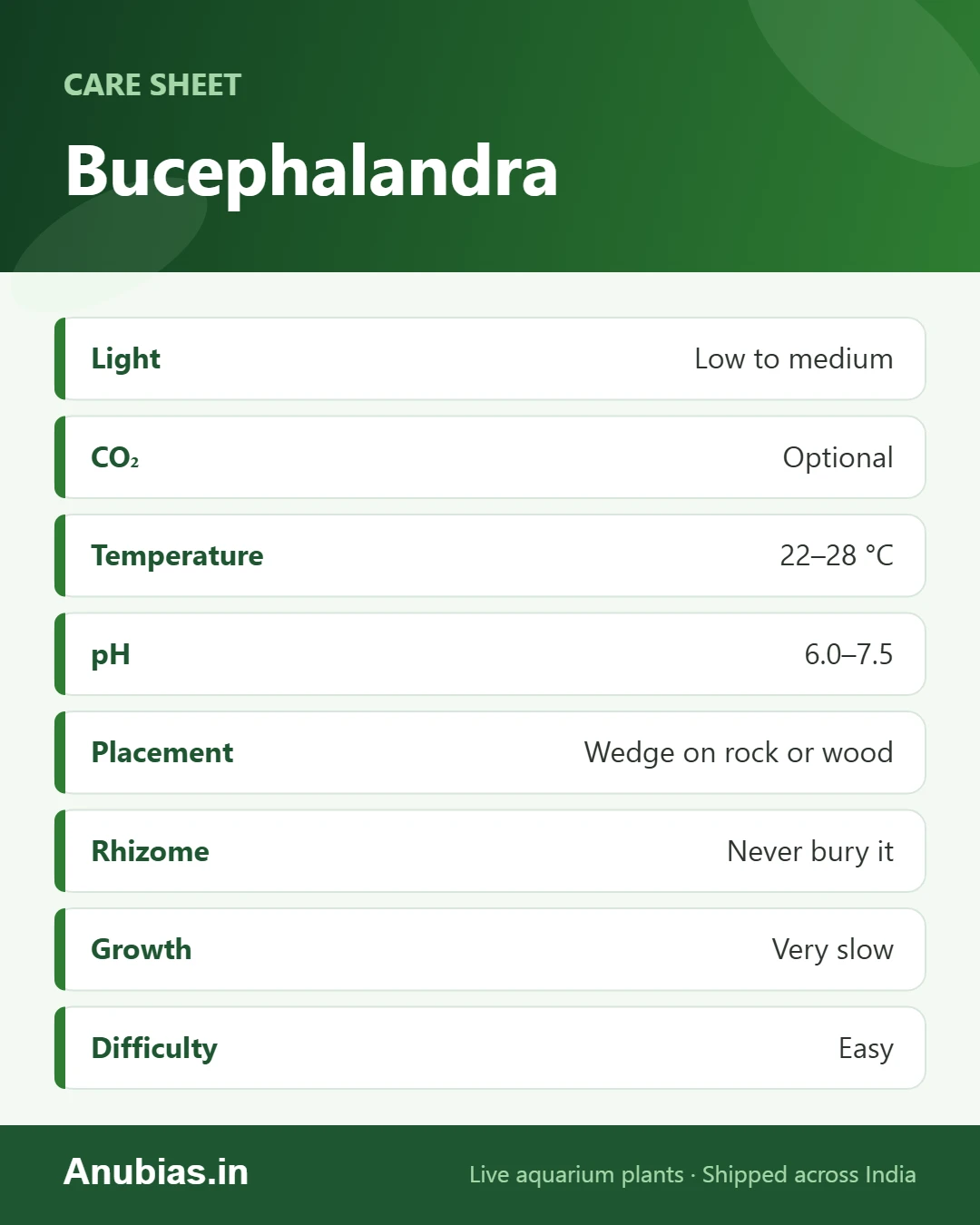
Bucephalandra care sheet
| Factor | What Bucephalandra needs |
|---|---|
| Light | Low to moderate |
| CO₂ | Not required (boosts growth and colour) |
| Temperature | 22–28°C |
| Placement | Wedged or glued on rock or wood; rhizome never buried |
| Growth | Very slow |
| After planting | Some “buce melt” is normal |
| Difficulty | Easy |
Popular Bucephalandra varieties and prices
| Variety | Price on Anubias.in |
|---|---|
| Wavy Green | ₹299 |
| Brownie Ghost | ₹350 |
| Kedagang | ₹399 |
| Catherinae | ₹449 |
| Godzilla | ₹549 |
| Skeleton King | ₹649 |
Prices checked 17 September 2026; most varieties are on pre-order. Compare Bucephalandra varieties · Bucephalandra price guide
Why Bucephalandra melts and how to fix it
New buce often drops leaves in the first weeks while it adjusts to your water or switches from emersed to submerged growth. Remove melting leaves, keep the rhizome attached and uncovered, and avoid moving it. If the rhizome stays firm, new leaves usually appear within a few weeks. Bucephalandra melting guide
Keeping algae off slow leaves
Because buce grows so slowly, its leaves are easy targets for algae. Keep lighting moderate for about 6–8 hours a day, place it in partial shade, and add shrimp or nerite snails to graze the leaves. How to remove algae
Bucephalandra vs Anubias and Java fern
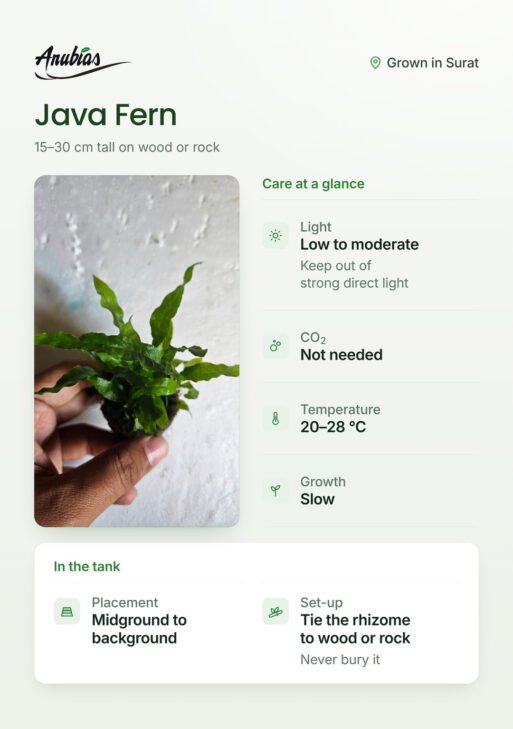
All three are easy rhizome plants that grow on hardscape. Buce is the most compact and colourful, Anubias the toughest, and Java fern the tallest. Anubias vs Bucephalandra · Bucephalandra vs Java fern
Frequently asked questions
Is Bucephalandra hard to grow?
No. It is about as easy as Anubias: low to moderate light, no CO2, attached to rock or wood.
Why is my Bucephalandra melting?
Usually it is adjusting after planting. Remove melted leaves and keep the rhizome firm, uncovered and in place; new leaves normally follow.
Does Bucephalandra need CO2?
No, but CO2 can speed growth and improve colour.
How much does Bucephalandra cost in India?
On Anubias.in, Bucephalandra ranges from ₹299 for Wavy Green to ₹649 for Skeleton King.